A panel under the Environment Ministry has approved
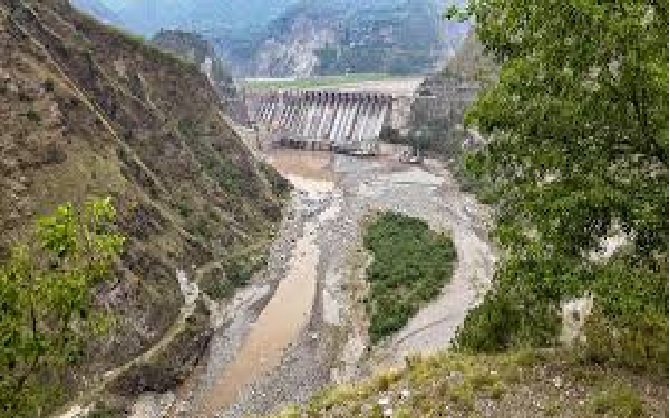
the 260 MW Dulhasti Stage-II hydroelectric project on the Chenab River in
Kishtwar, Jammu and Kashmir. The Expert Appraisal Committee on Hydroelectric
Projects under the Union Environment Ministry, during its 45th meeting, granted
environmental clearance to the 260 MW (2*130 MW) Dulhasti Stage-II
hydroelectric project. The project will be developed by NHPC Limited at an
estimated cost of approximately ₹3,277 crore. With this approval, the
government can now initiate the process of inviting construction tenders for
the project. The project parameters have been designed in accordance with the
provisions of the Indus Waters Treaty, 1960, pertaining to the Chenab basin.
The central government is fast-tracking several hydroelectric projects in the
Indus basin, including the Ratle, Sawalkot, Bursar, Pakal Dul, Kwar, Kiru, and
Kirthai projects.
Overview of the Dulhasti
Stage-II Hydroelectric Project
¨
Dulhasti Stage-II is a
run-of-the-river hydroelectric project with an installed capacity of 260 MW
(2*130 MW).
¨
It is an extension of the
existing 390 MW Dulhasti Stage-I hydroelectric project.
¨
Dulhasti Stage-I was
commissioned in 2007 and is successfully operating under NHPC Limited.
¨
Stage-II will utilize the
existing dam, reservoir, and power intake infrastructure of Stage-I.
¨
Water for Stage-II will
be diverted through a separate tunnel approximately 3.7 kilometers long for
water storage. • Under this project, a surge shaft, a pressure shaft, and an
underground powerhouse will be constructed.
¨
Water for this project
will be obtained from the Marusudar River through the ‘Pakal Dul’ project
linkage.
¨
The Chenab basin already
has operational projects such as Dulhasti-I, Baglihar, and Salal.
¨
Additional projects are
under construction on the Chenab River, making this basin a major hydropower
hub.
¨
Dulhasti Phase-II is
expected to increase regional power supply and support India's strategic and
energy security objectives in the Indus Basin.
Significance of the Project
¨
Affirmation of Water
Sovereignty: By accelerating construction amidst the uncertainty surrounding
the treaty, India is clearly signaling its strategy of moving towards the
optimal utilization of its Himalayan rivers. This is a deliberate move to use
water rights as a strategic advantage in regional security and diplomacy.
¨
Optimal Utilization of
Infrastructure: This project is highly cost-effective as it will utilize the
existing dam and reservoir of Dulhasti Phase-I. This “brownfield” approach will
significantly increase power generation capacity (from 390 MW to a total of 650
MW) with relatively less environmental impact.
¨
Energy Security for Jammu
and Kashmir: This project is a crucial part of India's plan to make the region
a hydropower hub. It aims to address the chronic power shortage and boost local
industrial development through a reliable supply of renewable energy.
¨
Strategic Quick-Response:
This approval by the Expert Appraisal Committee, coming immediately after the
1,856 MW Sawalkot project, is part of an effort to establish ‘facts on the
ground’. This strong physical presence on the Chenab River will solidify
India's position in future treaty negotiations to an almost irreversible
extent.
 Bill, 2026.jpg)