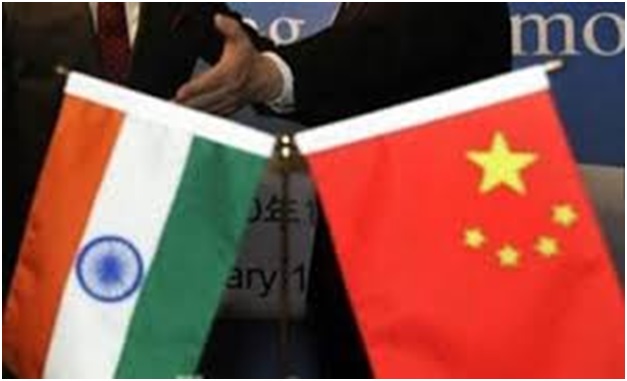
China has filed a formal complaint at the
World Trade Organization (WTO) against India, alleging that New Delhi’s
subsidies for electric vehicles (EVs) and batteries provide an unfair
competitive advantage to domestic industries.
More on the News
¨
The
Chinese Ministry of Commerce announced that it has lodged a complaint with the
WTO claiming that India’s EV and battery subsidies violate multilateral trade
rules.
¨ The ministry stated that these measures
undermine China’s legitimate interests and give an unfair competitive edge to
India’s domestic manufacturers.
¨ China has requested consultations with India,
which is the first step in the WTO’s dispute settlement process.
¨ India now has 30 days to engage in
consultations with China to resolve the issue before a dispute panel may be
requested.
¨ The complaint comes at a time when India is
preparing to launch the National Critical Mineral Stockpile (NCMS) programme to
secure access to rare earth elements crucial for EV battery production and
green technologies.
¨ The Indian Ministry of Commerce has stated
that it will review China’s submissions in detail before issuing a formal
response.
¨
China has
also filed similar trade complaints against Turkey, Canada, and the European
Union over EV-related incentives.
India’s EV Subsidy
Framework
¨
The FAME India
Scheme (Faster Adoption and Manufacturing of Hybrid and Electric Vehicles),
launched in 2015, provides direct purchase incentives to promote adoption of
electric two-, three-, and four-wheelers and the creation of charging
infrastructure.
¨Under FAME Phase-I (2015–2019), over 2.55 lakh EVs were supported along
with development of key charging infrastructure to encourage early adoption.
¨ The Government of India provides several
incentives under the Faster Adoption and Manufacturing of (Hybrid and) Electric
Vehicles (FAME-II) scheme to promote electric mobility.
¨ Subsidies include ₹15,000 per kWh for
two-wheelers (up to 40% of the vehicle cost), ₹10,000 per kWh for three- and
four-wheelers, and ₹20,000 per kWh for e-buses.
¨ The National Electric Mobility Mission Plan
(NEMMP) 2020 aims to accelerate EV production and adoption through fiscal
incentives and policy support for manufacturers and consumers.
¨ India introduced the Scheme for Manufacturing
of Electric Cars (SMEC) in 2024, which allows concessional import duties for
companies establishing new EV manufacturing plants in India.
¨
These
initiatives aim to promote domestic production, reduce import dependency, and
support India’s clean energy transition.
Global and Trade
Context
¨
China
currently accounts for nearly two-thirds of global EV sales but faces
challenges such as declining domestic profits and growing trade restrictions
abroad.
¨ The European Union recently imposed a 27%
tariff on Chinese EV imports to curb their dominance in the European market.
¨ China’s WTO complaint against India is seen
as an effort to safeguard its EV export interests and prevent the spread of
similar protectionist measures in emerging markets.
¨
India’s
growing EV and battery production capacity, combined with mineral security
initiatives like the NCMS, could reduce its dependence on Chinese imports in
the long term.
World Trade
Organisation (WTO)
¨
It was
formed under the Marrakesh Agreement signed on 15th April 1994 by 123 countries
after the Uruguay Round negotiations (1986-94) of the General Agreement on
Tariffs and Trade (GATT), leading to the formation of the WTO in 1995.
¨ The WTO is the only global international
organisation dealing with the rules of trade between nations.
¨ At its heart are the WTO agreements,
negotiated and signed by the bulk of the world’s trading nations and ratified
in their parliaments.
¨
The goal
is to ensure that trade flows as smoothly, predictably and freely as possible.
 Bill, 2026.jpg)