Recently, in view of deteriorating air
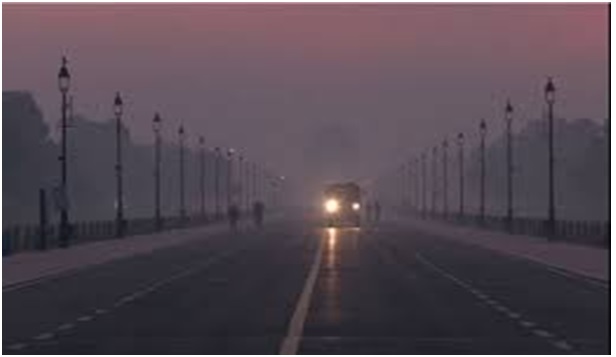
quality levels in the National Capital Region (NCR), the Commission for Air
Quality Management in National Capital Region and Adjoining Areas (CAQM)
invoked Stage-I of the Graded Response Action Plan (GRAP) with immediate
effect.The decision came after Delhi’s daily average Air Quality Index (AQI)
was recorded at 211, falling in the ‘Poor’ category, as per the Central
Pollution Control Board (CPCB).
Key Measures
¨
The
27-point action plan under Stage-I of the Graded Response Action Plan (GRAP)
addresses key sectors to mitigate pollution effectively:
¨ Dust Control: Enforce stringent dust
suppression protocols at construction and demolition sites, including mandatory
anti-smog guns, consistent water sprinkling, and mechanized street cleaning.
¨ Solid Waste Management: Ensure systematic
collection and scientific disposal of municipal solid waste, construction
debris, and industrial refuse to prevent open dumping and reduce pollution
sources.
¨ Traffic Management: Deploy traffic police at
congestion points, rigorously enforce Pollution Under Control (PUC)
certifications, impound visibly polluting vehicles, and redirect non-essential
trucks via designated peripheral expressways.
¨ Industrial Regulation: Shut down
non-compliant industrial units, mandate the use of approved clean fuels in
industries and brick kilns, and enforce emission standards at thermal power
plants.
¨ Ban on Polluting Fuels: Prohibit the use of
coal and firewood in hotels, eateries, and open kitchens, promoting cleaner
fuel alternatives to limit air contaminants.
¨ Firecracker Ban: Implement judicial orders
prohibiting firecracker use during festivals to control episodic pollution
spikes.
¨
Public
Communication: Provide real-time air quality updates through social media,
mobile applications, and bulk SMS, and facilitate prompt resolution of citizen
complaints via digital platforms.
Graded Response
Action Plan (GRAP)
¨
Graded
Response Action Plan is an emergency air pollution control plan for the
Delhi-NCR region that is triggered by worsening air quality.
¨ The Commission for Air Quality Management
(CAQM) is responsible for its implementation.
¨
The GRAP
was approved by the Supreme Court in 2016 and first notified by the Ministry of
Environment, Forest and Climate Change (MoEFCC) in 2017.
It is a four-stage,
science-based framework that implements progressively stricter measures based
on the Air Quality Index (AQI) level, ranging from “Poor” to “Severe+”. The
four stages are as follow:
¨
Stage I
(Poor: AQI 201–300): Activated when AQI falls within 201–300, this stage
enforces stricter dust control at construction sites and increases public
transport frequency to reduce vehicular emissions.
¨ Stage II (Very Poor: AQI 301–400): Triggered
at AQI levels between 301–400, this stage continues all prior measures and adds
further restrictions to curb pollution levels.
¨ Stage III (Severe: AQI 401–450): When AQI
reaches 401–450, more rigorous actions are implemented, including shutting down
brick kilns and pausing industrial operations that contribute substantially to
pollution.
¨
Stage IV
(Severe +: AQI > 450): The most critical stage, activated above AQI 450,
involves bans on non-essential truck movement and BS-IV diesel vehicles,
halting construction activities, and advising work-from-home to minimize
exposure and emissions.
Commission for Air
Quality Management (CAQM)
¨
The CAQM
was established in October 2020 by an ordinance and later became a statutory
body through the CAQM Act of 2021.
¨ It replaced the Environment Pollution
(Prevention and Control) Authority (EPCA) to address air pollution in the
National Capital Region (NCR) and adjoining areas.
¨
Its goal
is to coordinate and implement measures for improving air quality in the NCR
and surrounding states.
Central Pollution
Control Board (CPCB)
¨
The CPCB
is a statutory body established under the Water (Prevention and Control of
Pollution) Act, 1974.
¨ The CPCB provides technical services to the
Ministry of Environment and Forests.
¨
The CPCB
also promotes cleanliness of streams and wells in different areas of the states
by prevention, control and abatement of water pollution.
 Bill, 2026.jpg)