Recently,
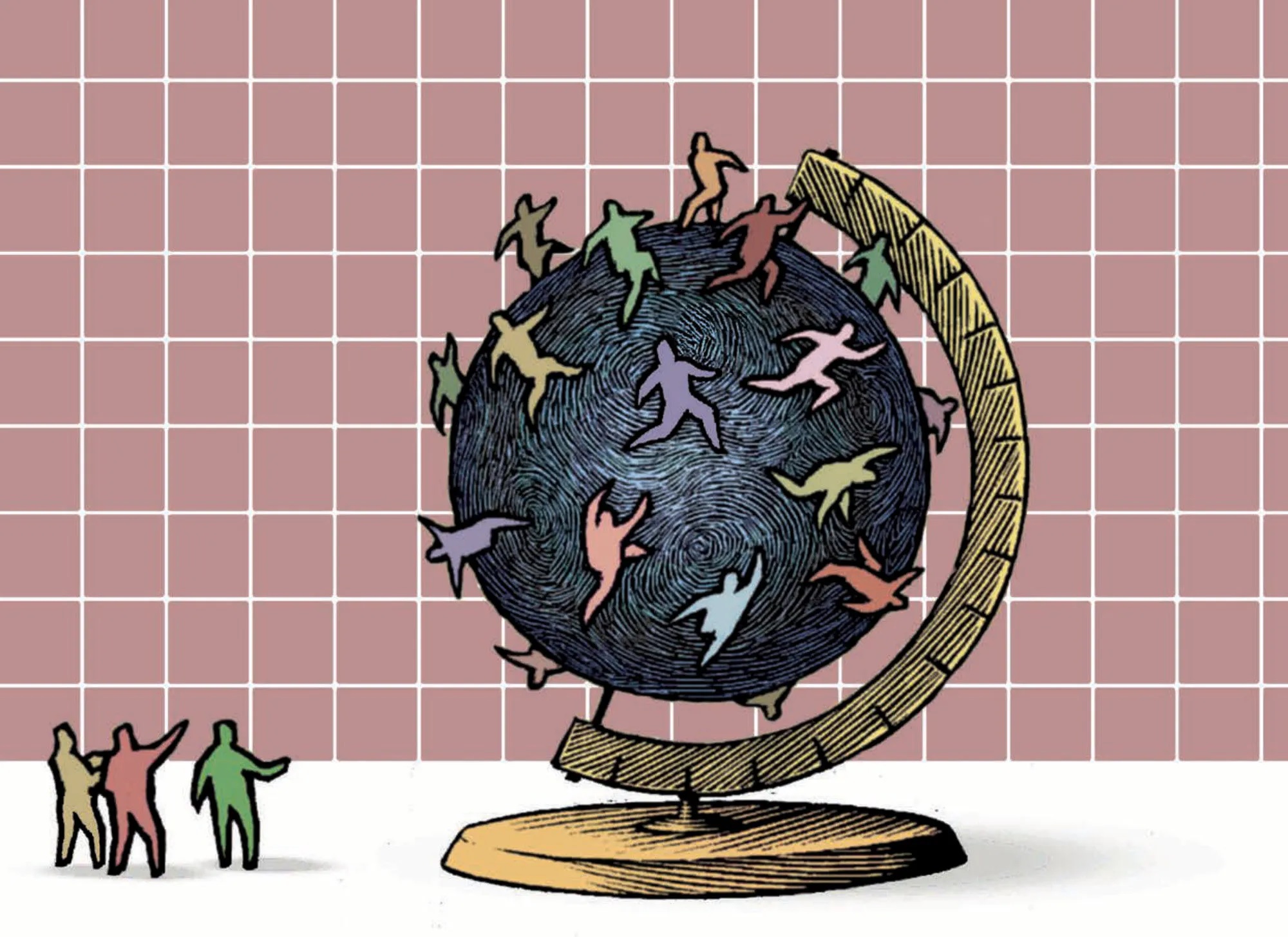
the Organisation for Economic Co-operation and Development (OECD) released its
49th edition of International Migration Outlook, an annual report that analyses
recent migration flow, labour market trends and evolving policy responses in
member countries.
Key Highlights of the Report
¨ Permanent
migration: Following three years of sharp post-pandemic increases, permanent
migration to OECD countries declined by 4% in 2024.
¨
Family continued to be the leading reason
for permanent migration to OECD countries. Foreign-born: More than 160 million
people living in OECD countries were foreign-born in 2024 and the share will
increase steadily over the past decade.
¨
Humanitarian migration: It increased due
to a rise in asylum applications and new refugee resettlements.
¨
Humanitarian migration is the movement of
people who are forced or compelled to leave their homes due to persecution, violence,
conflict, or natural disasters, seeking safety and protection in another
country.
¨
Temporary labour migration: It stabilised
in 2024 at its highest observed level.
¨ Other
patterns: Seasonal worker inflows and working holidaymakers increased while participation
in national temporary worker programmes declined.
Asylum and Irregular Movement
¨ Asylum
applications across OECD countries reached an all-time high.
¨
More than half of all asylum applications
were filed in the United States.
¨
Major origin countries included Venezuela,
Colombia, Syria, Afghanistan and India.
¨ Irregular
border crossings decreased at the EU and US borders.
Labour Market Outcomes
¨ Immigrant
labour force participation remained strong across OECD countries.
¨
Employment gains were more favourable
among migrant women than migrant men.
¨
Immigrants were concentrated in
lower-paying firms and sectors, which widened initial wage gaps.
¨
At entry level in the labour market,
Immigrants earn 34% less than native-born workers of the same age and sex.
¨ OECD
health systems continue to rely heavily on migrant doctors and nurses.
Policy Shifts in Migration Governance
¨ Several
OECD countries introduced measures to moderate migration inflows.
¨
Labour migration policies focused
increasingly on attracting targeted skills and talent.
¨
Asylum systems adopted faster procedures
and tighter rules on benefits and family reunification.
¨
International student policies underwent
review with changes in admission, post-study rights and retention pathways.
¨ Targeted
support for migrant women is growing streamlining recognition of skills and the
offer for bridging courses and micro-credential programmes is being scaled up.
Organisation for Economic Co-operation and
Development (OECD)
¨ The
OECD is an intergovernmental organisation established in 1961 to promote better
policies for better lives through global standards, reliable data, analytical
reports and support for policy reforms.
¨
Its main decision-making body is the OECD
Council which includes representatives from all 38 Member Countries and the
European Union.
¨
The annual Ministerial Council Meeting
brings together member governments to discuss major global policy challenges
and to set the OECD’s priorities for the coming year.
¨
The organisation was originally founded by
18 European countries along with the United States and Canada.
¨ India
is not a member but is recognised as a key partner alongside China, Brazil,
Indonesia and South Africa.
 Bill, 2026.jpg)