Supreme Court of
India directed the Jharkhand government to declare 31,468.25 hectares of the
Saranda Forest area as a wildlife sanctuary. The Court reaffirmed that mining
is prohibited within national parks and wildlife sanctuaries and within a
one-kilometer buffer zone around their boundaries.The Court upheld a 1968
notification from the then unified Bihar state, which declared the Saranda
Forest as the "Saranda Game Sanctuary," which later came under
Jharkhand's jurisdiction after the state's division (2000).
Saranda Forest
¨
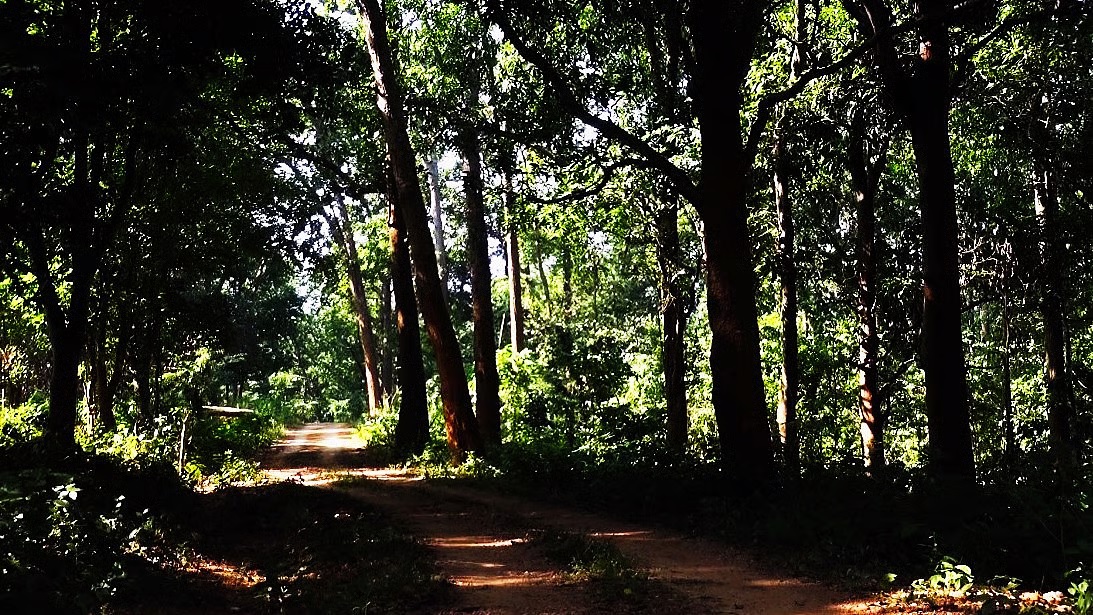
Introduction: This is Asia's largest sal forest, located near
Jamshedpur, Jharkhand. The name "Saranda" means "land of seven
hundred hills," covering approximately 900 square kilometers.
¨ Historically, it served as the private
hunting ground of the royal family of Saraikela.
¨ The Saranda Forest Division contains 26% of
India's iron ore reserves, making it both ecologically and economically
important.
¨ Vegetation: Dominated by Sal (Shorea
robusta), it is one of the oldest and most sustainable Sal forests in the
state. Other prominent species include Mahua and Kusum.
¨ It supports diverse deciduous vegetation that
maintains the water cycle and contributes to carbon absorption.
¨ Fauna: It is home to critically endangered
and endemic species, including the Sal forest turtle, four-horned antelope, and
Asian palm civet.
¨ Located on the southern border of the state, this
forest is home to endangered species of flying lizards and hundreds of
elephants.
¨
Tribes: It is home to the Ho, Munda, Oraon, and other related tribal
communities. Their livelihoods, cultural traditions, and subsistence practices
are deeply dependent on forest resources.
 Bill, 2026.jpg)