United
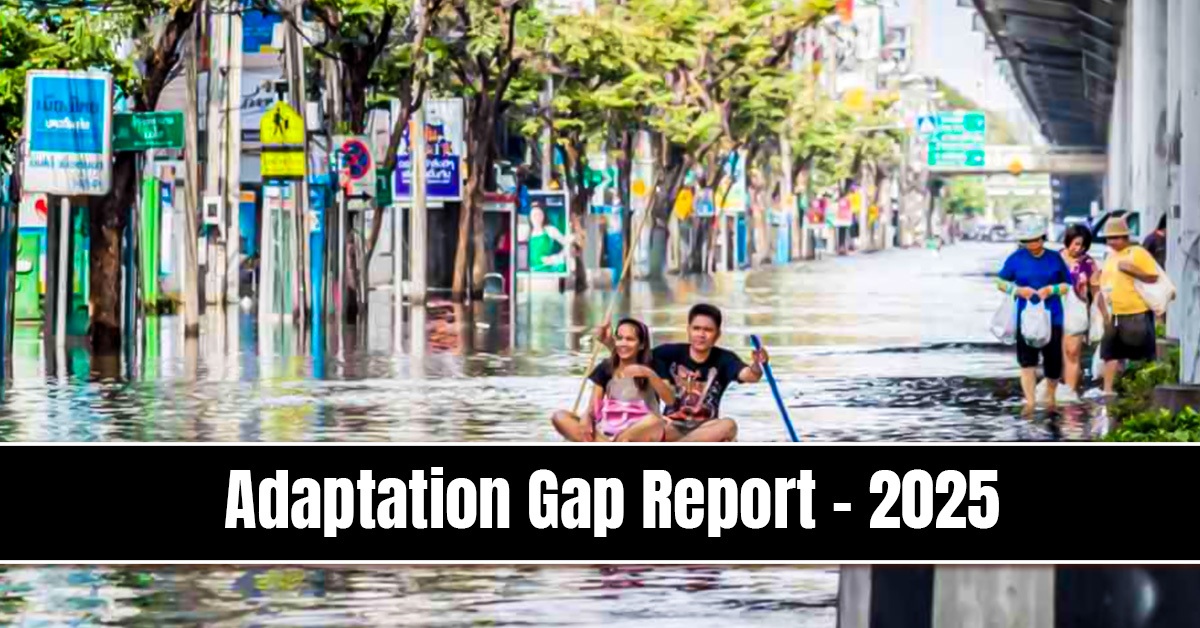
Nations Environment Programme (UNEP) has released the Adaptation Gap Report
2025, titled “Running on Empty.” The report highlights that the world is
lagging far behind in terms of the finance, policy, and action needed for
climate adaptation.The report's publication comes at a time when Jamaica was
severely affected by Hurricane Melissa—a sign that climate change is no longer
just a future concern, but a present-day crisis.
Key Highlights of the report
1.
Rising
Adaptation Costs: Developing countries will need between USD
310 billion to 365 billion annually by 2035 to cope with ongoing and future
climate impacts. Inflation adjustments could raise the cost to between USD 440
billion to 520 billion annually.
2. Funding Shortfall: International
public adaptation finance fell to USD 26 billion in 2023, down from USD 28
billion the previous year, creating an adaptation finance gap estimated between
USD 284 billion to 339 billion annually.
3. Slow Progress on Climate Finance Goals:
The report warns that the Glasgow Climate Pact goal to double adaptation
finance by 2025 to USD 40 billion is unlikely to be met under current trends.
The New Collective Quantified Goal agreed at COP29 aims for USD 300 billion
annually for climate action by 2035 but remains insufficient to close the
adaptation gap.
4. Increasing Adaptation Planning:
About 172 out of 197 countries now have at least one national adaptation
policy, plan, or strategy.
5. Limited Private Sector Participation:
The private sector contribution to adaptation finance currently stands at USD 5
billion and may rise to USD 50 billion annually with targeted policy action and
blended finance approaches, but this is inadequate compared to the overall
funding gap.
6.
Risk of
Maladaptation: Out of 172 countries that have implemented a national
adaptation strategy, 36 are having instruments that are outdated or have not
been updated in over a decade.
Recommendations from the Report
¨ Adopt
International Collaborative Frameworks: Implement frameworks like the Baku to
Belem Roadmap from COP29 to ensure coordinated and equitable adaptation funding
mechanisms.
¨
Integrate Climate Resilience in Financial
Decision-Making: Financial actors should incorporate climate risks and
resilience metrics into investment and credit decisions to scale up adaptation
funding.
¨
Accelerate Adaptation Planning and
Implementation: Countries should update outdated adaptation plans and move
swiftly to implement effective resilience-building strategies aligned with
national circumstances.
¨ Call
for Non-Debt Creating Finance: Grants and concessional (low-cost) financing
mechanisms are essential to prevent increasing debt burdens for vulnerable
countries, enabling sustainable adaptation investment.
About the Report
¨ Publishing
Institutions: It is released by UNEP in partnership with the Copenhagen Climate
Centre, with inputs from various international organisations and climate
experts.
¨ Key
Focus Areas: The report identifies gaps in adaptation finance, evaluates the
effectiveness of adaptation plans, and outlines the challenges faced by
developing nations in strengthening climate resilience.

 scheme will continue until September 30, 2026.jpg)