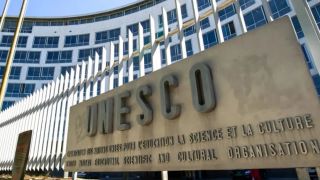
UNESCO Report: 90% of Sites at
Environmental Risk
UNESCO’s recent ‘People and Nature’ report presents an
alarming picture of the global environmental situation. According to this
report, approximately 90% of the sites designated by UNESCO—including World
Heritage Sites, Biosphere Reserves, and Geoparks—are currently facing high
environmental pressure. This situation highlights the fact that international
recognition alone cannot guarantee the long-term security of a site.
The report indicates that factors such as climate
change, biodiversity loss, pollution, and human activities are having a severe
impact on these sites. Rising temperatures, erratic rainfall, deforestation,
and urbanization have undermined the ecological balance of these protected
areas. Consequently, many critical species and natural resources are at risk.
About the Report
¨ The Report is the first assessment across all
UNESCO categories such as World Heritage Sites, Biosphere Reserves and Global
Geoparks.It brings together a single network of more than 2,260 sites covering
over 13 million sq km, which is larger than the combined area of China and
India.
¨
Most critically, about
98% of these sites are already experiencing climate change impacts, indicating
that no major ecological region is untouched by global warming.Every 1°C of
warming avoided could halve the number of sites exposed to major disruption by
the end of the century.
¨ The report highlights a
key global governance challenge, even the most protected ecosystems are
increasingly vulnerable to climate and human pressure
Key Findings of People and Nature Report
¨ Climate Change as the
Dominant Pressure: Climate change has emerged as the most widespread threat,
with 98% of UNESCO sites experiencing at least one extreme climate event since
2000.These include heatwaves, glacier retreat, sea-level rise, coral bleaching,
droughts, floods, and wildfires.A key finding is the sharp rise in extreme
weather events such as droughts, floods, and wildfires, which have increased by
40% in the past decade, reflecting growing climate instability.Cryosphere loss
is also severe, with over 2,500 gigatonnes of glacier ice lost since 2000 and
mountain glaciers declining by around 9% in volume. Ocean acidification is
further weakening marine ecosystems and coral reefs.
¨ Land-Use Change and
Ecosystem Degradation: Alongside climate change, human pressures are reshaping
these protected areas.Wildfires have become the leading driver of forest change
in World Heritage sites, surpassing logging and agricultural
expansion.Infrastructure development such as roads, railways, and energy
projects is fragmenting ecosystems and reducing ecological connectivity.Since
2000, over 300,000 sq km of forest cover has been lost, while invasive species
are now present in more than 80% of UNESCO sites.
¨
Risk of Ecological
Tipping Points: The report warns that more than 25% of UNESCO sites may cross
irreversible ecological tipping points by 2050.Coral reef systems face the risk
of functional collapse due to repeated bleaching events, while forest
ecosystems may shift from carbon sinks to carbon sources.Freshwater ecosystems
are also under stress, with over 300 sites experiencing chronic water scarcity.
¨ Biodiversity and Global
Significance: Despite rising pressures, UNESCO sites remain critical
biodiversity strongholds.They host over 60% of globally mapped species,
including a large share of endemic and endangered species.Habitat degradation
within these sites is significantly lower than in surrounding landscapes,
highlighting their effectiveness as conservation refuges.
¨ Climate Regulation and Human
Dependence: UNESCO sites play a vital role in global climate stability. They
absorb nearly 700 million tonnes of CO₂ annually and store around 240
gigatonnes of carbon in forests, soils, and coastal ecosystems.
¨ They also support nearly
900 million people (about 10% of the global population) and contribute close to
10% of global GDP, mainly through tourism, agriculture, and ecosystem-based
livelihoods.Ecosystem services such as freshwater supply, soil fertility, and
pollination are essential for global food security, with pollination alone
valued at around $500 billion annually.UNESCO initiatives like “Women for Bees”
support sustainable beekeeping, including in India’s Western Ghats.

 scheme will continue until September 30, 2026.jpg)