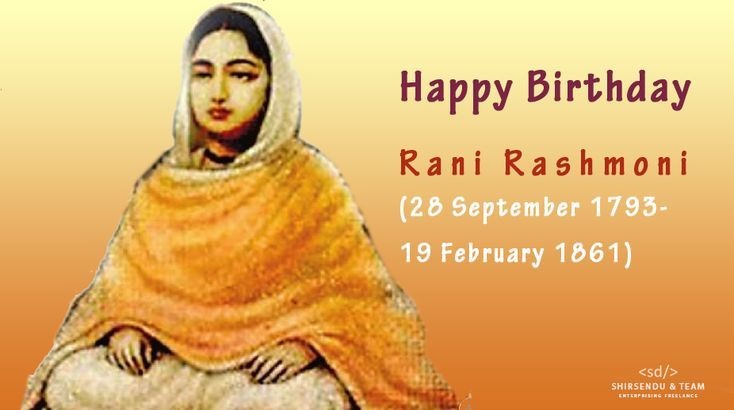
Rani Rashmoni was a prominent 19th-century social reformer, philanthropist, and zamindar from Bengal who played a significant role in shaping society through her progressive ideas and charitable works. Known for her courage and administrative skills, she remains an important historical figure, especially for competitive exam aspirants studying modern Indian history.
Early Life and Background
Rani Rashmoni was born on 28 September 1793 in a village named Kona, situated on the border of Nadia and North 24 Parganas in present-day West Bengal. She was born into a Mahishya peasant family, reflecting humble beginnings. Tragically, she lost her mother at the young age of seven, which shaped her resilience early in life. At the age of eleven, she was married to Babu Rajchandra Das, a wealthy zamindar from Janbazar in Kolkata. This marriage brought her into an affluent household, where she later demonstrated exceptional administrative capabilities.
Role as a Zamindar
After the death of her husband in 1836, Rani Rashmoni took over the responsibility of managing the vast zamindari estate. Despite the challenges, she efficiently handled financial matters and estate administration. Her leadership earned her widespread respect and admiration among her contemporaries.
Dakshineswar Kali Temple Construction
One of her most significant contributions was the construction of the famous Dakshineswar Kali Temple. Built between 1847 and 1855, the temple stands as a symbol of devotion and architectural excellence.
- She acquired nearly 30,000 acres of land for the project.
- She invested around nine lakh rupees, a huge amount at that time.
- The temple later became closely associated with Ramakrishna Paramahamsa, enhancing its spiritual significance.
Philanthropic Activities
Rani Rashmoni was widely known for her charitable efforts. She undertook several initiatives for public welfare:
- Constructed ghats along the Ganges to facilitate religious activities.
- Built roads to make pilgrimages easier for devotees.
- Supported institutions like the National Library of India and Hindu College.
Her contributions significantly improved infrastructure and access to education during her time.
Opposition to British Policies
Rani Rashmoni was not just a philanthropist but also a strong voice against unjust colonial policies of the East India Company. She boldly resisted measures that affected local traditions and livelihoods:
- Opposed taxes imposed on fishermen along the Ganges.
- Challenged restrictions on religious processions imposed by British authorities.
Her actions highlighted her commitment to protecting Indian cultural and economic interests.
Social Reform Initiatives
Rani Rashmoni actively supported progressive social reforms:
- Advocated for widow remarriage at a time when it was socially discouraged.
- Submitted a proposal to ban polygamy to the British administration.
These efforts reflect her forward-thinking mindset and concern for women's rights.
Conclusion
Rani Rashmoni’s life is a powerful example of leadership, courage, and social responsibility. From managing a vast zamindari to challenging colonial authority and promoting social reforms, her contributions remain highly relevant. For aspirants preparing for competitive exams, her biography offers valuable insights into social reform movements and women’s empowerment in 19th-century India.
Exam-Oriented Key Facts
- Born: 28 September 1793
- Birthplace: Kona village, Bengal
- Husband: Rajchandra Das
- Famous for: Dakshineswar Kali Temple construction
- Role: Zamindar, philanthropist, social reformer
- Key contributions: Infrastructure development, social reforms, resistance to British policies