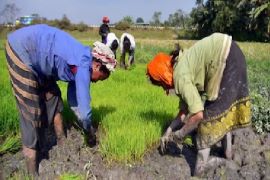
CCEA Approves Increase in MSP for 14
Kharif Crops for Marketing Season 2026-27
The Cabinet Committee on Economic Affairs (CCEA),
chaired by Prime Minister Narendra Modi, has approved an increase in the
Minimum Support Prices (MSP) for 14 Kharif crops for the marketing season
2026-27. The decision aims to ensure remunerative prices for farmers, encourage
agricultural production, and strengthen the country’s food security framework.
More on the News
¨
MSPs for Kharif crops
were increased to ensure remunerative prices to farmers and maintain MSP at
least 1.5 times the all-India weighted average cost of production, in line with
the Union Budget 2018-19 announcement.
¨
The highest absolute
increase in MSP was announced for sunflower seed (₹622 per quintal), followed
by cotton (₹557), nigerseed (₹515), and sesamum (₹500).
¨
The expected margin over
cost of production is highest for moong (61%), followed by bajra and maize
(56%) and tur/arhar (54%), while the remaining crops are estimated to provide a
50% margin.
¨
The government stated
that higher MSPs for pulses, oilseeds, and nutri-cereals (Shree Anna) are aimed
at promoting crop diversification and reducing dependence on cereals.
Minimum Support Price (MSP)
¨
The MSP is a form of
market intervention by the Government to protect agricultural producers against
any sharp fall in farm prices.
¨
MSPs are announced by the
Cabinet Committee on Economic Affairs (CCEA) at the beginning of the sowing
season for certain crops based on the recommendations of the Commission for
Agricultural Costs and Prices (CACP).
The major objectives of MSP are
¨
Providing remunerative
prices to farmers.
¨
Ensuring food security
through procurement for the Public Distribution System (PDS).
¨
Encouraging production of
essential crops.
In formulating the recommendations for
minimum support prices, the CACP takes into account various factors such as –
¨
cost of production (A2+FL
method),
¨
demand and supply
conditions,
¨
inter-crop price parity,
¨
effect on the general
price level,
¨
domestic and international
prices, etc.
Currently, the government announces minimum support
prices (MSPs) for 22 Mandated Crops and FRP (fair and remunerative price) for
sugarcane.In addition, the MSPs of toria and de-husked coconut are fixed based
on the MSPs of rapeseed/mustard and copra, respectively.
Commission for Agricultural Costs &
Prices (CACP)
¨
CACP is an attached
office of the Ministry of Agriculture and Farmers Welfare, Government of India.
¨
It came into existence in
January 1965 as the Agricultural Prices Commission. It was later renamed as
CACP in 1985.
¨
Currently, the Commission
comprises a Chairman, a Member Secretary, one Member (Official), and two
Members (Non-Official).
¨
The non-official members
are representatives of the farming community and usually have an active
association with the farming community.
Pricing Policy for Sugarcane
¨
Sugarcane pricing is
governed under the Sugarcane (Control) Order, 1966, issued under the Essential
Commodities Act.
¨
Before 2009-10, the
government fixed the Statutory Minimum Price (SMP) for sugarcane.
¨
In 2009, SMP was replaced
with the Fair and Remunerative Price (FRP) system after amendments to the
Sugarcane (Control) Order.
¨
FRP includes “reasonable
margins for growers on account of risk and profits” as a statutory factor.
Factors Considered While Fixing FRP: The
Commission for Agricultural Costs and Prices considers:
¨
Cost of sugarcane
production
¨
Returns from alternative
crops
¨
Availability of sugar to
consumers at fair prices
¨
Sugar prices
¨
Recovery rate from
sugarcane
¨
Value of by-products such
as molasses, bagasse, and press mud
¨ Reasonable profit margins for farmers
¨ States may also announce a State Advisory Price (SAP), which is generally higher than the FRP fixed by the Centre.

.jpg)