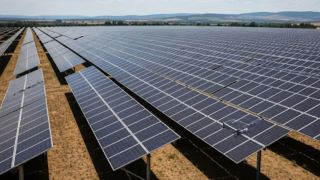
India's Global Leap in Renewable Energy:
3rd Rank in IRENA 2026 Report
India has emerged as a major global player in the
clean energy transition, ranking third globally in renewable energy installed
capacity, according to the Renewable Energy Statistics 2026 released by the
International Renewable Energy Agency (IRENA).
Key Highlights
¨
The country has surpassed
Brazil and now stands behind only China and the United States.
¨ Installed Capacity and
Growth: India’s total non-fossil fuel installed capacity reached 283.46 GW as
of March 31, 2026, including 274.68 GW from renewable energy and 8.78 GW from
nuclear power.Renewable energy capacity has increased 3.6 times since
2014.During FY 2025–26, the country recorded a historic addition of 55.3 GW in
non-fossil capacity, marking the highest-ever annual increase.Solar leads the
energy mix with 150.26 GW, followed by wind at 56.09 GW and large hydro at
51.41 GW.Bioenergy contributes 11.75 GW, and small hydro accounts for 5.17
GW.Distributed Renewable Energy added 16.3 GW in FY 2025–26, driven by rooftop
solar and PM-KUSUM.Integration of battery storage, electric vehicles, and
solar-based household systems is increasing.
¨ Early Achievement of
Climate Target: India achieved 50% of its cumulative installed electricity
capacity from non-fossil sources in June 2025.
¨
This milestone was
reached five years ahead of its 2030 climate target.
¨
Future Targets: India
aims to achieve 500 GW of non-fossil capacity by 2030 as part of its COP26
commitment.
¨
Proposed targets for
2031–35 include a 47% reduction in emissions intensity, 60% power capacity from
non-fossil sources, and creation of a 3.5–4 billion tonne carbon sink.
Significance of Renewable Energy
¨ Climate Change
Mitigation: Renewable energy reduces greenhouse gas emissions by lowering
dependence on fossil fuels, as seen in India achieving 50% installed capacity
from clean sources ahead of its NDC targets, reflecting a strong climate
commitment.
¨
Energy Security: By
promoting domestic sources like solar, wind, and hydro, renewable energy
minimizes reliance on imported fuels and ensures long-term energy stability
during global supply disruptions.
¨
Rural Development and
Electrification: Decentralized systems like rooftop solar and PM-KUSUM enhance
rural electrification, improve agricultural productivity, and reduce dependence
on diesel, strengthening rural livelihoods.
¨ Technological Advancement
and Innovation: Investments in renewables accelerate innovation in technologies
like battery storage, perovskite solar cells, and green hydrogen, with positive
spillover effects across industries.
¨ Alignment with Global
Commitments: The expansion of renewables supports India’s obligations under the
Paris Agreement and contributes to Sustainable Development Goals like clean
energy (SDG 7) and climate action (SDG 13).
 Bill, 2026.jpg)