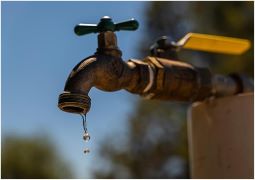
India’s Water Crisis: A Paradox of
Abundance and the Need for Integrated Water Governance
India is facing a complex water crisis that reflects a
deep paradox. Despite receiving nearly 4,000 billion cubic meters of annual
rainfall, the country continues to struggle with water scarcity, inefficient
management, and unequal distribution of resources.
The Paradox of Water Availability
¨
India experiences both
abundance and shortage of water simultaneously. A large share of rainfall flows
unused into rivers and eventually into the sea, mainly due to inadequate
storage and weak water management systems.
Summary
¨
India faces a stark
population-resource paradox, supporting 18% of humanity with only 4% of
freshwater.
¨
While the Ministry of Jal
Shakti leads national missions, the crisis is deepened by irrational crop
patterns and 70% surface water contamination.
¨
Sustaining growth
requires a circular water economy and community-led groundwater budgeting.
Key Facts Regarding Water Availability in
India?
¨
Population-Resource
Paradox: India supports nearly 18% of the world's population but possesses only
4% of global freshwater resources. Approximately 60 Crore people experience
high to extreme water stress. Per capita
water availability has plummeted from over 5,000 cubic meters in 1947 to nearly
1,400 cubic meters today. If it falls below 1,000 cubic meters, the nation will
be officially classified as "water-scarce."
¨
Precipitation and
Usability: While India receives nearly 4,000 BCM (Billion Cubic Metres) of
annual rainfall, only about 1,123 BCM is considered "utilisable." The
gap is due to inadequate storage infrastructure, geological barriers, and the
highly seasonal nature of the monsoon (70% of rain occurs in just 3–4 months).
¨
Current Storage & Reservoir
Status: As of early April 2026, the Central Water Commission (CWC) has flagged
that water levels in 166 monitored reservoirs have fallen to below 45% of total
capacity. Southern India has seen the
steepest drop, with several reservoirs reaching critically low levels, while
North-Eastern states like Arunachal Pradesh remain water-abundant due to high
rainfall and Himalayan runoff.
¨
Invisible Groundwater
Crisis: India is the largest user of groundwater in the world accounting for
about 25% of global groundwater extraction.Recent assessments by the Central
Ground Water Board (CGWB) show that roughly 14% to 17% of assessment units are
"over-exploited" (meaning extraction exceeds replenishment),
particularly in states like Punjab, Haryana, and Rajasthan.
¨
Sector-Wise
Consumption: Agriculture is the largest
consumer, using approximately 85–90% of India's total freshwater, primarily for
water-intensive crops like rice and sugarcane. Industrial and domestic sectors
share the remaining 10–15%, though industrial demand is rising rapidly
alongside urbanization.
What are the Causes and Consequences of
India’s Rising Water Scarcity
|
Category |
Causes |
Consequences |
|
Agriculture & Irrigation |
India remains the world's largest
consumer of groundwater, driven by the massive cultivation of "thirsty"
crops like paddy and sugarcane in regions with low
rainfall. |
Continuous extraction has led to
a dangerous drop in water tables, making farming economically
unviable and causing land subsidence in some agricultural belts. |
|
Urbanization & Planning |
Rapid, unplanned urban growth has led to the paving
over of traditional "catchment areas" like wetlands and ponds that naturally
recharge the ground. |
Major cities frequently face "Day Zero" scenarios
where municipal supply runs dry, forcing a total reliance on expensive
and unregulated private water tankers. |
|
Environmental & Climate |
Climate change has made the monsoon seasons
highly erratic, characterized by long dry spells followed by intense "cloudbursts" that cause runoff rather than
absorption. |
Severe droughts are becoming more frequent,
leading to the desertification of once-fertile soil and the
destruction of local ecosystems and biodiversity. |
|
Pollution & Quality |
Approximately 70% of India's surface
water is contaminated because of the direct discharge of untreated
industrial waste and domestic sewage into rivers. |
Access to clean drinking water is limited, leading to a
high prevalence of water-borne diseases and
chronic health issues from consuming water laced with arsenic and
lead. |
|
Infrastructure Gaps |
Aging distribution networks in Indian
cities are highly inefficient, with nearly 40% of piped
water being lost to leakages and illegal connections before
reaching homes. |
This massive waste of treated water
increases the fiscal burden on the government and leaves
millions of people in informal settlements without any reliable access. |
|
Economic Policy |
Many states provide free or heavily subsidized
electricity for farmers, which removes the financial incentive to
save water and encourages 24/7 pumping from deep wells. |
This "invisible" subsidy has contributed to a
looming 6% loss in India's GDP by 2050 due to the high cost
of mitigating water scarcity and industrial shutdowns. |

 scheme will continue until September 30, 2026.jpg)