India Moves Towards Water-Based Urban
Transport with National Water Metro Policy 2026
Ministry of Ports, Shipping and Waterways has advanced
its plan to introduce “Water Metro” services in 18 cities across India. Along
with this initiative, the ministry has circulated the draft “National Water
Metro Policy, 2026” for inter-ministerial and state-level consultations. The
objective of the policy is to establish a national framework for water-based
urban mobility and promote sustainable transportation systems in Indian
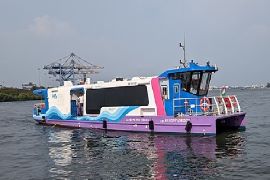
cities.A Water Metro is an urban transport system that uses rivers, lakes, backwaters,
and coastal waterways for public passenger transport. In India, this concept
gained prominence through the Kochi Water Metro, which is regarded as the
country’s first water metro service. The central government now plans to expand
this model to several other cities.
More on the News
¨
Phase I cities include
Guwahati, Srinagar, Patna, Varanasi, Ayodhya, and Prayagraj, while Tezpur and
Dibrugarh in Assam are proposed under Phase II.
¨
The initiative builds
upon the operational success of the Kochi Water Metro and aims to transform
inland waterways into efficient, eco-friendly, and integrated urban transport
corridors.
Water Metro / Water Buses / Water Taxi
¨
A Water Metro is a
mechanically propelled mass passenger transport system operating on inland, coastal,
and other water bodies for the systematic movement of passengers and, where
applicable, vehicles.
¨
It may operate across
intra-city, inter-city, coastal, and inter-island corridors on rivers, canals,
lakes, backwaters, estuaries, creeks, and coastal waters.
¨
Water Metro systems use
modern vessels, floating jetties, automated fare systems, and passenger
information systems to provide organised water-based urban transport services.
¨
Unlike conventional ferry
services, Water Metro systems are designed as high-frequency urban mobility
networks supporting daily commuting, tourism, recreation, and regional
connectivity.
¨
The system provides a
low-cost, low-emission, and congestion-free mobility alternative by leveraging
existing waterways with minimal land acquisition requirements.
Key Features of Water Metro
¨
Green & Low-Emission
Mobility: Promotes electric, battery-operated, solar-assisted, and hybrid
ferries to reduce carbon emissions and fuel consumption, with hybrid vessels
used for longer routes and difficult operational conditions.
¨
Mass Public Transport
System: Functions as a scheduled public transport system for daily urban
mobility while also supporting tourism and recreational activities.
¨
Standardisation &
Safety: Ensures standardised vessel designs, charging systems, terminals, and
navigational infrastructure in compliance with national maritime and inland
vessel safety regulations.
¨
Multimodal Integration:
Integrates Water Metro services with metro rail, buses, roads, feeder systems,
pedestrian pathways, and last-mile connectivity infrastructure.
¨
Ecosystem-Based
Development: Develops a comprehensive ecosystem including vessels, pontoons,
jetties, charging and bunkering facilities, passenger terminals, navigational
aids, digital systems, and emergency rescue support.
¨
Indigenous Manufacturing:
Encourages vessel construction by Indian shipyards under the Aatmanirbhar
Bharat initiative through standardisation and bulk procurement to reduce costs
and improve scalability.
¨
Flexible Funding Models:
Supports implementation through joint Centre-State funding, State-funded
projects, PPP models, and fully Central-funded projects for strategic National
Waterway corridors.
¨
Urban & Climate
Resilience: Improves connectivity to remote and water-locked regions, reduces
urban congestion, and provides transport resilience during floods and
infrastructure disruptions.
Draft National Water Metro Policy, 2026
¨
The Draft National Water
Metro Policy, 2026, prepared by the Ministry of Ports, Shipping & Waterways
(MoPSW), seeks to establish a coordinated national framework for integrating
inland waterways into India’s urban transport ecosystem.
¨
It aims to position Water
Metro systems alongside other Mass Rapid Transit Systems (MRTS) such as metro
rail, BRTS, and tramways to promote sustainable, multimodal, and low-emission
urban mobility.
¨
Key Objectives: The
policy promotes green propulsion technologies (electric and hybrid ferries),
standardisation in vessel and terminal design, passenger safety, technical
efficiency, affordable public transport, multimodal integration, and indigenous
manufacturing.
¨
Planning Criteria: Water
Metro projects will be prioritised in cities with continuous or semi-continuous
navigable waterways, urban agglomerations with populations above one million,
tourism-intensive corridors, and flood-prone or water-locked regions requiring
improved connectivity.
¨
Operational &
Infrastructure Components: The framework provides for modern terminals and
floating jetties, passenger amenities, automated fare collection systems,
passenger information systems, charging and bunkering infrastructure,
GPS/AIS-based navigational aids, energy management systems, and backup power
infrastructure.
¨
Ecosystem-Based
Development Approach: The policy adopts an integrated ecosystem model covering
vessels, pontoons, terminals, charging infrastructure, navigational systems,
and seamless multimodal integration with existing transport networks.
¨
Fare & Revenue
Framework: The policy emphasises affordable and inclusive public transport rather
than profit maximisation, while encouraging non-fare revenue through
advertising, retail spaces, waterfront commercial development, and tourism
activities.
¨ Funding Models: Multiple implementation models are proposed, including joint Centre–State funding, fully State-funded projects, Public-Private Partnerships (PPP), and fully Centre-funded initiatives.
¨ Performance Monitoring: Performance assessment will be based on indicators such as safety standards, punctuality, ridership levels, operational efficiency, fuel savings, and environmental outcomes.
.jpg)