India
Takes Firm Stand on UNSC Reforms: Strongly Opposes “Two-Tier” Permanent
Membership System
- The debate over reforms in the United Nations Security
Council (UNSC) has once again gained momentum. During the recently held
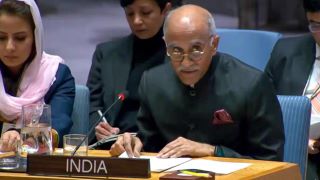
Intergovernmental Negotiations (IGN), India strongly opposed the proposal for
creating a “two-tier” system for permanent membership. According to India, such
a proposal would not only promote inequality but also weaken the very objective
of UNSC reforms.
What is the “Two-Tier” System?
Under this proposal, permanent membership
would be divided into two categories
- ¨
Permanent members with
full rights (like the current P5: USA, Russia, China, France, and the UK)
- ¨
New permanent members
with limited rights, who may not be granted powers such as the veto
- India argues that this model would create an
incomplete and discriminatory structure, where new permanent members would
effectively remain second-class members.
Outcome of the Inter-Governmental
Negotiations (IGN)
- ¨ Rejection of New Category
Without Veto: India rejected proposals to create a new category of permanent
members without veto powers, warning that such a move would complicate
negotiations and entrench inequality within the Council.
- Support for G4 Proposal:
India supported the G4 proposal (India, Brazil, Germany, Japan), under which
new permanent members would not exercise veto powers for 15 years, followed by
a review.
- Comprehensive Reform
Emphasis: India reiterated that meaningful reform must address both membership
expansion and veto power simultaneously, as piecemeal approaches would fail to
resolve structural distortions.
- Support for African
Position: India backed the African demand that new permanent members should
enjoy veto powers as long as the veto exists, highlighting concerns of
historical injustice and unequal representation.
United Nations Security Council (UNSC)
- ¨
The United Nations
Security Council is one of the principal organs of the United Nations and is
primarily responsible for maintaining international peace and security.
- Originally consisting of
11 members, the Council was expanded to 15 members in 1965 through an amendment
to the UN Charter, comprising 5 permanent members and 10 non-permanent members
elected for two-year terms by the United Nations General Assembly.
- Each member has one vote,
and all UN member states are obligated to comply with the decisions of the
Security Council under the UN Charter.
- The Council determines
the existence of threats to peace or acts of aggression and initially seeks
peaceful resolution of disputes through dialogue and negotiation.
- It can impose diplomatic and economic sanctions, authorize peacekeeping operations, and, as a last resort, approve the use of military force to maintain or restore international peace and security.
- Any state, even if not a UN member, can bring a dispute before the Council for consideration.
- The Council has a rotating presidency that changes monthly and is supported by various subsidiary organs that assist in its functioning.
Need for UNSC Reform
- ¨ Outdated Structure: The
United Nations Security Council was established in 1945 and does not reflect
present-day geopolitical realities, with the only major reform in 1965
expanding non-permanent membership only.
- Imbalance in Power: The ratio of permanent to non-permanent members shifted from 5:6 to 5:10, increasing the relative power of veto-wielding members.
- Lack of Representation and Legitimacy: India identified two core problems—membership structure and veto system—arguing that the current system leads to a lack of representativeness and reduced credibility of the Council.
- Ineffective Veto Restraint Mechanisms: A 2022 United Nations General Assembly resolution mandates discussion after veto use, vetoes continue frequently, and are often driven by national interests.
- “Effective Veto” Beyond P5: Even non-permanent members informally exercise an “effective veto” by blocking press statements and sanctions decisions.
 Programme.jpg)