Rising Tension in the Indian Ocean: US
Submarine Sinks Iranian Frigate IRIS Dena
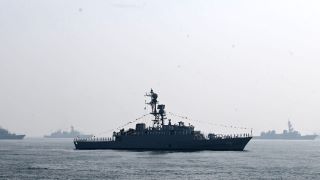
Tensions in the Indian Ocean Region (IOR) escalated
when a US submarine torpedoed and sank the Iranian frigate IRIS Dena. The
incident occurred approximately 40 nautical miles off Galle, off the southern
coast of Sri Lanka. This action has brought the ongoing tensions between the
US, Israel, and Iran closer to the Indian Ocean region.This incident is also
considered significant because it marks the first time since World War II that
the US has torpedoed and sunk an enemy ship. This attack has raised new concerns
about security and strategic balance in the region.The IRIS Dena was a modern
frigate of the Iranian Navy, considered capable of long-range maritime
operations. Experts believe that this incident could lead to increased naval
activity and surveillance in the Indian Ocean region.
What is the International Convention on
Maritime Search and Rescue (SAR)?
¨
The SAR Convention is an
international agreement adopted in 1979 under the International Maritime
Organization (IMO). Its objective is to ensure prompt search and rescue
assistance for persons in distress at sea.
Key Features
¨
Global Search and Rescue
System: The world's oceans are divided into various SAR zones, with each
coastal state responsible for coordinating rescue operations within its region.
¨
Responsibility to Rescue:
This convention requires ships and coastal states to assist persons in distress
at sea, regardless of their nationality or status.
¨
Coordination Mechanism:
The establishment of Rescue Coordination Centers (RCCs) is provided for the organization
and management of search and rescue operations.
¨
International
Cooperation: Cooperation between neighboring countries is encouraged for prompt
rescue and evacuation.
India and SAR
¨
India is a signatory to
the SAR Convention, 1979, and ratified it in 2001. In India, the Indian Coast
Guard (ICG) coordinates rescue operations in the Indian Search and Rescue
Region (ISRR), where the Director General, ICG, serves as the National Maritime
Search and Rescue Coordinating Authority (NMSARCA). The ICG also operates a
voluntary ship reporting system called INDSAR, which helps monitor ships and
provide rapid response to maritime distress situations.
¨
Significance: SAR ensures
humanitarian assistance at sea and strengthens maritime security and
international cooperation. SAR is a key pillar of global maritime law,
underpinning maritime governance in collaboration with conventions such as the
International Convention for the Safety of Life at Sea (SOLAS), 1974, and the
United Nations Convention on the Law of the Sea (UNCLOS), 1982. IRIS Dena was
attacked while returning from participating in the International Fleet Review
(IFR) 2026 held in Visakhapatnam. IFR is organised by the Indian Navy with the
aim of building trust, interoperability, and “bridges of friendship” between
navies globally. The attack on a partner vessel shortly after leaving Indian
waters puts New Delhi in a sensitive diplomatic position, where it has to
balance its strategic partnership with the US and its civilisational and energy
ties with Iran.
What is a Torpedo
¨
A torpedo is a
self-propelled underwater missile designed to destroy ships or submarines.
Unlike naval mines, it moves freely underwater, follows a target, and detonates
at the most effective point, usually beneath the ship's hull.
Evolution of the Torpedo
¨
Early Origins: The term
'torpedo' originally referred to underwater explosive devices and sea mines.
¨
During the Napoleonic
Wars (1803–1815), inventor Robert Fulton, inspired by the electric ray fish,
experimented with underwater explosive devices.
¨
Spar Torpedoes: Early
naval forces used 'spar torpedoes,' in which an explosive was mounted on a long
pole and detonated when it collided with enemy ships.
¨
These weapons were
effective, but extremely dangerous for the attacking crew.
¨
Invention of the Modern
Torpedo: In 1866, engineer Robert Whitehead developed the first self-propelled
torpedo. It was powered by compressed air and featured automatic depth control,
allowing it to travel independently underwater and attack enemy ships from a
distance.
¨
This invention
transformed the torpedo into a true underwater guided weapon.
¨
Function: Modern
torpedoes use electric batteries or thermal propulsion systems and can travel
at speeds exceeding 50 knots, covering distances of over 50 kilometers. They
feature advanced guidance systems, onboard sensors, and computers to locate
targets and maintain appropriate attack depths. Modern torpedoes rely primarily
on acoustic homing technology. Active acoustic torpedoes emit sonar signals and
detect echoes from targets, while passive acoustic torpedoes follow the noise
generated by engines or propellers.
¨ Torpedoes in the World
Wars: Submarines emerged as the most effective platform for torpedo attacks
during the World Wars. In World War II, Germany's U-boat fleet sank thousands
of Allied ships, leading to the development of convoy systems, sonar detection
technology, and anti-submarine warfare strategies.
Types of Modern Torpedoes: Modern
torpedoes are primarily of two types
¨ Heavyweight torpedoes:
Often launched from submarines and used to destroy large warships.
¨ Lightweight torpedoes: Launched from ships, aircraft, or helicopters to target submarines. Some systems combine missile and torpedo technology, increasing attack range.
¨ Strategic Importance: Torpedoes remain vitally important in modern naval warfare because they are stealthy, accurate, and highly destructive. Because they are difficult to detect underwater, submarines can launch stealthy torpedo attacks, making them highly effective weapons in maritime conflicts.
 Bill, 2026.jpg)