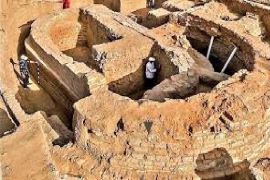
Archaeological structures dating back
nearly 9,000 years have been identified beneath Lake Huron in North America
¨
Archaeological structures
dating back nearly 9,000 years have been identified beneath Lake Huron in North
America.
¨
These sites belong to the
Paleoindian and Early Archaic periods.
¨
The structures are
located on the Alpena-Amberley Ridge, which served as a land bridge between
northeastern Michigan and southern Ontario during the last Ice Age.
¨
Underwater archaeology
studies evidence of human activity preserved beneath lakes, seas and rivers.
¨
Lake Huron is one of the
five Great Lakes of North America.
¨
Its cold, deep and
low-oxygen waters help preserve organic and stone remains for long periods.
¨
Submerged evidence of
prehistoric settlements and hunting activities has been found in the Great
Lakes Basin.
¨
The Alpena-Amberley Ridge
emerged when water levels were lower during the Ice Age.
¨
The ridge contains
caribou hunting features such as pathways, hunting blinds and stone tool
storage areas.
¨
A site known as “Drop 45
Drive Lane” is located about 120–121 feet below the surface southeast of
Alpena, Michigan.
¨
Researchers from
University of Michigan first identified archaeological evidence beneath the
lake in 2008 and 2009.
¨
The research team
included archaeologists John O'Shea and Guy Meadows.
¨ More than 80 locations containing stone structures have been identified.
¨ The findings were published in Proceedings of the National Academy of Sciences.