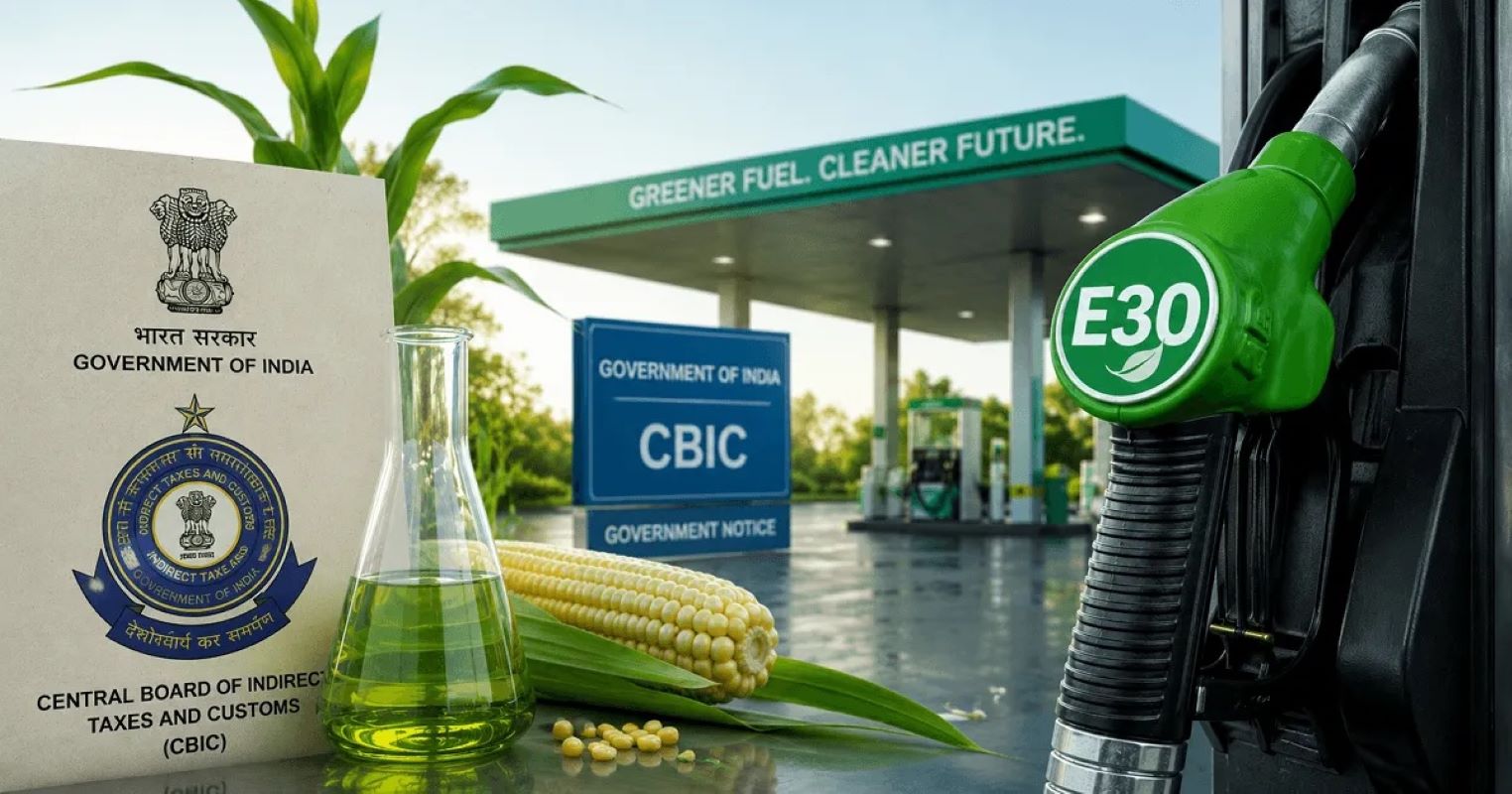
Central Government exempted E22–E30
ethanol-blended petrol from central excise duty
Central Government has exempted 22%–30%
ethanol-blended petrol (E22–E30 fuels) from Central Excise Duty to promote
higher ethanol blending and advance India’s biofuel, energy-security, and
clean-mobility objectives.
More on the News
¨
The exemption has been granted
through a notification issued by the Department of Revenue, Ministry of
Finance.
¨
Earlier, excise-duty
exemption was available for blending ethanol with petrol up to the notified
limits under the Ethanol Blending Programme (EBP). The latest notification
extends the benefit to higher ethanol blends.
The notified categories include:
¨
E22: 22% ethanol and 78%
petrol.
¨
E25: 25% ethanol and 75%
petrol.
¨
E27: 27% ethanol and 73%
petrol.
¨
E30: 30% ethanol and 70%
petrol.
The measure comes after India achieved the 20% ethanol
blending target ahead of schedule, marking the next phase of ethanol-based fuel
adoption.The move is expected to encourage automobile manufacturers, oil
marketing companies, and fuel retailers to prepare for higher ethanol-blend
fuels.
Ethanol Blending Programme (EBP)
¨
Launched in 2003, it is
implemented by Public Sector Oil Marketing Companies (OMCs) under the Ministry
of Petroleum and Natural Gas (MoPNG).
¨
The programme seeks to
blend ethanol with petrol to reduce crude oil imports, enhance energy security,
and lower carbon emissions.
Ethanol for blending is produced from:
¨
C-heavy molasses,
¨
B-heavy molasses,
¨
Sugarcane juice and
syrup,
¨
Damaged food grains,
Maize and surplus rice permitted by the Government.The
programme is supported by the National Policy on Biofuels, 2018, which promotes
the use of biofuels in the transport sector.India has already achieved 20%
ethanol blending (E20), thus meeting the accelerated deadline of 2025-26, and 5
years ahead of the original target year of 2030.
Significance
¨ Strengthens Energy
Security: Reduces dependence on imported crude oil and diversifies India’s
transport-fuel mix.
¨ Supports Biofuel Economy:
Expands demand for domestically produced ethanol and strengthens the biofuel
value chain.
¨
Benefits Farmers: Creates
additional market opportunities for sugarcane and grain-based feedstocks,
supporting rural incomes.
¨ Promotes Cleaner Mobility: Higher ethanol blends can help reduce greenhouse gas emissions and support India’s decarbonisation goals.
¨ Advances Aatmanirbhar Bharat: Encourages indigenous fuel production and reduces vulnerability to global oil-price fluctuations.