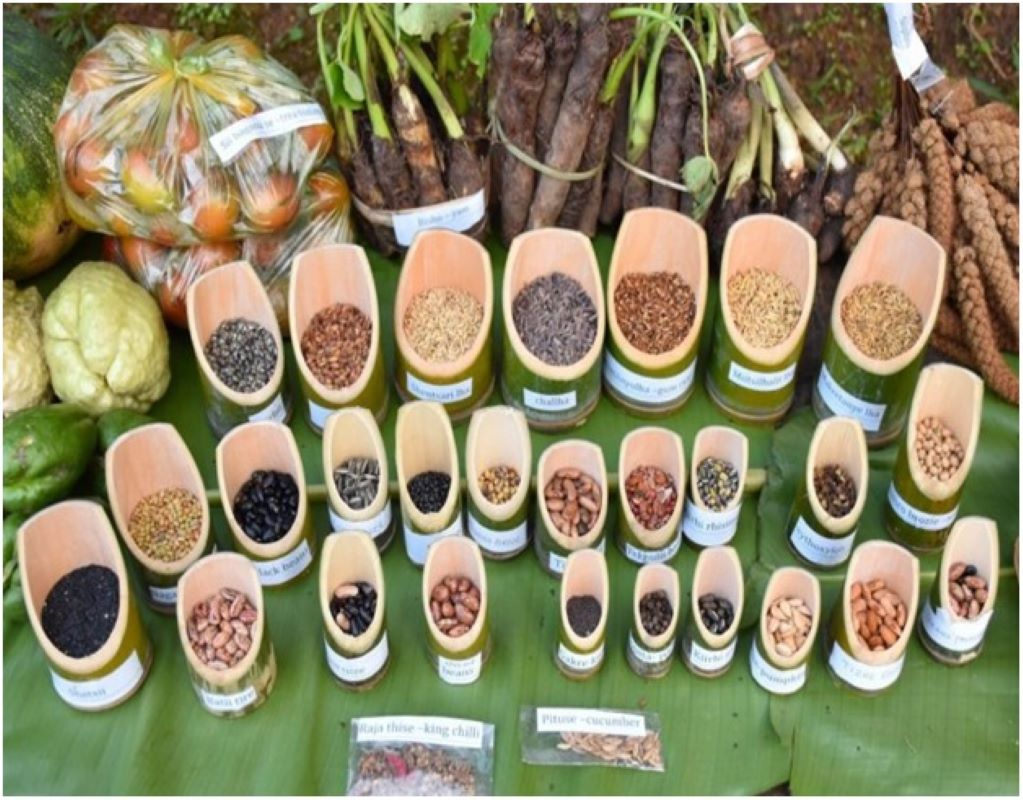
BIS Issues New Standard for Community Seed
Banks to Promote Conservation of Indigenous Crop Varieties
The Bureau of Indian Standards has introduced a new
Indian Standard (IS) aimed at strengthening the management of Community Seed
Banks (CSBs) and promoting the conservation of indigenous crop varieties across
the country. The initiative seeks to support sustainable agriculture, enhance
seed security, and preserve India's rich agricultural biodiversity.
More on the News
¨
The new standard, IS
20201:2026 Community Seed Bank Management – Requirements, has been developed by
the Biodiversity Sectional Committee (EED 06) under the Environment and Ecology
Department (EED) of BIS and provides a comprehensive management framework for
Community Seed Banks across India.
¨
This standard is a
voluntary certifiable management system standard.
¨
It aims to strengthen
conservation of indigenous, traditional and climate-resilient crop varieties,
addressing concerns of genetic erosion, loss of agricultural biodiversity and
increasing climate-related risks to agriculture.
¨
The framework lays down
requirements relating to the establishment, governance, seed collection,
storage, regeneration, documentation, exchange mechanisms and capacity building
of Community Seed Banks.
¨
The initiative seeks to
promote community-led conservation of plant genetic resources, preserve
traditional agricultural knowledge, enhance seed security and contribute to
sustainable agriculture and SDG 2 (Zero Hunger).
Key Features of the BIS Standard
¨
Standardized Framework
for Establishment and Management: The standard lays down comprehensive
requirements for the establishment, governance and operational management of
Community Seed Banks.
¨
Seed Collection,
Conservation and Regeneration: It provides guidelines for seed identification,
collection, accession, storage, regeneration and periodic renewal to maintain
seed viability and genetic purity.
¨
Documentation and
Traceability: The framework emphasizes systematic documentation, inventory
management, record-keeping and traceability of conserved seed varieties.
¨
Community Participation
and Governance: It promotes farmer-led management, participatory
decision-making and involvement of local institutions, self-help groups and
community organizations.
¨
Knowledge Preservation:
The standard encourages documentation and transmission of traditional knowledge
related to seed selection, cultivation practices and crop conservation.
¨
Capacity Building: It
highlights the need for training, awareness generation and technical support to
ensure the long-term sustainability of Community Seed Banks.
Significance
¨
Strengthening Seed &
Food Security: Community-managed seed systems improve farmers’ access to
locally adapted seeds, reduce dependence on external seed markets and
contribute to food and nutritional security. The initiative also advances SDG 2
(Zero Hunger) by supporting sustainable food production systems and conserving
agricultural genetic resources.
¨
Preserving Traditional
Knowledge and Community Participation: The framework safeguards indigenous
agricultural knowledge related to seed selection, cultivation and conservation,
while promoting farmer-led governance and community participation in seed
management.
¨
Conserving
Agrobiodiversity and Strengthening Biodiversity Governance: The standard
strengthens conservation of indigenous crop varieties, farmer-developed seeds
and landraces, helps address genetic erosion, and complements frameworks such
as the PPV&FR Act, 2001 and Biological Diversity Act, 2002.
¨ Enhancing Climate Resilience and Sustainable Agriculture: Traditional crop varieties often possess traits such as drought tolerance, flood resilience and pest resistance. Their conservation supports climate-resilient farming and promotes sustainable agricultural systems adapted to local conditions.
¨ Supporting Long-Term Agricultural Sustainability: By institutionalising community-based conservation of plant genetic resources, the standard strengthens India’s capacity to maintain diverse, resilient and productive agricultural systems in the face of climatic and market uncertainties.

.jpg)