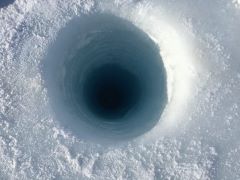
Researchers have identified thriving microbial
communities hundreds of meters beneath the Ross Ice Shelf in Antarctica
¨
Researchers have
identified thriving microbial communities hundreds of meters beneath the Ross
Ice Shelf in Antarctica.
¨
The findings were
published in 2022 in Nature Communications.
¨
In 2024, a detailed
description of a functional microbial community in seawater beneath the ice
shelf was published.
¨
The Ross Ice Shelf is the
largest ice shelf in Antarctica.
¨
It is a floating
extension of the Antarctic ice sheet.
¨
The cavity beneath the
shelf contains seawater that remains dark, extremely cold and isolated from
direct sunlight for long periods.
¨
The microbial community
includes aerobic lithoautotrophic archaea and bacteria.
¨
Heterotrophic
microorganisms that break down organic carbon are also present in the
community.
¨
These microbes obtain
energy through chemosynthesis using ammonium, nitrite and sulfur compounds.
¨
This process does not
depend on sunlight.
¨ Scientists used metagenomics and metatranscriptomics to study microbial DNA and active gene expression beneath the ice.
¨ These techniques helped identify community structure and metabolic activity in environments where direct cultivation is difficult.