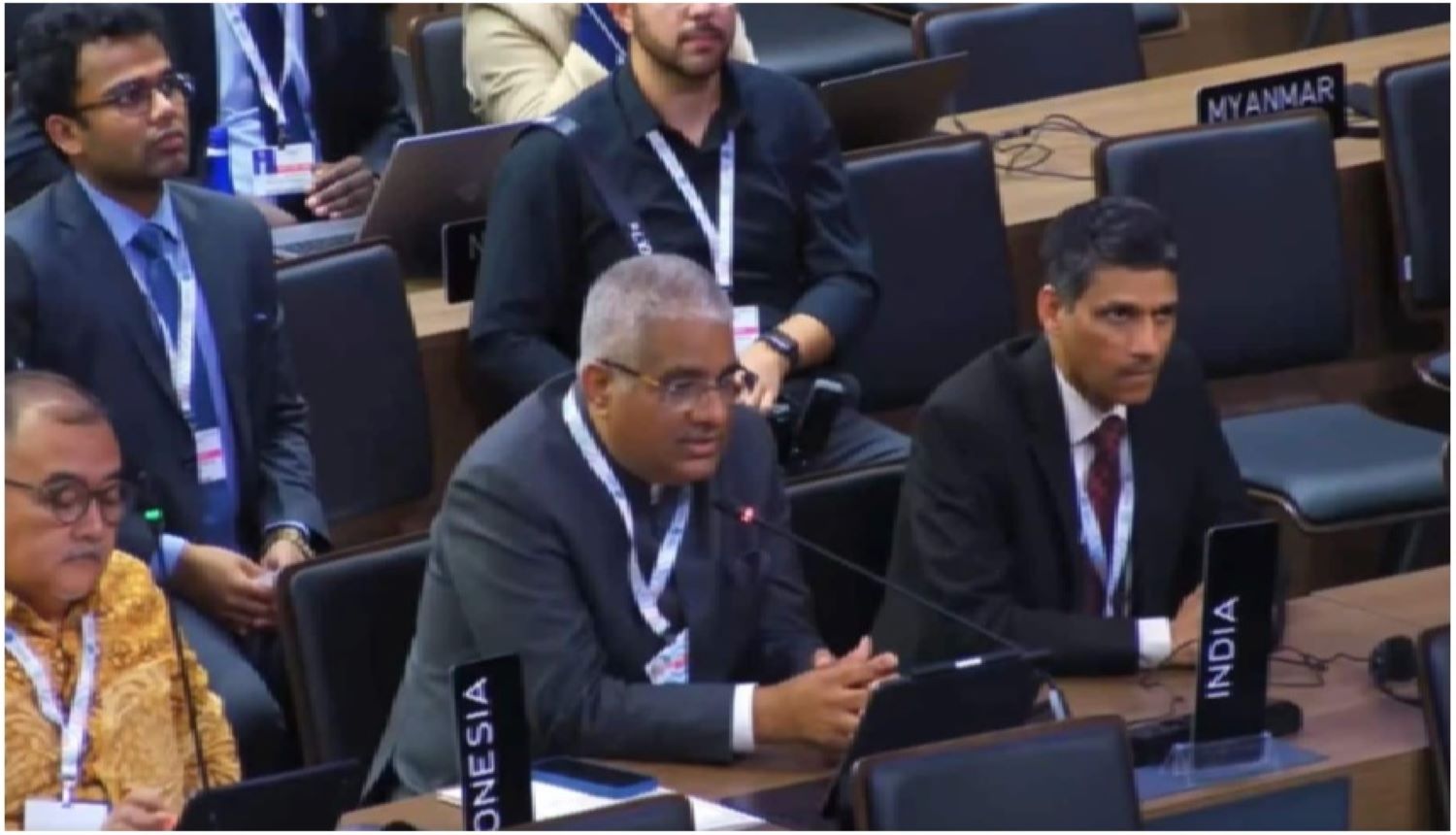
Agreement Reached at FATF Plenary in Paris
to Intensify Global Action Against Emerging Financial Crime Threats
At the Financial Action Task Force (FATF) plenary
meeting held in Paris—under the presidency of the United Kingdom—an agreement
was reached to accelerate global action against emerging financial crime
threats, specifically the misuse of virtual assets, financial fraud, and 'scam
compounds.' Regarding the regulation of virtual assets: following the FATF
ministerial declaration of April 2026, the plenary agreed to initiate a
targeted review and an accelerated follow-up process to strengthen the
implementation of FATF standards concerning virtual assets (VAs) and virtual
asset service providers (VASPs) in jurisdictions with significant virtual asset
activity. The findings of this review, expected in June and October 2027, will
focus on risks related to money laundering, terrorist financing, and
proliferation financing.
Addressing Fraud and Scam Compounds: As part of its
roadmap to combat fraud, the FATF approved a report examining illicit financial
flows linked to 'scam compounds,' with the objective of disrupting organized
criminal networks and the emerging 'crime-as-a-service' economy.
Removal from Enhanced Monitoring: Bulgaria, Côte
d’Ivoire, the Democratic Republic of the Congo, and Monaco have been removed
from the FATF 'grey list' after successfully completing their action plans and
undergoing successful on-site evaluations. The FATF also expressed concern
regarding Vietnam's slow progress in addressing strategic deficiencies within
its anti-money laundering and counter-terrorist financing framework.
Introduction to the FATF
¨
Establishment: The FATF
is an intergovernmental organization established in 1989 at the initiative of
the G7 countries; its headquarters are in Paris, France.
¨
Mandate: It serves as a
global watchdog against money laundering, terrorist financing, and
proliferation financing. Initially focused on money laundering, its mandate was
expanded in 2001 to include terrorist financing, and in 2012 to include
proliferation financing.
¨
Decision-making Body: The
FATF Plenary is the organization's decision-making body, typically meeting
three times a year.
¨
Membership: The FATF has
40 members, comprising 38 jurisdictions and two regional organizations—the
European Commission and the Gulf Cooperation Council (GCC). Russia’s membership
has been suspended since February 2023.
¨
India and the FATF: India
became an observer in 2006 and a full member in 2010. It is also a member of
the Asia/Pacific Group (APG) and the Eurasian Group (EAG), both of which are
FATF-style regional bodies.
¨
India’s Vivek Agrawal
assumed the position of Vice-President of the FATF on July 1, 2026.
FATF Monitoring Lists:
¨
Grey List: This includes
jurisdictions under increased monitoring that have committed to addressing
strategic deficiencies in combating money laundering, terrorist financing, and
proliferation financing within an agreed-upon timeframe.
¨
Black List: This consists
of high-risk jurisdictions subject to a "call for action" due to
serious deficiencies in their efforts to combat money laundering, terrorist
financing, and proliferation financing. As of October 2026, this includes North
Korea (DPRK), Iran, and Myanmar.