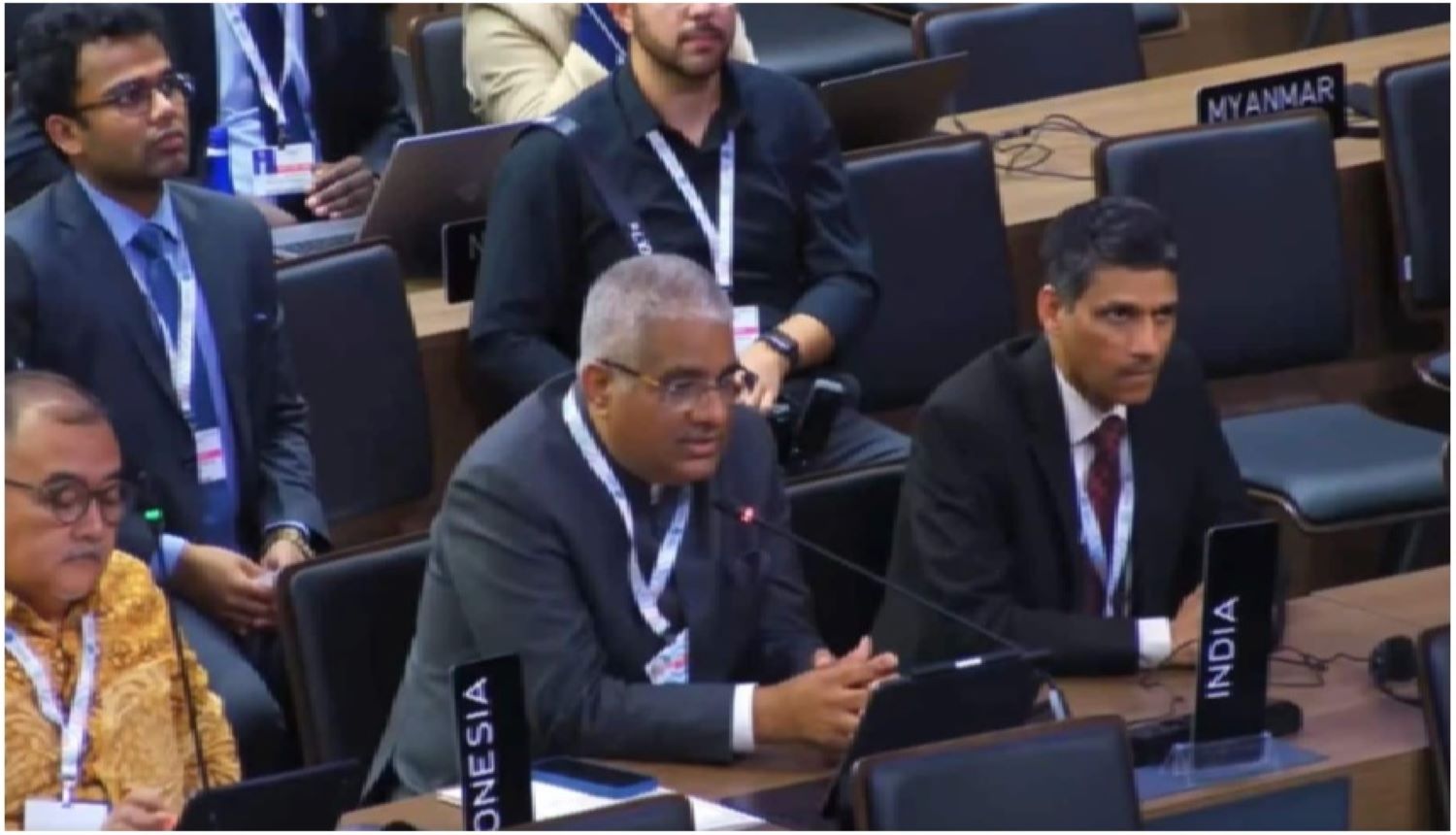
Discussed at ESTIC-2026.jpg)
Carbon Capture, Utilisation and Storage
(CCUS) Discussed at ESTIC-2026
Carbon Capture, Utilisation and Storage (CCUS) is one
of the emerging energy technologies that can play an important role in reducing
carbon dioxide emissions and addressing climate change. The technology was
discussed at the Emerging Science, Technology and Innovation Conclave
(ESTIC-2026), held from 27 to 29 October 2026 at Bharat Mandapam, New Delhi.
Carbon Capture, Utilisation and Storage
(CCUS)
¨
CCUS is a technology that
captures carbon dioxide (CO₂) emissions from industrial facilities and power
plants before they are released into the atmosphere. The captured carbon
dioxide can either be used to manufacture useful products or safely stored
underground.
More on the News
¨
ESTIC-2026: The second
edition of the conclave was organised by the Council of Scientific and
Industrial Research (CSIR) under the theme “Creative Minds, Catalyzing Science,
Empowering Technologies”.
¨
India’s decarbonisation
challenge: CCUS is gaining attention as a potential pathway to reduce emissions
from hard-to-abate industrial sectors while supporting India’s Net Zero target
by 2070.
Understanding CCUS
¨
CCUS involves capturing
carbon dioxide (CO₂) from industrial sources or other emission streams before
it enters the atmosphere, followed by its utilisation in useful products or permanent
storage in geological formations.
Key Stages:
¨
Capture: CO₂ is separated
from industrial emissions or other sources.
¨
Purification and
compression: The captured CO₂ is processed to make it suitable for
transportation and subsequent use or storage.
¨
Transportation: CO₂ is
transported through pipelines, ships or other suitable modes.
¨
Utilisation or storage:
CO₂ is converted into products or injected into suitable geological formations
for long-term storage.
¨
Major storage pathways:
These include depleted oil and gas reservoirs, deep saline aquifers and
suitable basalt formations.
¨
Carbon utilisation:
Captured CO₂ can serve as a feedstock for building materials, chemicals,
synthetic fuels, polymers and biological products. The climate benefits vary by
application and depend on lifecycle emissions.
¨
CCUS hubs and clusters:
Multiple industrial emitters can be connected to shared CO₂ transport and
storage infrastructure, potentially reducing costs and enabling deployment at
scale.
Need and Significance
¨
Addressing a major
emissions challenge: Emissions from hard-to-abate industrial sectors and
thermal power generation are expected to reach nearly 2,300 million tonnes per
annum by 2030. CCUS offers a pathway to address emissions that are difficult to
eliminate through electrification and renewable energy alone.
¨
Achieving Net Zero by
2070: CCUS can complement renewable energy, energy efficiency and industrial
electrification, particularly where industrial processes require high
temperatures or carbon-based inputs.
¨
Decarbonising essential
industries: It can help reduce emissions from steel, cement, chemicals,
refineries and fertilisers while allowing the continued production of essential
industrial goods.
¨
Supporting low-carbon
hydrogen and industrial innovation: Carbon capture can support hydrogen
production from fossil fuels. Captured CO₂ can also be used in concrete,
chemicals and synthetic fuels, subject to the emissions and lifecycle impacts
of the complete production pathway.
Government Initiatives and Pilots
¨
Union Budget 2026–27:
Proposed an outlay of ₹20,000 crore over five years to advance CCUS
technologies in five sectors—power, steel, cement, refineries and
chemicals—with a focus on improving readiness for end-use applications.
¨
CCUS R&D Roadmap,
2025: Launched by the Department of Science & Technology in December 2025,
the roadmap provides strategic direction for research, funding, technology
development and deployment, with a focus on commercial readiness.
¨
Demonstration
infrastructure: In May 2026, IIT Bombay inaugurated India’s first integrated
CCUS field laboratory, capable of capturing up to 3 tonnes of CO₂ per day from
industrial emissions and ambient air, while supporting utilisation and
geological-storage research.
¨
NITI Aayog CCUS Policy
Framework: Released in November 2022, the report examines CCUS as an emissions
reduction strategy for deep decarbonisation of hard-to-abate sectors and
outlines sector-specific policy interventions for its deployment.