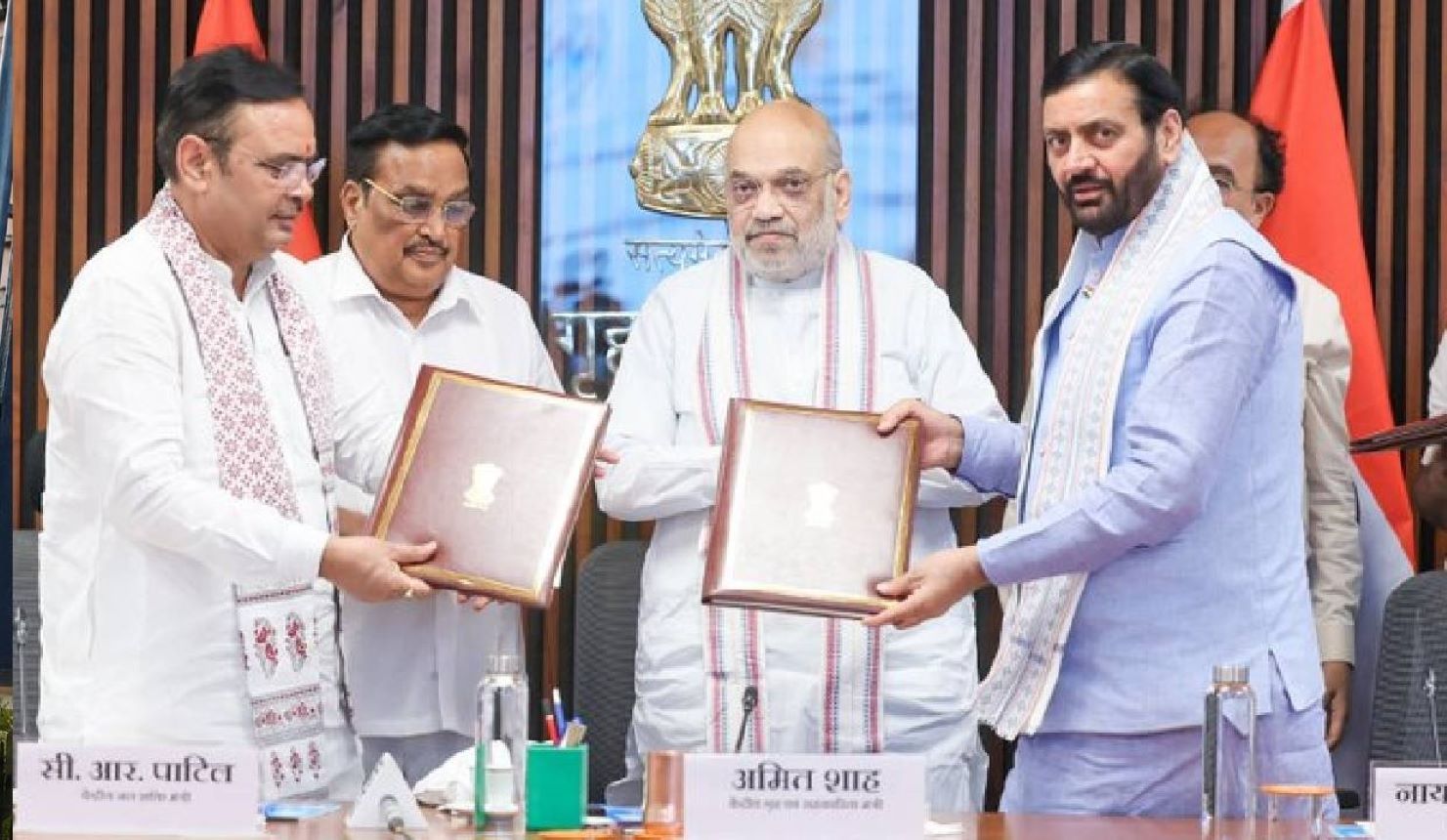
Haryana and Rajasthan Sign MoU to
Implement Upper Yamuna Water Sharing Agreement
In a major step towards resolving a long-pending
inter-state water issue, Haryana and Rajasthan have signed a Memorandum of
Understanding (MoU) to implement the 1994 Upper Yamuna Water Sharing Agreement.
The agreement will enable Rajasthan to receive its allocated share of Yamuna
water through dedicated infrastructure after nearly 32 years, marking a
significant milestone in cooperative water management.
Key Highlights of the Agreement
¨
Under the agreement,
approximately 580 million Cubic Metres (MCM) of surplus Yamuna water available
during the monsoon season (July–October) will be supplied annually to
Rajasthan.
¨
Water will be released
from the Hathnikund Barrage (Haryana) and conveyed through three underground
pipelines (over 3.6 m in diameter) routed along the Western Yamuna Canal
System.
¨
Around 300 km of
underground pipeline infrastructure will be constructed between Hathnikund
Barrage and Rajasthan at an estimated cost of ₹3,900 crore.
¨
The project will ensure a
reliable drinking water supply to the water-stressed districts of Churu, Sikar
and Jhunjhunu (Shekhawati region) in Rajasthan, besides benefiting Bhiwani and
Fatehabad districts of Haryana.
¨
The agreement is also
expected to accelerate the implementation of the Renuka, Kishau and Lakhwar
Multipurpose Dam Projects envisaged under the 1994 Upper Yamuna Water Sharing
Agreement.
About the 1994 Upper Yamuna Water Sharing
Agreement
¨
The Upper Yamuna Water
Sharing Agreement was signed on 12 May 1994 for the allocation of the
utilisable surface waters of the Upper Yamuna Basin among the basin States.
¨
The agreement was signed
by the Governments of Haryana, Uttar Pradesh, Rajasthan, Himachal Pradesh, and
National Capital Territory (NCT) of Delhi.
¨
Following the creation of
Uttarakhand in 2000, it also became a party to the agreement.
Objectives of the Agreement
¨
To ensure equitable
sharing of the utilisable surface waters of the Upper Yamuna Basin.
¨
To establish a scientific
mechanism for regulating seasonal water releases.
¨
To facilitate coordinated
development of storage reservoirs and water infrastructure.
¨
To improve drinking water
supply, irrigation and overall basin management through inter-State
cooperation.
Reasons Behind the 32-Year Delay
¨
Lack of Water Conveyance
Infrastructure: No dedicated canal or underground pipeline existed to transport
Rajasthan’s allocated Yamuna water from the Hathnikund Barrage.
¨
Delay in Project
Planning: Preparation of the Detailed Project Report (DPR) and finalisation of
the underground pipeline design were significantly delayed.
¨
Inter-State
Administrative Differences: Haryana and Rajasthan took years to reach consensus
on cost sharing, financial responsibilities, land acquisition, water release
protocols, operation and maintenance, and monitoring arrangements.
¨
Delay in Upstream Dam
Projects: The slow implementation of the Renuka, Kishau, and Lakhwar Dam
projects delayed augmentation of water availability in the Upper Yamuna Basin.
¨
Prolonged Administrative
Processes: Extended inter-governmental consultations and administrative delays
postponed the implementation of the 1994 agreement.
Significance of the Agreement
¨
Long-Pending Implementation
of the 1994 Agreement: Operationalises a water-sharing arrangement that
remained pending for nearly 32 years, enabling Rajasthan to utilise its
allocated share of Yamuna waters.
¨
Strengthening Water
Security: Provides a long-term solution to the drinking water needs of the
water-stressed Shekhawati region (Churu, Sikar and Jhunjhunu) while also
benefiting parts of Haryana.
¨
Efficient Utilisation of
Monsoon Surplus: Enables productive use of surplus monsoon flows that
previously went downstream unused, while also supporting groundwater recharge
through storage in ponds.
¨ Boost to Cooperative Federalism: Demonstrates successful resolution of a long-pending inter-State water issue through dialogue and consensus, strengthening cooperative federalism and institutional coordination.Z
¨ Catalysing Basin Infrastructure Development: Accelerates the implementation of the Renuka, Kishau and Lakhwar Multipurpose Dam Projects, enhancing water storage, improving basin management, and ensuring long-term water availability.


 Certificate for Indigenous Netra AEW&C System to the Indian Air Force.jpg)