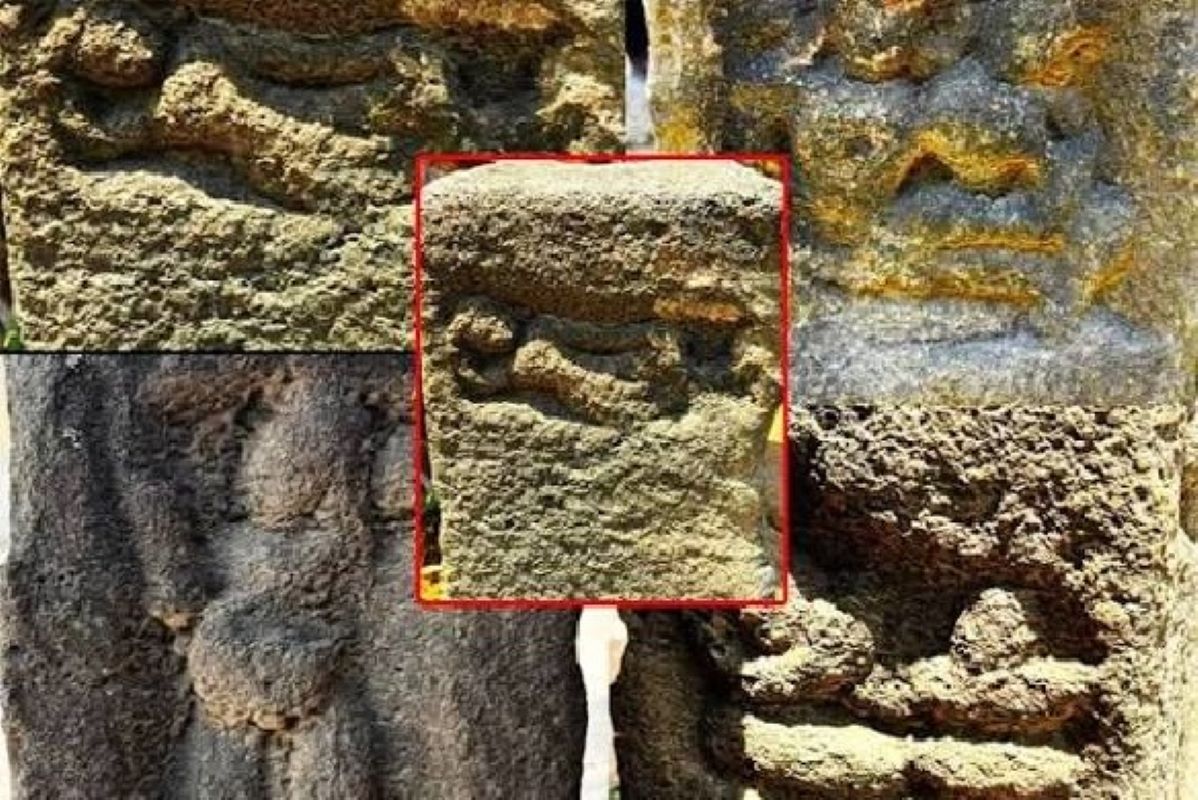
In a remarkable archaeological discovery, a rare four-sided stone pillar depicting Buddha's Parinirvana has been unearthed in Bhimsari village of Adilabad district, Telangana during June 2026. Historians consider this sculpture exceptionally significant because it brings together Buddhist, Shaivite, and Vaishnavite traditions on a single monument—an uncommon feature in India's archaeological heritage.
The discovery provides valuable evidence of the peaceful coexistence of multiple religious traditions in the Deccan region during the medieval period and has become an important topic for competitive examinations.
Key Highlights of the Discovery
- A rare four-sided stone pillar was discovered in Bhimsari village, Adilabad district, Telangana.
- The monument dates back to approximately the 10th century CE, based on its artistic style.
- Each side of the pillar contains a beautifully carved half-relief sculpture.
- The monument reflects the harmonious existence of Buddhism, Shaivism, and Vaishnavism during medieval India.
- Experts describe it as one of the rarest archaeological discoveries in Telangana.
What is Buddha Parinirvana?
Parinirvana refers to the final liberation of Gautama Buddha after his death, marking the end of the cycle of birth and rebirth (Samsara). According to Buddhist tradition, Buddha attained Parinirvana at Kushinagar after completing his earthly life.
In Indian art, Buddha in Parinirvana is generally portrayed:
- Reclining peacefully on his right side.
- Resting his right hand beneath his head.
- Symbolizing complete liberation from worldly existence.
The newly discovered sculpture closely follows the iconographic description mentioned in the Parinibbana Sutta, one of the important texts in the Pali Buddhist Canon.
Artistic Features of the Stone Pillar
The pillar is carved on all four sides, with each face representing a different religious or cultural theme.
- Buddha in Parinirvana: The principal carving depicts Lord Buddha in his final reclining posture, symbolizing eternal peace and liberation.
- Vishnu Sayana Murti: Another side portrays Lord Vishnu in the reclining (Sayana) form, representing cosmic preservation and divine rest.
- Heroic Warrior Figure: One face displays a heroic warrior, believed to symbolize bravery, protection, or royal authority.
- Uma Lingana Murti: The fourth carving depicts Lord Shiva embracing Goddess Uma (Parvati), a representation associated with Shaivite traditions and divine unity.
Why is This Discovery Historically Important?
This archaeological find is remarkable because it combines three major religious traditions on a single monument:
- Buddhism
- Vaishnavism
- Shaivism
Such a synthesis is extremely rare in Telangana's archaeological record.
The sculpture also demonstrates that during the 10th century CE, different religious communities coexisted peacefully in the Deccan region, influencing each other's artistic and cultural traditions.
Who Discovered the Pillar?
The stone pillar was discovered by Roddavaru Prithviraj, a history lecturer and member of the Kotha Telangana Charitra Brundam, an organization dedicated to exploring Telangana's historical heritage.
Why is This Important for Competitive Exams?
Questions related to archaeological discoveries are frequently asked in:
- UPSC Civil Services Examination
- State PSC Exams
- SSC CGL & CHSL
- Banking Awareness
- UGC NET History
- Telangana State Competitive Exams
Candidates should remember:
- Location: Bhimsari village, Adilabad district, Telangana
- Period: 10th Century CE
- Theme: Buddha Parinirvana
- Unique Feature: Buddhist, Shaivite and Vaishnavite sculptures on one pillar
- Text Reference: Parinibbana Sutta
- Discoverer: Roddavaru Prithviraj
Exam-Oriented One-Liner Facts
- A rare Buddha Parinirvana stone pillar was discovered in Telangana in June 2026.
- The monument belongs to the 10th century CE.
- The sculpture contains four carvings on four sides.
- It represents Buddhist, Vaishnavite and Shaivite traditions together.
- Buddha Parinirvana signifies Buddha's final liberation after death.
- The iconography follows the Parinibbana Sutta.
- The pillar was found in Bhimsari village of Adilabad district.
- The discovery highlights religious harmony in medieval Deccan India.
Conclusion
The discovery of the Buddha Parinirvana stone pillar in Telangana is more than an archaeological finding—it is a powerful reminder of India's rich cultural diversity and centuries-old tradition of religious coexistence. The monument reflects the artistic excellence of the 10th century and offers fresh insights into the interaction of Buddhist, Shaivite, and Vaishnavite traditions in the Deccan.
For competitive exam aspirants, this discovery is an important current affairs topic that connects archaeology, history, religion, and culture.