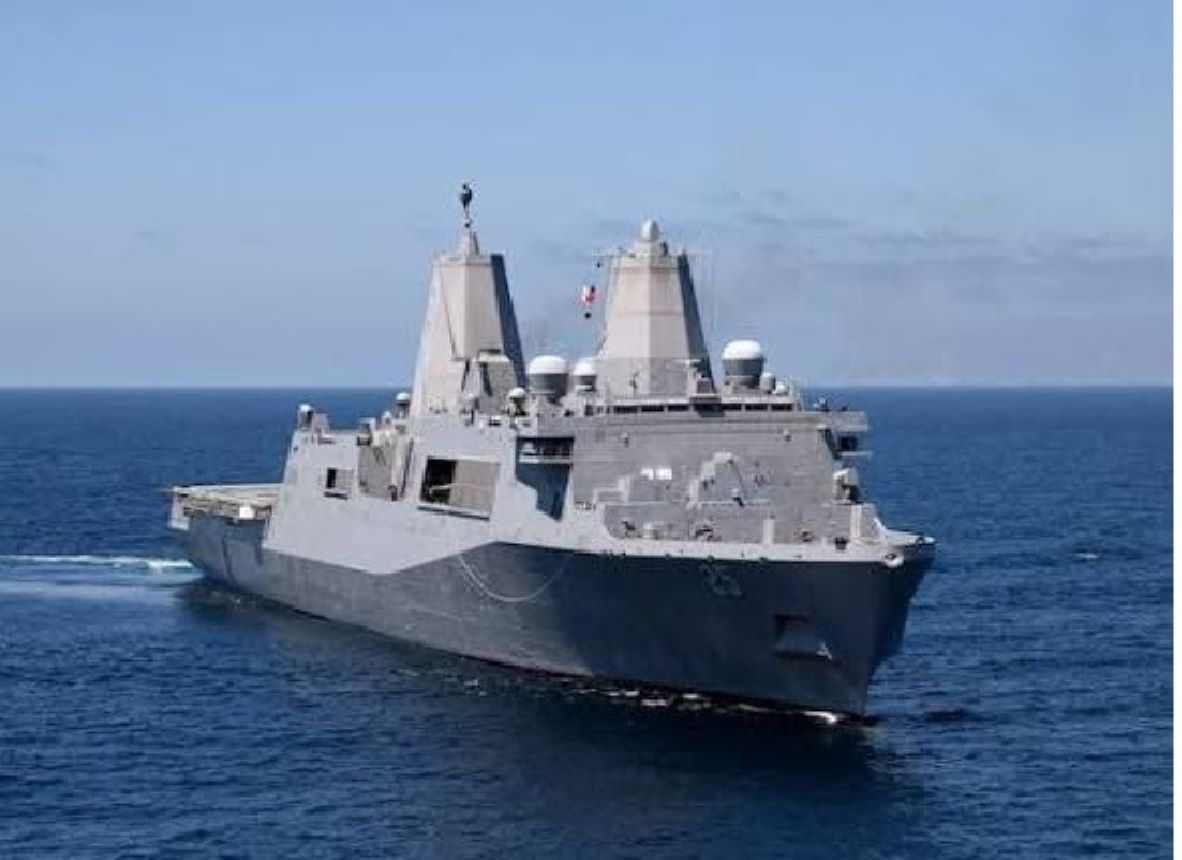
India and the UK are set to sign an
Inter-Governmental Agreement to jointly develop Integrated Full Electric
Propulsion technology for four Landing Platform Docks planned for the Indian
Navy
India and the UK are set to sign an Inter-Governmental
Agreement (IGA) to jointly develop Integrated Full Electric Propulsion (IFEP)
technology for four Landing Platform Docks (LPDs) planned for the Indian Navy.
More on the News
¨
India and the UK are
expected to sign the IGA shortly, building on the Statement of Intent (SoI)
signed in November 2024 on cooperation in designing and developing
electric-propulsion systems for the Indian Navy.
¨
The proposed cooperation
covers four LPDs to be built at an Indian shipyard, envisaged to have a
full-electric propulsion architecture.
¨
GE Vernova and Bharat
Heavy Electricals Limited (BHEL) are to establish India’s first maritime
land-based testing facility for IFEP, enabling the system to be developed and
tested before installation on naval platforms.
¨
The proposed IGA
represents the next step in implementing the broader India–UK framework for
co-design, co-creation and co-production of electric-propulsion capabilities.
Understanding Integrated Full Electric
Propulsion (IFEP)
¨
Integrated Power
Architecture: IFEP integrates the ship’s power-generation, distribution and
propulsion systems, allowing electricity generated onboard to be supplied to
both propulsion and other major mission loads.
¨
Power Management
Flexibility: Unlike conventional mechanical propulsion, the integrated
electrical architecture allows available power to be allocated flexibly
according to operational requirements, supporting efficient utilisation of the
ship’s overall power capacity.
¨
Support for Advanced
Systems: The architecture can accommodate growing power requirements of
advanced sensors, electronic warfare systems and other high-power mission
systems, making it particularly relevant to next-generation naval platforms.
¨
India’s Current Position:
Indian naval vessels have traditionally relied on diesel engines, gas turbines
or steam turbines for propulsion; the proposed programme would help introduce
advanced electric-propulsion capability into future large naval platforms.
Key Features of the India–UK Cooperation
¨
Co-design and
Co-production: The 2024 SoI provides a broader framework for co-design,
co-creation and co-production of electric-propulsion capabilities for future
Indian naval ships, with the LPDs envisaged as an initial application.
¨
Land-Based Testing
Facility: GE Vernova and BHEL are to establish India’s first maritime
land-based testing facility, enabling the integrated propulsion architecture to
be developed and validated on land before deployment on naval platforms.
¨
Indigenous Shipbuilding:
The four LPDs are planned to be built at an Indian shipyard, linking advanced
propulsion development with India’s domestic naval shipbuilding ecosystem.
¨
Future Applications:
India and the UK are also discussing the possible retrofitting of selected
legacy naval ships with electric propulsion, although this remains under
consideration rather than a confirmed programme.
Significance for India
¨
Naval Technology
Self-Reliance: Developing IFEP capability in India can strengthen indigenous
expertise in a strategically important naval propulsion technology and reduce
dependence on imported propulsion solutions over time.
¨
Next-Generation
Warfighting: Integrated power management can support the increasing electricity
requirements of advanced sensors, electronic warfare and other high-power
systems, providing greater flexibility for future warship design.
¨
Technology Absorption:
Cooperation with the UK, which has extensive experience in electric propulsion
on sophisticated naval platforms, can help India build domestic capabilities in
system design, integration, testing and lifecycle support.
¨
Strengthening
Shipbuilding Ecosystem: Linking IFEP development with Indian shipyards and BHEL
can deepen domestic capabilities in marine electrical engineering, power
conversion, system integration and specialised manufacturing.
¨
Future Fleet
Modernisation: Experience from the initial LPD programme can provide a
technological foundation for future large naval platforms and, where
technically feasible, the adoption of electric propulsion on selected existing
vessels.