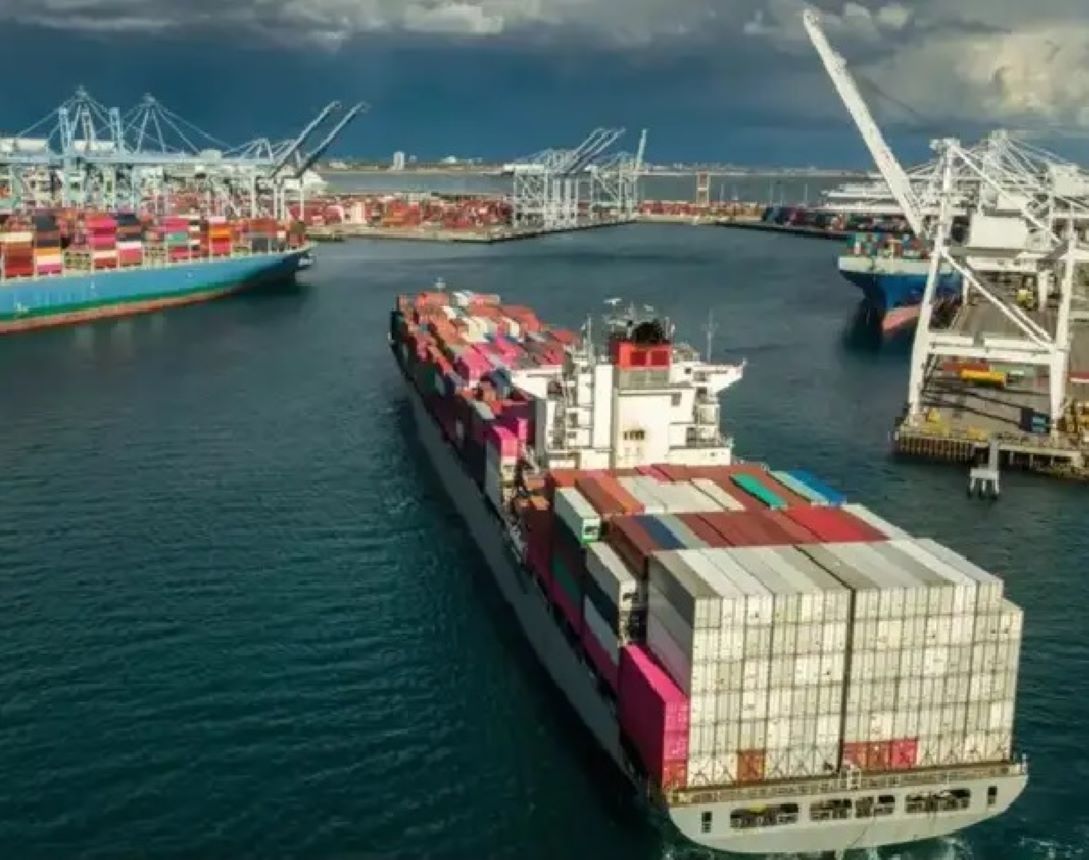
India–European Union Launch Industry
Coalition for Green Shipping Corridor at Sagarmanthan 2026
India and the European Union (EU) formally launched an
industry alliance for the 'India-EU Green Shipping Corridor' during the third
edition of 'Sagarmanthan: The Great Oceans Dialogue' (2026). The initiative
aims to accelerate the adoption of low-emission marine fuels, mobilize
investment, and develop commercially viable green shipping routes. This
dialogue was organized by the Ministry of Ports, Shipping and Waterways (MoPSW)
in collaboration with the Observer Research Foundation (ORF).
What are the key features of the India-EU
Green Shipping Corridor initiative?
¨
Green Fuel Trade: The
initiative aims to link India's green fuel production capacity with Europe's growing
demand. It involves facilitating the trade of green ammonia and methanol and
accelerating the process of reducing carbon emissions in the maritime sector.
¨
Implementation Framework:
Following the initiation of pre-feasibility studies in 2025, an industry
alliance was established in 2026 to mobilize private investment, strengthen
government-industry partnerships, and develop a green shipping corridor that is
commercially viable and scalable.
¨
Renewable Energy in
Ports: Under the 'Harit Sagar' Green Port Guidelines (2023), India aims to
increase the share of renewable energy in the total energy consumption of major
ports to over 60% by 2030 and over 90% by 2047.
¨
Green Maritime
Transition: Diesel-powered port tugboats are being phased out and replaced by vessels
powered by green energy. Meanwhile, Deendayal Port (Gujarat), Paradip Port
(Odisha), and V.O. Chidambaranar Port (Tamil Nadu) has been designated as a
green hydrogen hub for the production, storage, and bunkering of clean marine
fuels. Under India's comprehensive green port strategy, measures such as
shore-to-ship power supply, the electrification of port equipment and vehicles,
and the reduction of carbon emissions from port operations are also being
promoted.
¨
Resilience in the
Maritime Sector: This initiative aims to strengthen the resilience of maritime
supply chains against geopolitical disruptions and climate-related risks, while
fostering a just and inclusive green transition.
¨
Expansion of Port
Capacity: Under the 'Maritime Amrit Kaal Vision 2047', India aims to increase
the annual cargo-handling capacity of its ports to 10 billion tonnes by 2047.
Major ports handled over 915 million tonnes of cargo in the 2025–26 fiscal
year, compared to 581 million tonnes in 2014–15.
¨
National Waterways: Cargo
transportation via national waterways rose from 18 million tonnes in the
2013–14 fiscal year to 218 million tonnes in 2025–26. This highlights the
growing role of inland waterways in India's multi-modal transport system.


