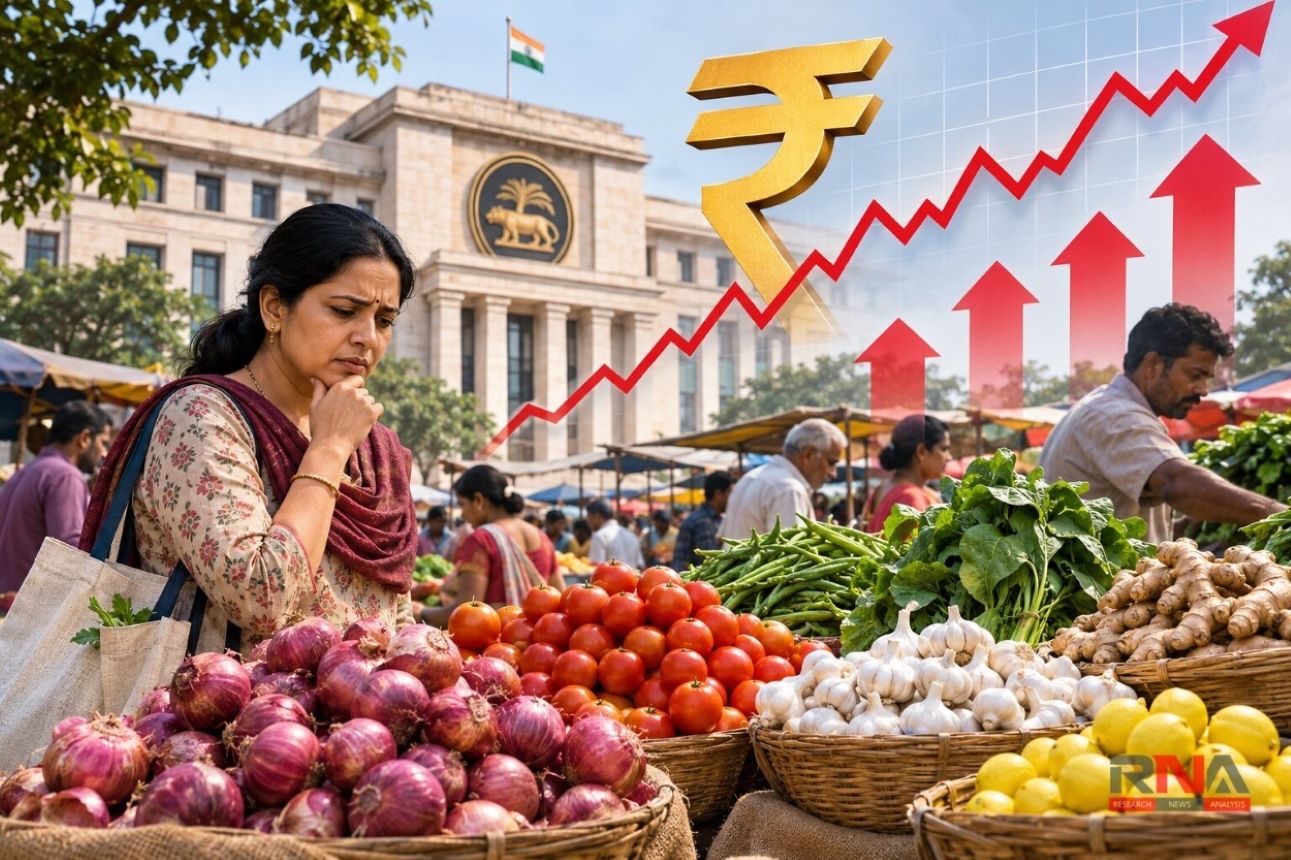
India’s Retail Inflation Increased to
6.09% in October 2026
India’s retail inflation increased to 6.09% in October
2026, crossing the Reserve Bank of India’s (RBI) upper tolerance limit of 6%
for the first time in the last two years. Retail inflation stood at 5.54% in
September 2026. The major reason behind this increase was a sharp rise in food
prices. In addition, rising prices of various consumer goods and services also
contributed to inflationary pressures.According to the data released by the
National Statistical Office (NSO), Ministry of Statistics and Programme
Implementation (MoSPI), on 12 November 2026, Consumer Price Index (CPI)-based
retail inflation increased to 6.09% (provisional) in October 2026. It also
represents the highest level recorded under the new base year 2024 series.
|
The crossing of the RBI’s upper
tolerance limit of 6% by retail inflation in October 2026 highlights the
challenge of maintaining price stability in the Indian economy. Controlling
food prices, improving supply-chain management and ensuring coordination
between effective monetary and fiscal policies are essential to keeping
inflation within the prescribed target. |
Key Points
¨
Increase in Food
Inflation: Consumer Food Price Index (CFPI)-based food inflation increased from
7.74% in September 2026 to 8.94% in October 2026.
¨
Rural and Urban
Inflation: In October 2026, rural retail inflation was recorded at 6.63%, while
urban retail inflation stood at 5.41%.
¨
Impact on Rural Areas:
Higher inflation in rural areas reflects the impact of rising prices of food
items and daily-use commodities.
¨
Food Prices: Rising
prices of essential food items such as onions, garlic and ginger contributed to
the increase in food inflation.
¨
Broad-Based Price Rise:
Apart from food items, increases in the prices of transportation, personal care
and other consumer services also affected overall inflation.
¨
Consumer Price Index
(CPI): The Consumer Price Index is used to measure retail inflation. It
includes changes in the prices of various goods and services such as food and
beverages, housing, clothing, fuel, transportation, healthcare and education.
¨Weight
of Food and Beverages: Under the new CPI series (Base Year 2024=100), food and
beverages account for 36.75% of the total weight. Therefore, changes in food
prices have a significant impact on overall retail inflation.
¨
RBI's Inflation Target:
The Reserve Bank of India has been mandated by the government to maintain
retail inflation at 4%, with a tolerance band of 2% to 6%.
¨
Impact on Monetary
Policy: A sustained increase in inflation may create challenges for the RBI in
maintaining price stability. In such a situation, monetary policy measures such
as increasing the repo rate or maintaining it at a higher level may be
considered.
¨
Impact on the General
Public: Rising prices of food items and essential commodities particularly
affect the purchasing power of lower- and middle-income groups.
¨
Impact on Savings and
Investment: High inflation reduces the real value of savings and may also
affect production costs and business investment decisions.
¨
Impact on Economic
Growth: Persistently high inflation may adversely affect consumption, demand
and overall economic activity.
Measures Required to Control Inflation
¨
Increasing agricultural
production and productivity.
¨
Strengthening the supply
chain and storage infrastructure for food commodities.
¨
Controlling hoarding and
black marketing of essential commodities.
¨
Removing transportation
and distribution-related bottlenecks in agricultural markets.
¨
Taking timely import and
export-related decisions to ensure the availability of essential commodities.
¨
Controlling inflationary
expectations through the RBI's monetary policy.
¨
Providing targeted food
security and social security assistance to poor and vulnerable sections of
society.