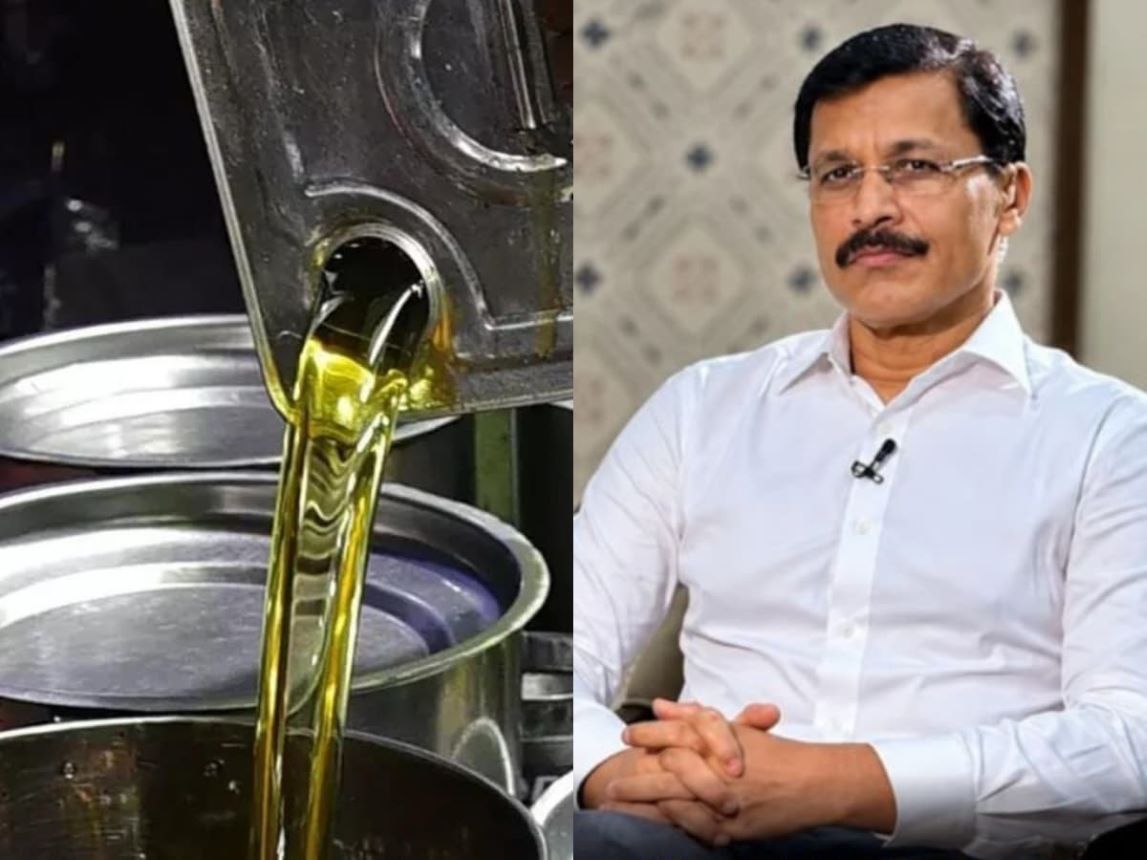
Maharashtra’s Food and Drug Administration
issued a statewide banning the sale of loose or unpackaged edible oil and fats
¨
Maharashtra’s Food and
Drug Administration (FDA) issued a statewide order on 20 August 2026 banning
the sale of loose or unpackaged edible oil and fats.
¨
The order applies across
the edible-oil supply chain, including oil expellers, refiners, blenders,
repackers, importers, wholesalers, transporters, retailers and e-commerce
platforms.
¨
Edible oil in India is
regulated under the Food Safety and Standards Act, 2006 and related food-safety
rules.
¨
Packaged edible oil must
carry information such as product identity, source details, batch information
and expiry date.
¨
Food-safety authorities
can take action against unsafe, substandard and misbranded food products.
¨
Under the Maharashtra
directive, edible oil can be sold only in sealed and tamper-evident packages.
¨
Every package must carry
complete and mandatory labelling.
¨
Multi-sourced vegetable
oil packages are restricted to a maximum size of 15 kg under the order.
¨
Loose edible oil refers
to oil sold without a sealed retail package or standard label.
¨
Tamper-evident packaging
is designed to indicate whether a package has been opened or altered.
¨
Food labelling
requirements are important for consumer safety and product traceability.
¨
The order also prohibits
the repeated reuse of frying oil in commercial establishments.
¨
Used cooking oil with
Total Polar Compounds (TPC) above 25% must be disposed of through authorised
collectors.
¨
Total Polar Compounds
(TPC) are chemical indicators used to assess the degradation of cooking oil
during repeated heating.
¨
The FDA stated that
violations can lead to prosecution under the Food Safety and Standards Act,
2006.
¨
Serious offences can
attract imprisonment of up to seven years.
¨
Unsafe food or misleading
advertisements can attract a fine of up to ₹10 lakh.
¨
Substandard edible oil
can attract a fine of up to ₹5 lakh.
¨
Misbranded edible oil can
attract a fine of up to ₹3 lakh.
¨
The order aims to ensure
edible-oil quality, strengthen consumer protection and reduce health risks
associated with repeatedly heated cooking oil.
 has developed India’s first Soil Texture Map.jpg)