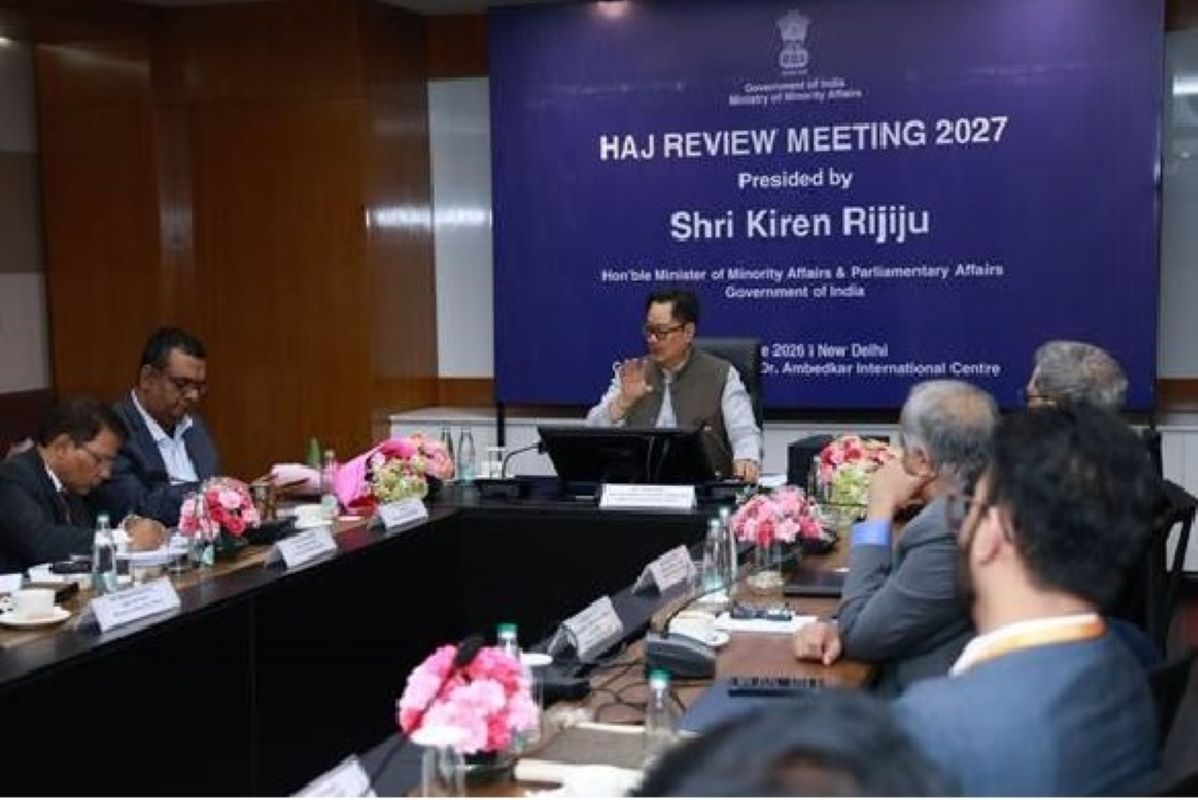
The Ministry of Minority Affairs has officially announced the Haj Policy 2027, introducing several important reforms to make the pilgrimage more transparent, efficient, and pilgrim-friendly. The new policy, unveiled on 22 June 2026 by Union Minister Kiren Rijiju, emphasizes the use of technology, improved medical screening, enhanced accommodation, and better administrative support for Indian pilgrims.
For candidates preparing for UPSC, SSC, State PCS, Banking, Railway, Defence, and other competitive examinations, the Haj Policy 2027 is an important current affairs topic.
What is Haj Policy 2027?
The Haj Policy 2027 outlines the guidelines for the selection, management, and travel of Indian pilgrims undertaking the Haj pilgrimage to Saudi Arabia. The policy aims to ensure a safer, smoother, and more transparent pilgrimage experience while leveraging modern technology to improve services.
Haj 2027 Applications Now Open
Eligible applicants can submit their Haj applications through:
- Haj Committee of India (HCoI) Online Portal
- Haj Suvidha Mobile App
The online application process has been simplified to improve accessibility and reduce paperwork for pilgrims across the country.
Indian Haj Quota Remains Unchanged
The Government has proposed to continue the existing 70:30 quota distribution between the Haj Committee of India and Private Tour Operators (PTOs).
Proposed Haj Quota Distribution for 2027
|
Category |
Proposed Seats |
|
Haj Committee of
India |
122,518 |
|
Private Tour
Operators (PTOs) |
52,507 |
|
Total Proposed
Quota |
175,025 |
The total Indian Haj quota remains the same as the previous year, ensuring that a large number of Indian pilgrims can undertake the sacred journey.
Pilgrim-Friendly Facilities Continue
The Ministry has retained several popular facilities introduced during Haj 2026 to enhance the comfort and convenience of pilgrims.
Key Facilities Include:
- Comfortable sofa-cum-bed arrangements in Mina.
- High-speed train connectivity between Makkah and Madinah.
- Improved hotel-style accommodation in Makkah.
- A specially designed 20-day Short Haj Package for pilgrims preferring a shorter stay.
These initiatives aim to provide a more comfortable and organized pilgrimage experience.
Improved Administrative Support
To strengthen on-ground assistance, the Government has revised the deployment ratio of State Haj Inspectors.
- Earlier ratio: 1 Inspector for every 150 pilgrims
- Revised ratio: 1 Inspector for every 135 pilgrims
This change is expected to improve coordination, grievance handling, and overall support for pilgrims during the Haj.
Mandatory Medical Screening Before Travel
Health and safety remain a major priority under Haj Policy 2027.
Important Medical Provisions
- Medical examinations will follow the latest Saudi Arabian health guidelines.
- Pilgrims suffering from chronic medical conditions will undergo stricter health screening.
- Travel clearance will be granted only after meeting the prescribed medical standards.
The objective is to ensure that pilgrims are medically fit for the physically demanding pilgrimage.
Artificial Intelligence to Modernize Haj Management
One of the most significant features of Haj Policy 2027 is the adoption of Artificial Intelligence (AI) for improving administrative efficiency. AI will be used for:
- Online application processing
- Document verification
- Flight allocation demand forecasting
- Real-time grievance monitoring and resolution
The integration of AI is expected to reduce delays, minimize errors, and improve overall service delivery.
Integration with Saudi Arabia's Nusuk Platform
The policy also proposes integration with Saudi Arabia's Nusuk digital platform, enabling better coordination between Indian authorities and Saudi agencies. This integration will help streamline travel management, documentation, and pilgrim services throughout the pilgrimage.
Why Haj Policy 2027 is Important for Competitive Exams
Questions related to Haj Policy 2027 may be asked in examinations under topics such as:
- Current Affairs
- Government Policies
- Minority Welfare
- Digital Governance
- Artificial Intelligence in Public Administration
- India–Saudi Arabia Relations
Candidates should remember the announcement date, quota distribution, AI integration, revised inspector ratio, and major pilgrim facilities.
Quick Revision Points:
- Policy Announced: 22 June 2026
- Announced By: Union Minister Kiren Rijiju
- Applications: Haj Committee of India Portal & Haj Suvidha App
- Quota Ratio: 70:30 (Haj Committee of India : Private Tour Operators)
- Total Proposed Haj Quota: 175,025 pilgrims
- Haj Committee Seats: 122,518
- Private Tour Operator Seats: 52,507
- Inspector Ratio Revised: 1:135 (Earlier 1:150)
- AI Applications: Document verification, application processing, flight planning, grievance tracking
- Medical Screening: Mandatory as per Saudi guidelines
- Additional Feature: Integration with Saudi Arabia's Nusuk platform
Conclusion
The Haj Policy 2027 reflects the Government of India's continued focus on making the Haj pilgrimage more transparent, technology-driven, and pilgrim-centric. By retaining successful facilities, strengthening health safeguards, adopting Artificial Intelligence, and enhancing coordination with Saudi Arabia through the Nusuk platform, the policy aims to provide Indian pilgrims with a safer, smoother, and more efficient pilgrimage experience.
For competitive exam aspirants, understanding the key provisions of this policy is essential as it combines governance, technology, international cooperation, and minority welfare in one important current affairs topic.