Nobel
Prize in Economic Sciences 2026
The 2026 Sveriges
Riksbank Prize in Economic Sciences in Memory of Alfred Nobel was awarded to
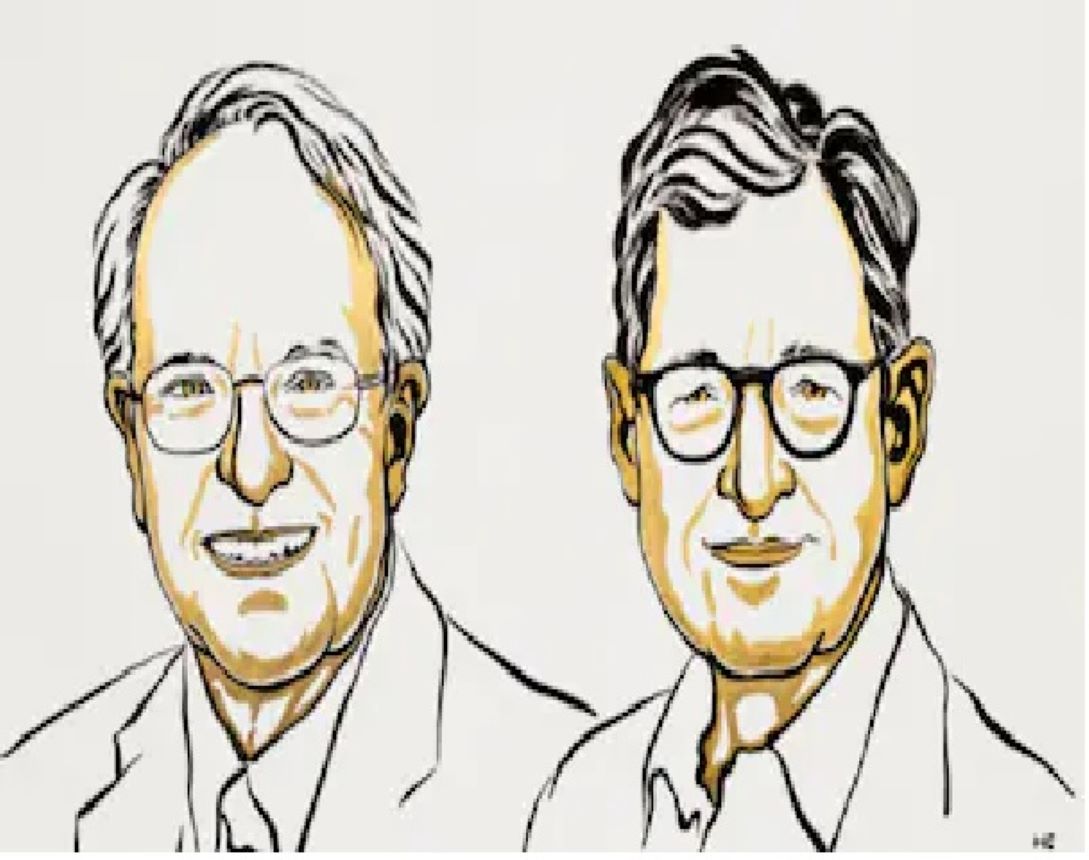
Robert E. Hall of Stanford University and Michael Woodford of Columbia
University for their contributions to the "microeconomic foundations of
macroeconomic stabilization."
What are
the key facts related to the 2026 Nobel Prize in Economics?
¨
Background: Traditional Keynesian models assumed that relationships
between macroeconomic variables, such as inflation and unemployment, were
stable. However, this assumption failed during the oil crises of the 1970s,
leading to stagflation (slow economic growth, high unemployment, and persistent
inflation).
¨
Economist Robert Lucas (1976) argued that human behaviour is not a
stable system. When central banks implement policies based on historical data,
consumers and businesses adjust their behaviour according to the new policies,
weakening or changing the intended economic effects.
Contribution
of Robert E. Hall (Household Behaviour):
¨
Forward-Looking Consumption: Hall explained that a household's current consumption
is not based solely on its current income but also reflects expectations
regarding its future lifetime wealth.
¨ “Random Walk” Hypothesis (1978): Hall
explained that people take all available information about the future into
account in advance. Therefore, changes in consumption occur only when
unexpected new information becomes available, such as an unforeseen financial
gain or sudden job loss. Thus, future consumption follows a “random walk” and
cannot be predicted using past economic variables.
¨
Search Frictions in the Labour Market: Hall also demonstrated that
labour markets experience search frictions, involving the time and effort
required to match workers with jobs. This helps explain why employment does not
improve immediately after economic recovery begins.
Contribution
of Michael Woodford (Central Banking and Firm Behaviour):
¨
New Keynesian Prototype: Woodford connected Hall's ideas about human
expectations with business behaviour and decision-making. He highlighted that
businesses face “sticky prices”—they cannot change prices immediately because
of operating costs. Therefore, they set current prices based on their
expectations regarding future inflation and the likely course of central bank
policies.
¨
Forward Guidance: Woodford highlighted how credible and transparent
communication by central banks about future monetary policy can influence
current consumption, investment, and inflation expectations, thereby improving
the effectiveness of stabilisation policies.
Significance
¨
Foundation of Modern Central Banking: Their micro-founded models (New
Keynesian models) are now standard frameworks used by central banks worldwide,
including the Reserve Bank of India (RBI) and the U.S. Federal Reserve, to
quantitatively assess how policies affect business cycles.
¨ Addressing the Failure of the 1970s:
Traditional economics failed during the stagflation of the 1970s because it
treated human behaviour as stable. Hall and Woodford addressed this problem by
demonstrating that policies work effectively only when they account for how
people adjust their future expectations.
¨
Addressing Modern Crises: Their framework enables policymakers to deal
with global supply shocks, such as pandemics and wars, while keeping public
inflation expectations stable. This helps ensure that sudden increases in
inflation do not spiral out of control.
What is
Macroeconomic Stabilisation Policy?
¨
Definition: Macroeconomic stabilisation policy refers to an overall
economic strategy implemented by governments and central banks to maintain
stable economic growth, minimise fluctuations in unemployment, and keep
inflation under control.
¨
Origin: This concept gained prominence through the work of John Maynard
Keynes during the Great Depression (1929–1939). Keynes argued that free markets
do not automatically correct themselves and that government intervention is
necessary during severe economic downturns.
Two
Primary Pillars:
¨
Monetary Policy: Managed by the central bank, for example, by adjusting
interest rates and controlling the money supply.
¨
Fiscal Policy: Managed by the government, for example, by changing tax
rates and adjusting public expenditure.
Role of
Stabilisation Policy:
¨
Smoothing Business Cycles: It controls fluctuations in the economic
cycle, thereby reducing the risk of overheating and severe recessions.
¨ Price Stability: It controls inflation and
protects purchasing power.
¨ Full Employment: It stimulates aggregate
demand during recessions to support employment generation.
¨
Stabilising Expectations: Transparent policies and forward guidance help
households and businesses plan their consumption and investment.


