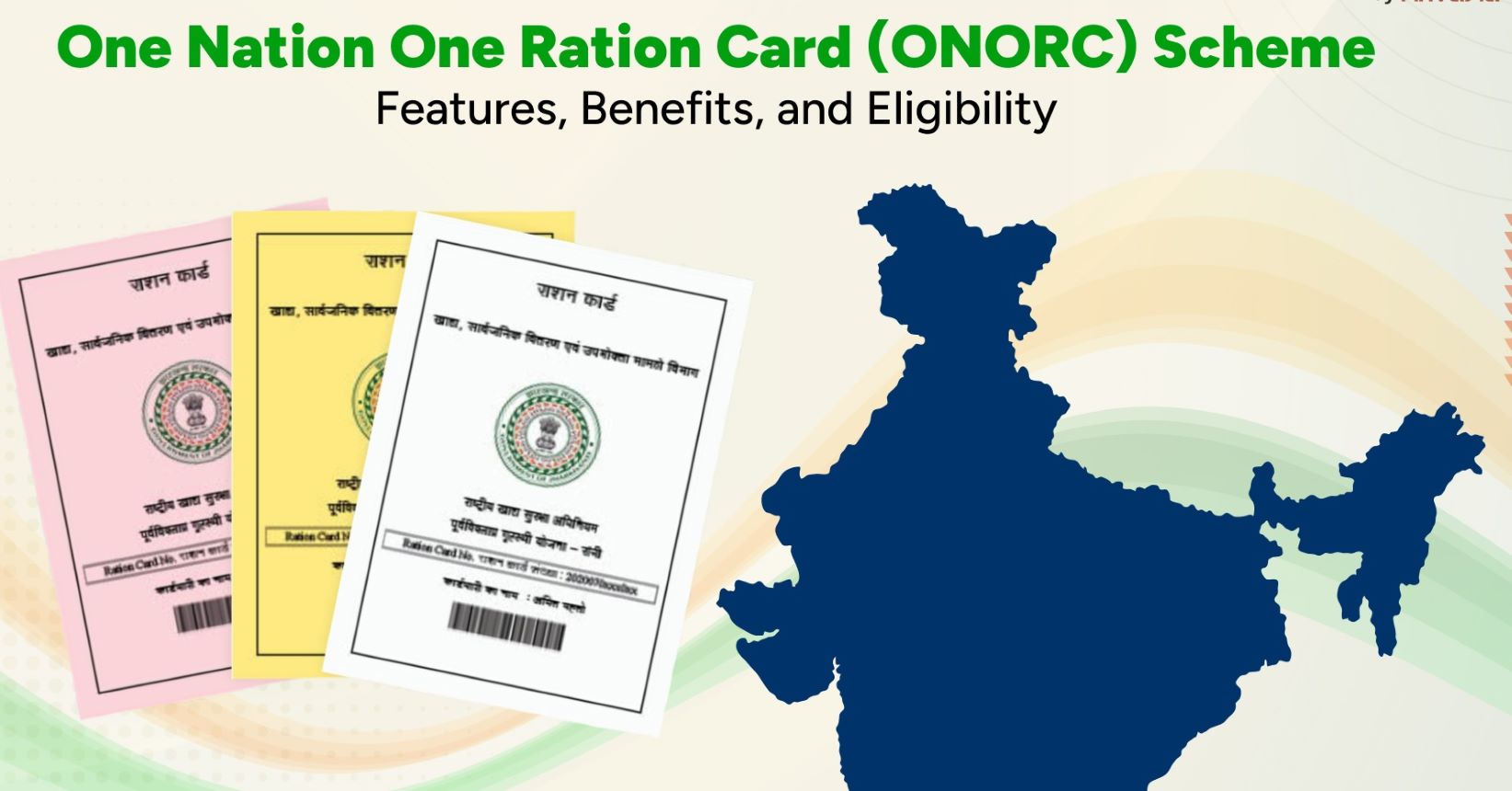
'One Nation One Ration Card' (ONORC)
initiative has been successfully implemented across all 36 states and union
territories of India
'One Nation One Ration Card' (ONORC) initiative has
been successfully implemented across all 36 states and union territories of
India. The objective of this initiative is to enable eligible beneficiaries
under the National Food Security Act (NFSA), 2013, to access food grains from
anywhere in the country.
One Nation, One Ration Card (ONORC)
¨
Launch: Introduced in
August 2019 by the Department of Food and Public Distribution, Ministry of
Consumer Affairs, Food and Public Distribution.
¨
Objective: To enable
nationwide portability of ration-card entitlements under the National Food
Security Act (NFSA), 2013, particularly benefiting migrant workers and their
families.
How does it work?
¨
Beneficiaries can collect
their entitled foodgrains from any FPS across the country using their existing
ration card, without obtaining a new one.
¨
Aadhaar-based biometric
authentication through electronic Point of Sale (e-PoS) devices facilitates
beneficiary identification and recording of transactions.
¨
Intra-State portability:
Beneficiaries can access their entitlements from any FPS within their own
State.
¨
Inter-State portability:
Beneficiaries can access their entitlements from an FPS in another State.
¨
Family members can also
access their respective entitlements from different locations, allowing migrant
households to collect foodgrains separately.
¨
Mera Ration Mobile App:
Launched by the Department of Food and Public Distribution in March 2021 to
facilitate access to ration-related information and services, particularly for
migrant beneficiaries.
Implementation Progress and Digital PDS
Reforms
¨
Nationwide Coverage:
Enabled across all 36 States/UTs, covering the entire NFSA beneficiary
population (approximately 81.35 crore persons), who currently receive free
foodgrains under PMGKAY.
¨
Portability Milestones:
Over 233 crore inter-State and intra-State portability transactions have been
recorded since inception, distributing more than 614 lakh metric tonnes (LMT)
of foodgrains. Approximately 3.27 crore portability transactions take place
every month.
¨
Digitisation of Ration
Cards: Ration-card and beneficiary databases are 100% digitised across all
States/UTs as of October 2026, covering around 78.65 crore beneficiaries.
Aadhaar Seeding and e-KYC:
¨
98.8% of ration cards
(20.27 crore out of 20.51 crore) in the Central System have been
Aadhaar-seeded.
¨
As of 30 September 2026,
e-KYC had been completed for 71.52 crore beneficiaries, representing 91% of the
total.
¨
e-PoS-enabled FPSs:
Around 99.8% of the country’s 5.51 lakh Fair Price Shops are operational with
e-PoS devices.
¨
Computerised PDS: Online
foodgrain allocation has been implemented nationwide, while supply chains have
been computerised in 31 States/UTs. Online grievance systems, transparency
portals and toll-free helplines operate across all States/UTs.
¨
SARTHAK-PDS: The Scheme
for Assistance in Ration Transport and Handling-Income with Automation in PDS
is an umbrella scheme under which ONORC-related technology reforms are
integrated. It strengthens intra-State foodgrain movement, handling and FPS
dealer margins while promoting an integrated and interoperable PDS
architecture.
Significance of ONORC
¨
Food Security for
Migrants: Ensures continuity of foodgrain entitlements despite migration or
changes in residence, reducing dependence on the location where a ration card
was originally issued.
¨
Social Inclusion:
Improves access to foodgrain entitlements for migrant workers, urban poor and
other vulnerable sections.
¨
Transparency and
Accountability: Digital authentication and transaction records strengthen
monitoring and help reduce duplication, diversion and leakages in PDS delivery.
¨
Women’s Empowerment: Enables
women and other household members to access their respective foodgrain
entitlements independently, even when family members migrate separately.
¨
Cooperative Federalism:
Promotes coordination and interoperability among States/UTs for seamless
delivery of food security benefits.
India’s Food Security Framework
¨
National Food Security
Act (NFSA), 2013: Provides legal entitlements to foodgrains to up to 75% of the
rural and 50% of the urban population, covering approximately 81.35 crore
persons based on Census 2011.
¨
Targeted Public
Distribution System (TPDS): Serves as the principal delivery mechanism under
NFSA, through which eligible beneficiaries receive their foodgrain entitlements
via Fair Price Shops.
¨
Antyodaya Anna Yojana
(AAY): Covers the poorest of the poor households, providing an entitlement of
35 kg of foodgrains per household per month.
¨
Priority Households
(PHH): Entitled to 5 kg of foodgrains per person per month under NFSA.
¨
Pradhan Mantri Garib
Kalyan Anna Yojana (PMGKAY): Initially launched in 2020 during the COVID-19
pandemic to provide additional free foodgrains to NFSA beneficiaries.
¨
From January 2023, the
regular NFSA foodgrain entitlements were made free of cost under the merged
arrangement, which was extended for five years (January 2024–December 2028).