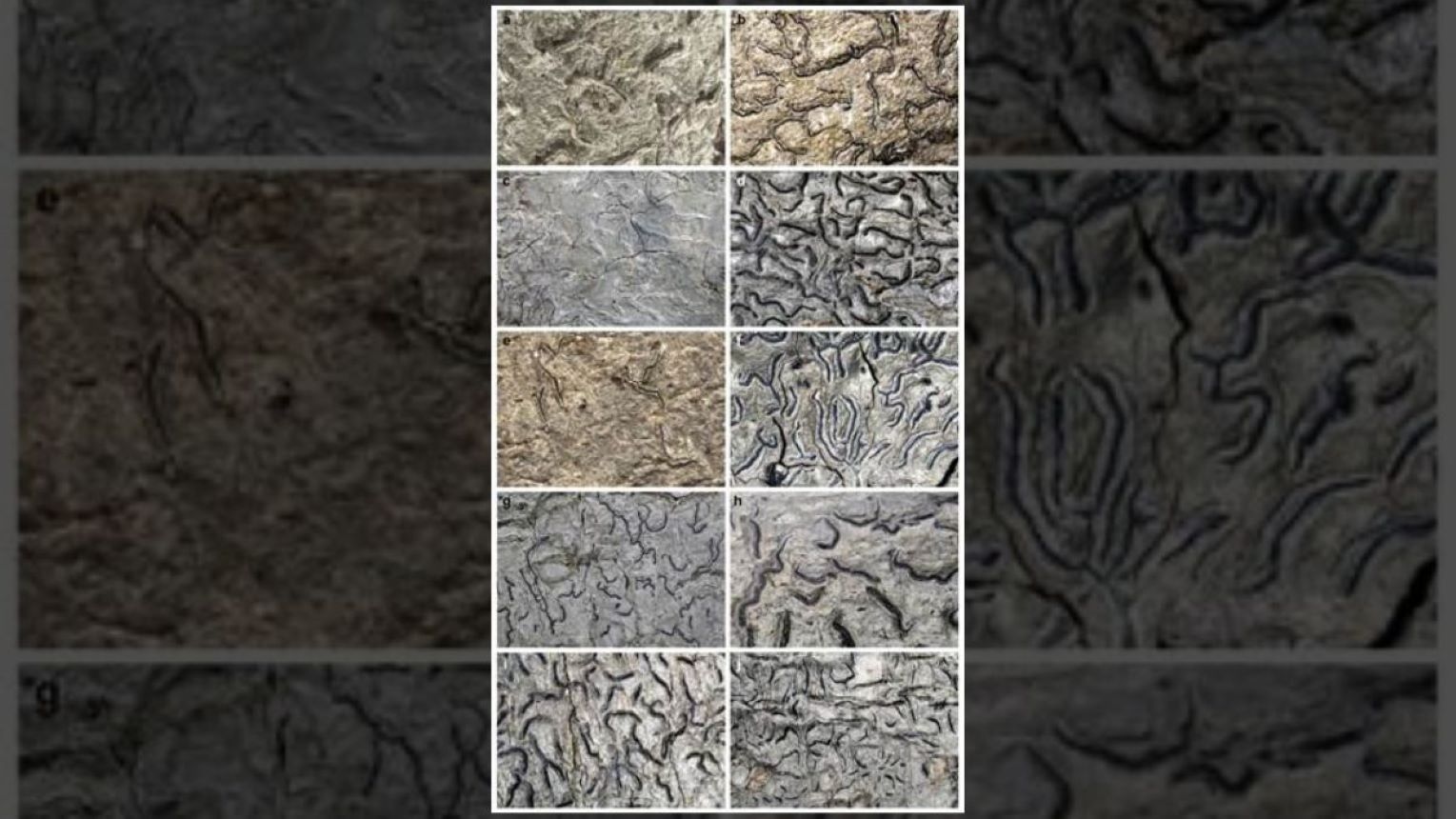
Pichhore orbicular granite, located near
Kutawali village in Shivpuri district, Madhya Pradesh, has been dated to about
2.56 billion years
¨
Pichhore orbicular
granite, located near Kutawali village in Shivpuri district, Madhya Pradesh,
has been dated to about 2.56 billion years.
¨
It is the second-oldest
known orbicular rock in the world, after a similar formation in Western
Australia.
¨
Orbicular granite is a
rare igneous rock containing orbicules, which are rounded or spherical
structures formed within the rock.
¨
The orbicules are mainly
composed of quartz and feldspar and often display concentric layers similar to
tree rings.
¨
Scientists determined the
rock's age using Uranium–Lead (U-Pb) zircon dating.
¨
The granite crystallised
during the Neoarchean Era, around 2.56 billion years ago.
¨
Inherited zircon crystals
in the rock are as old as 3.5 billion years, making them among the oldest
mineral records in the Indian Shield.
¨
The rock is part of the
Bundelkhand Craton, one of the oldest and most stable geological blocks in
India.
¨
A craton is a stable part
of the continental crust that has remained largely undeformed over very long
geological periods.
¨
The presence of ancient
zircon fragments indicates the recycling of early continental crust during
Earth's early geological history.
¨
The Bundelkhand Craton is
an important region for studying the evolution of the Indian Shield and
Precambrian geology.
¨
Orbicules can grow up to
30 centimetres in diameter.
¨
Uranium–Lead (U-Pb)
zircon dating is the standard scientific method for determining the age of very
ancient rocks.
¨
The study involved researchers
from Banaras Hindu University (BHU), IIT Kanpur, IISER Berhampur, the
University of Campinas (Brazil), and JAIST (Japan Advanced Institute of Science
and Technology).