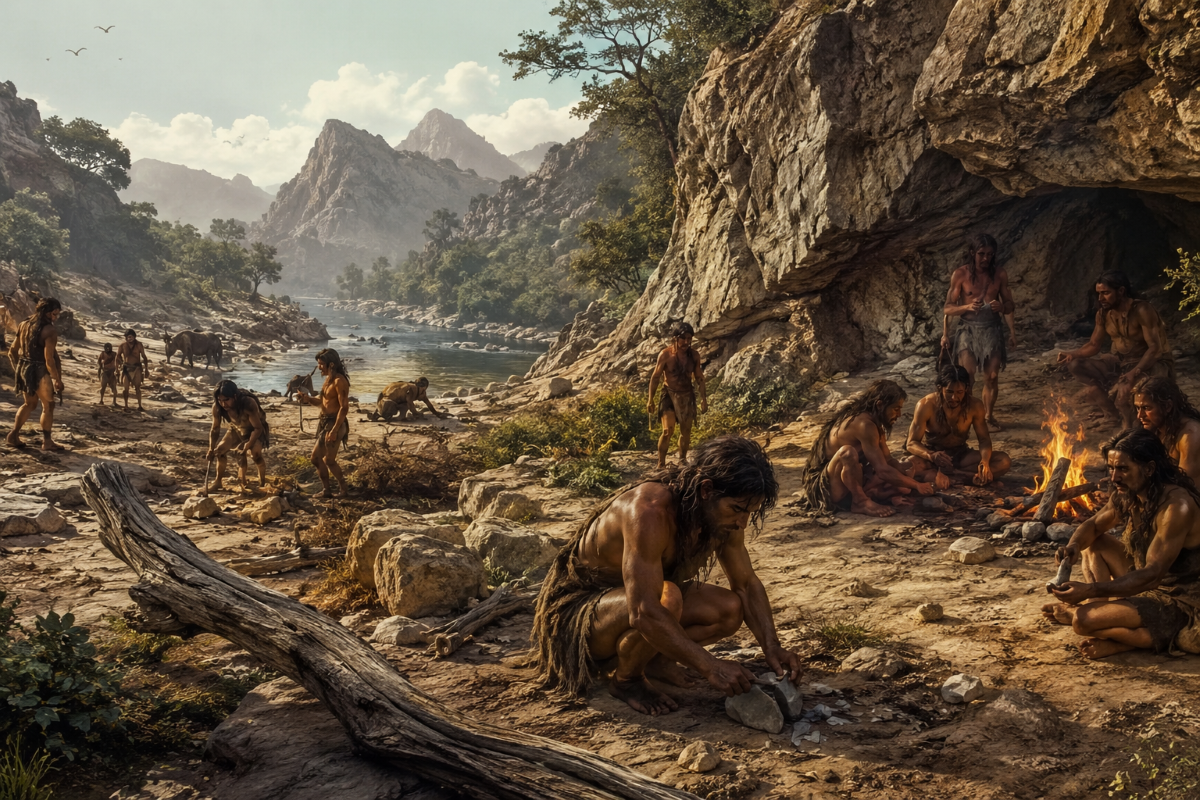
PRE-HISTORIC PERIOD
- The Pre-historic phase can be roughly divided into 3 parts i.e., paleolithic, Mesolithic and Neolithic.
Paleolithic Age.(5,00,000-10,000 B.C.) (Old stone age)
- Paleolithic Culture developed in the
Pleistocene period (Ice coverd the earth surface)
- Robert Bruce Foote (British geologist
and archaeologist) was discovered first Palaeolithic tool in India.
- The main tools used during this period
are handaxes, cleavers, Choppers, flakes, burins, scrapers.
- Their tools were made up of hard rock
called ‘quartzite’.
- The paleolithic sites are spread in
practically all parts of India except the alluvial plains of the Indus and
Ganga.
- The people of this age lived on
hunting and gathering wild fruits and vegetables.
- Man during this period used tools of
unpolished, undressed rough stones and lived in cave rock shelters.
- They had no knowledge of agriculture,
fire, or pottery of any metal.
- Important Sites : Hathnora,
Narmada Valley Pallavaram, Chennai, Bhimbetka, M.P., Adamgarh, M.P.
- Homo sapiens first appeared in the
last of this phase.
- It has been pointed out that
Paleolithic men belonged to the Negrito race.
- The Paleolithic Age in India has been divided into three phases according to the nature of stone tools - Early or lower Paleolithic, middle Paleolithic and upper Paleolithic.
Mesolithic Age.(10,000-6,000 B.C.) (Middle Stone Age)
- It was the transitional phase between the Paleolithic Age and the Neolithic Age
- Blade, Mesolithic tools are microliths.
- Blade, Core, Point, Triangle, Lunate and Trapeze are the main
types of Mesolithic tools.
- Important sites of Mesolithic Age are Bagor, Langhraj, Sarai
Nahar Rai, Birbhanpur.
- Bhimbetka, Adamgarh and Mirzapur.
- According to excavated evidence, the earliest evidences of domestication of animals in India have been found at Adamgarh, M.P. and Bagor, Rajasthan.
Chalcolithic Culture
Name of the
Culture
Period
Kayatha
2000-1800 B.C.
Ahar or Banas
2000-1400 B.C.
Savalda
2000-1800 B.C.
Malwa
1700-1200 B.C.
Prabhas
1800-1500 B.C.
Rangpur
1400-700 B.C.
Chirand
1500-750 B.C.
- Bone implements have been reported from Sarai Nahar Rai, Damdama and Mahadaha, as per book Puratattva Vimarsh written by Dr. Jai Narayan Pandey
- Three human Skeltons in a single grave were recovered at Damdama, U.P. A grave with four human skeltons have been found at Sarai Nahar Rai.
- People in mesolithic age were still dependent on hunting but how they began domesticating animals like dog, sheep goat etc.