QuPrayog Develops Prototype of an Atomic
Clock Based on Rubidium-87 Atoms
¨
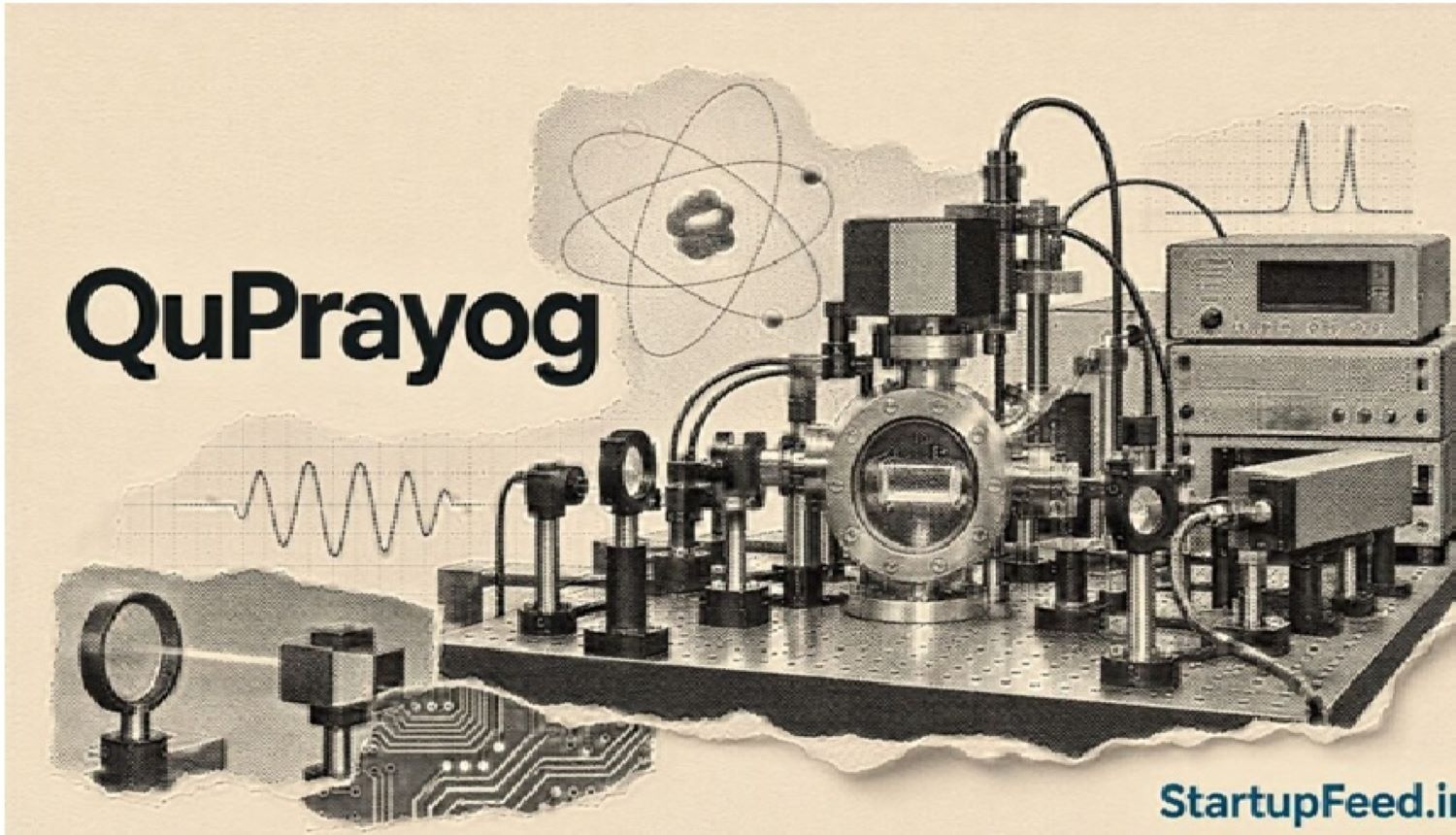
QuPrayog, a deep-tech
startup developed at the I-HUB Quantum Technology Foundation—based at the
Indian Institute of Science Education and Research, Pune (IISER Pune)—has
created a laboratory-scale prototype of an atomic clock using Rubidium-87
atoms.
¨
This prototype was
developed in just 7 months.
¨
An atomic clock is a
highly precise time-measuring instrument that calculates time based on the
natural frequency of atoms.
¨
The prototype utilizes
Rubidium-87 atoms.
¨
In laboratory tests, its
frequency stability was recorded at approximately 3 × 10⁻¹⁰ over a one-second
interval.
¨
Over intervals ranging
from 100 to 1,000 seconds, the frequency stability improved to approximately 2
× 10⁻¹¹ .
¨
Over a duration of 1,000
seconds, the prototype demonstrated stability approximately 50 times better
than that of a standard crystal oscillator.
¨
QuPrayog was founded in
2024 by Dr. Jay Mangavkar and Dr. Rahul Sawant.
¨
The startup is also
associated with the IIT Madras Incubation Cell.
¨
The company aims to
develop and present a miniaturized version of the atomic clock by August 2027.
¨
The company’s objective
is to develop compact atomic clocks capable of operating in challenging
environments for applications such as satellite navigation, telecommunications,
and scientific instrumentation.
¨
The startup is also
working on optical atomic clock technology for the future.
¨
The development of this
technology is supported by India’s deep-tech and quantum technology ecosystem.
¨
The Government of India
approved the National Quantum Mission (NQM) in 2023.
¨
A budget of ₹6,003.65
crore has been allocated for this mission over a period of 8 years.
¨ Its objective is to develop indigenous quantum technologies, including quantum computing, quantum communication, quantum sensing, and precision measurement.
¨ This achievement marks a significant step toward the development of indigenous atomic clock manufacturing and precision time-measurement technology in India.