Role of Pumped Storage Hydropower in
Integrating Renewable Energy in India
India is expanding its Pumped Storage Hydropower (PSH)
capacity to integrate renewable energy into the electricity grid, meet rising
electricity demand, and strengthen grid stability and reliability. This
technology plays a crucial role in storing electricity generated from variable
renewable energy sources, particularly solar and wind power, and supplying it
when required.
Understanding Pumped Storage Hydropower
¨
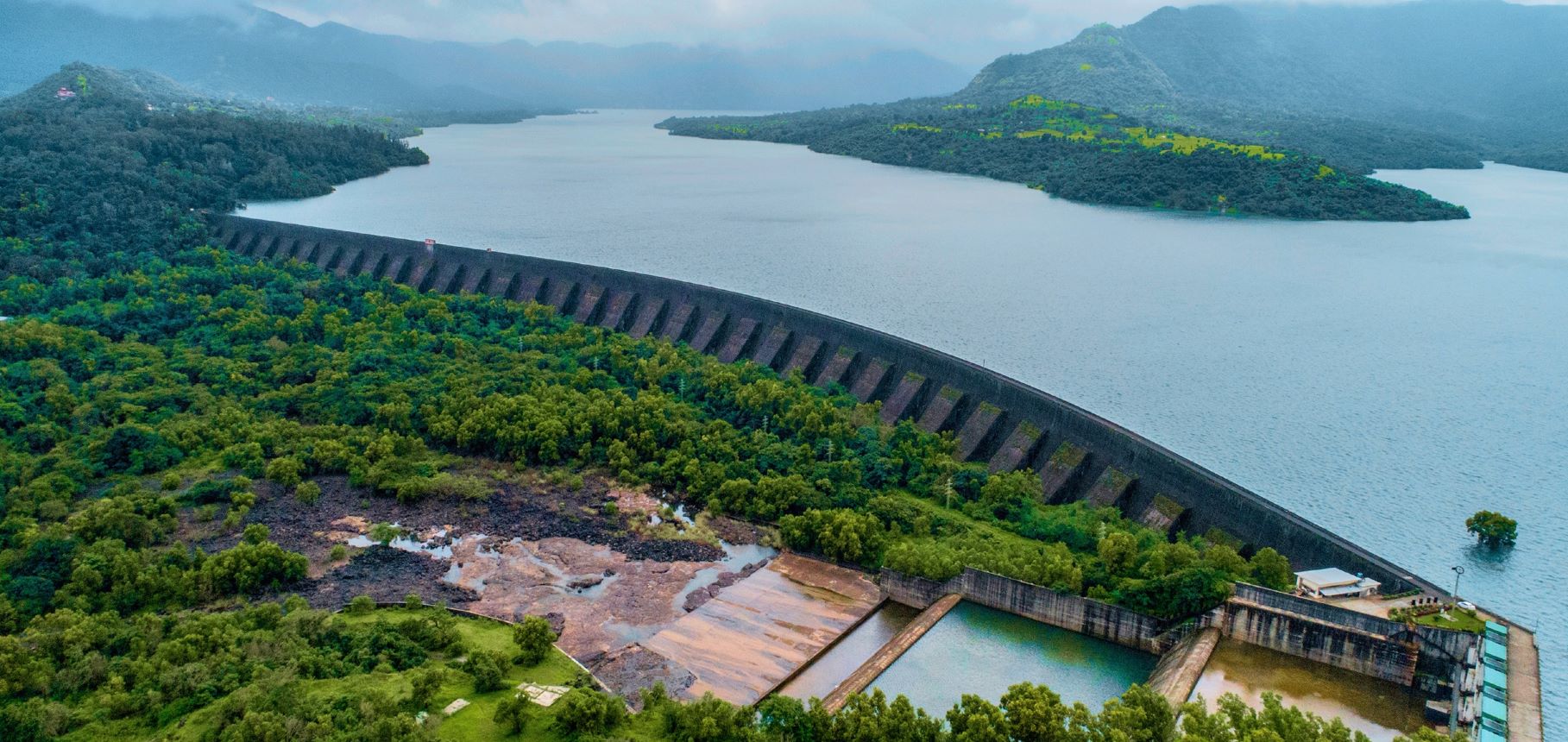
A Pumped Storage Project
(PSP) is a large-scale energy storage system that stores surplus electricity by
pumping water to an upper reservoir and generates electricity by releasing the
stored water through turbines when demand rises.
¨
Working Mechanism of
Pumped Storage Projects (PSPs): A typical PSP consists of two reservoirs
located at different elevations, connected through waterways and reversible
pump-turbines.
¨
Step 1 (Pumping and
Energy Storage): During periods of surplus electricity, power is used to pump
water from the lower reservoir to the upper reservoir. The water stores energy
as gravitational potential energy.
¨
Step 2 (Electricity
Generation): When electricity demand rises, water flows from the upper
reservoir through turbines, generating electricity that can be supplied to the
grid.
¨
Step 3 (Recharging the
System): During periods of low demand or surplus electricity, water is pumped
back to the upper reservoir, preparing the system for the next cycle.
¨
Types of Pumped Storage
Projects: PSPs are classified according to the location of their reservoirs in
relation to rivers, streams and perennial natural watercourses.
¨
On-stream PSP: Both
reservoirs are located on a river, stream or nallah. Water flows through
turbines to generate electricity and is pumped back to the upper reservoir when
surplus power is available.
¨
Off-stream open-loop PSP:
One reservoir is located on a river, stream or nallah, while the other is
located away from a perennial natural watercourse. Water is cycled between the
reservoirs to generate and store electricity.
¨
Off-stream closed-loop
PSP: Neither reservoir is located on a river, perennial stream or perennial
nallah. Both reservoirs are situated away from perennial natural watercourses,
and water is circulated between them.
India’s Status in Pumped Storage
Hydropower
¨
As of July 2026, India
had crossed 300 GW of installed non-fossil fuel capacity.
¨
The CEA projects a
storage requirement of 73.93 GW by 2031–32, comprising 26.69 GW from PSPs and
47.24 GW from BESS.
¨
As of August 2026, India
had 7.43 GW of operational PSP capacity across 10 projects. Another 15.87 GW
was under construction or implementation, while 10.40 GW had been concurred or
appraised by the CEA.
¨
India has identified 320
PSPs with 345.38 GW potential—56.67 GW from on-stream and 288.71 GW from
off-stream projects.
¨
The Western Region leads
with 129.72 GW, followed by the Southern Region with 97.76 GW.
¨
The CEA envisages adding
100.81 GW by 2035–36, taking cumulative PSP capacity to approximately 105.56
GW.
¨
India ranked fourth globally
in installed PSP capacity at the end of 2025, with 7.18 GW.