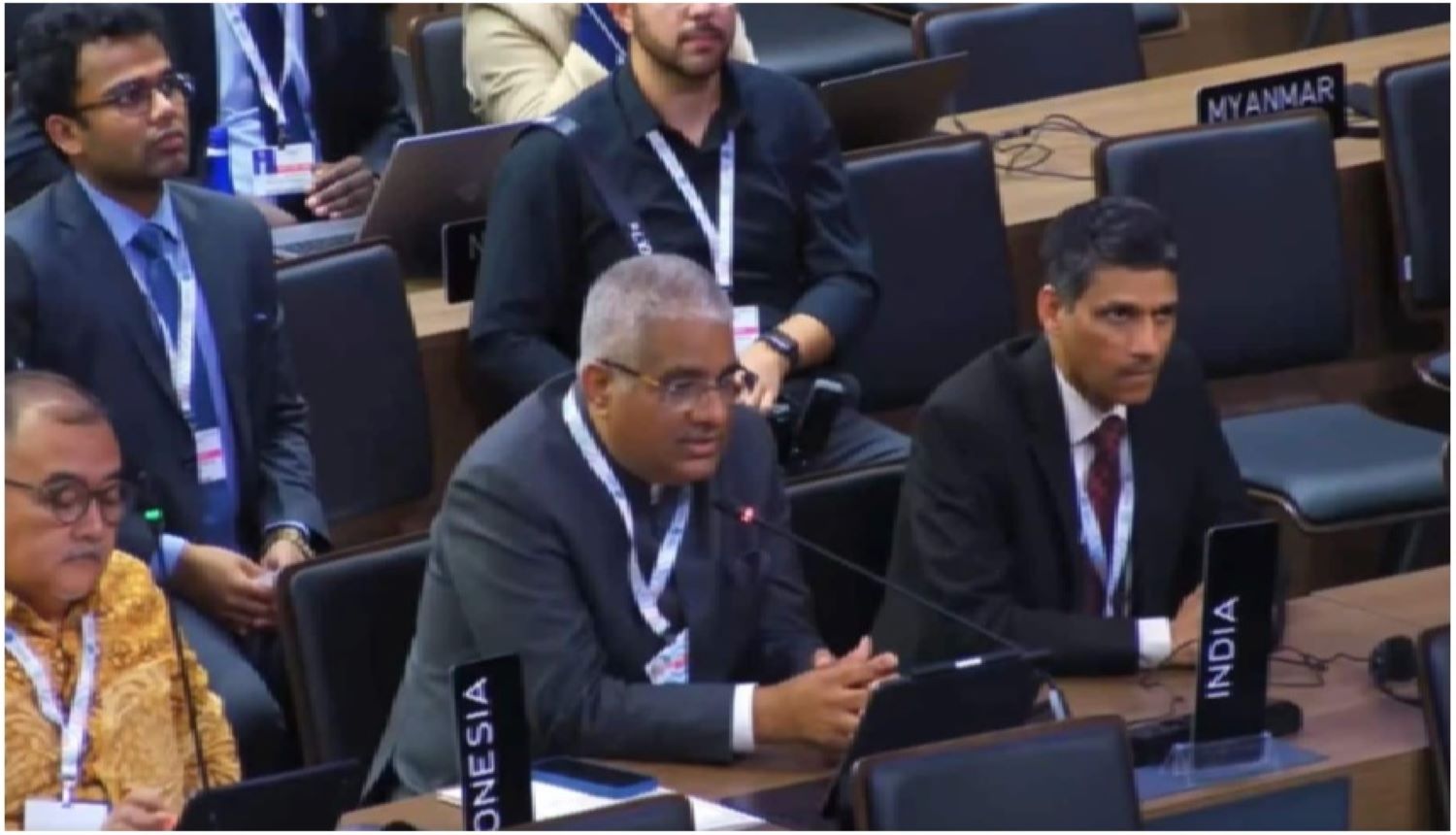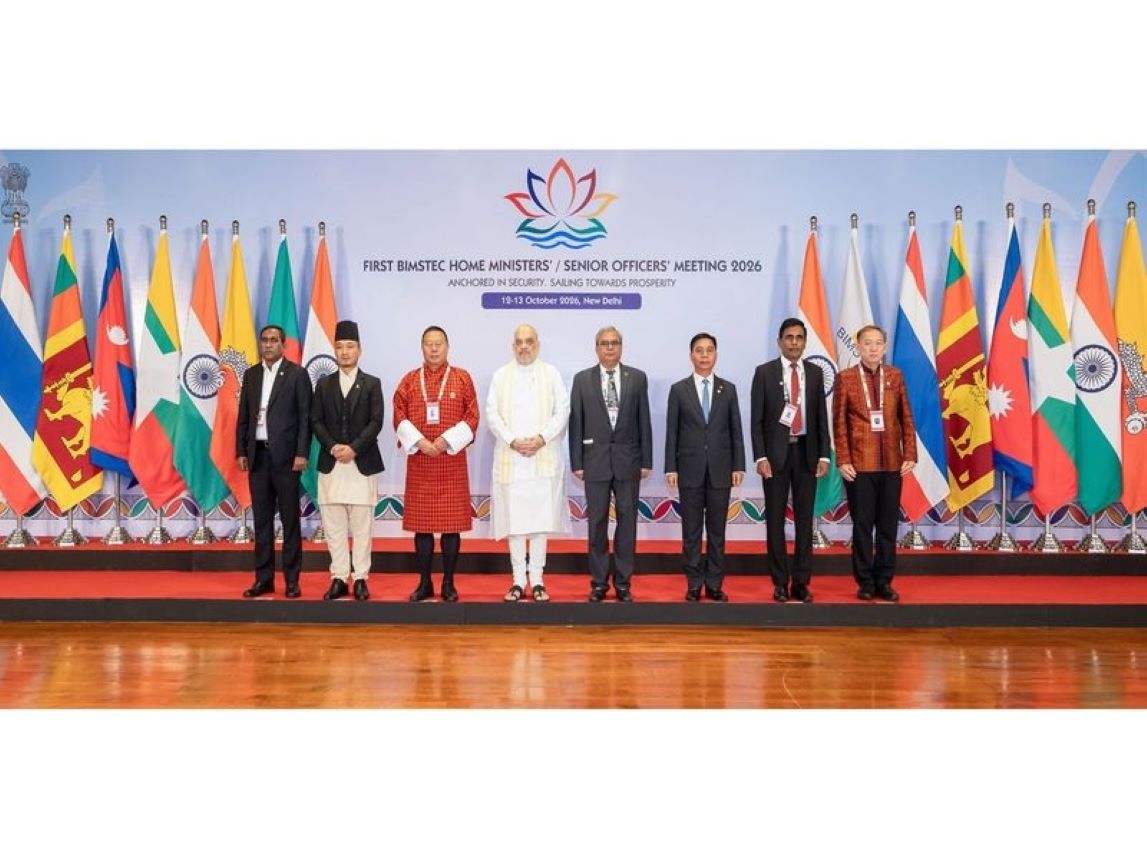
The first
meeting of BIMSTEC interior ministers was held in New Delhi
The first meeting of
BIMSTEC Home Ministers was held in New Delhi. The meeting concluded with the
adoption of the 'Delhi Declaration,' aimed at strengthening regional security
cooperation and addressing cross-border crimes. This meeting marks a
significant step toward enhancing security-related cooperation among the
countries of the Bay of Bengal region.
More on
the News
¨
The decision to establish the Home Ministers’ Meeting mechanism was
taken at the Fourth BIMSTEC Summit in Kathmandu in 2018.
¨ The Sixth BIMSTEC Summit, held in Bangkok in
April 2025, welcomed the mechanism to strengthen regional security cooperation.
¨
Chaired by Union Home Minister Amit Shah, the inaugural meeting adopted
the Delhi Declaration and approved five regional security initiatives covering
human trafficking, drug control, money laundering and terror financing, illicit
financial flows, and disaster management.
Delhi
Declaration
¨
The declaration reaffirms BIMSTEC members’ commitment to regional peace
and security, recognising the Bay of Bengal region as a common security space
facing shared transnational threats.
Key
Provisions
¨
Counter-Terrorism: Condemns terrorism, violent extremism and
cross-border terrorism, and calls for cooperation against radicalisation,
terrorist recruitment and terror financing.
¨ Transnational Crime: Strengthens cooperation
against drug trafficking, organised crime, cybercrime and human trafficking,
including the protection of victims exploited in online scam operations.
¨ Legal Cooperation: Emphasises the
implementation of existing BIMSTEC security conventions and action plans,
alongside cooperation in mutual legal assistance, extradition and related legal
frameworks.
¨ Information Sharing and Capacity Building:
Promotes intelligence sharing, specialised training and institutional
cooperation to tackle transnational crimes.
¨
International Cooperation: Encourages collaboration with international
organisations, including the United Nations Office on Drugs and Crime (UNODC),
INTERPOL and the Financial Action Task Force (FATF), and commits members to
holding Home Ministers’ Meetings regularly.
BIMSTEC
¨
Full Form: Bay of Bengal Initiative for Multi-Sectoral Technical and
Economic Cooperation.
¨ Establishment: 6 June 1997, through the
Bangkok Declaration.
¨ Initial Name: BIST-EC (Bangladesh–India–Sri
Lanka–Thailand Economic Cooperation).
¨ Expansion: Myanmar joined on 22 December
1997.
¨ Nepal and Bhutan joined in 2004.
¨ The grouping adopted its present name at the
First BIMSTEC Summit in Bangkok on 31 July 2004.
¨ Members: Bangladesh, Bhutan, India, Myanmar,
Nepal, Sri Lanka and Thailand.
¨ Secretariat: Established in Dhaka,
Bangladesh, in 2014, following a decision at the Third BIMSTEC Summit.
¨ Objective: To promote regional integration
and multidimensional cooperation between South and Southeast Asia, particularly
among countries bordering the Bay of Bengal.
¨ Sectoral Evolution: Initially covered six sectors
in 1997—trade, technology, energy, transport, tourism and fisheries.
Cooperation expanded in 2008 and was reorganised in 2021 into seven sectors.
¨ First Summit: The First BIMSTEC Summit was
held in Bangkok, Thailand, on 31 July 2004.
¨ Summits Held: Six BIMSTEC Summits have been
held so far, with the Sixth Summit held in Bangkok on 4 April 2025.
¨ Growing Strategic Significance: BIMSTEC has
gained prominence in India’s foreign policy as a platform to strengthen the
Neighbourhood First and Act East policies and deepen engagement with Southeast
Asia.
¨
India increasingly uses BIMSTEC to advance regional cooperation amid
limitations within SAARC, particularly India–Pakistan tensions; however,
BIMSTEC complements rather than replaces SAARC.
Institutional
Structure: BIMSTEC has five tiers:
¨
Summit of Heads of State or Government.
¨ Ministerial Meeting of Foreign Ministers.
¨ Sectoral Ministerial Meetings.
¨ Senior Officials’ Meeting.
¨
BIMSTEC Permanent Working Committee (BPWC).