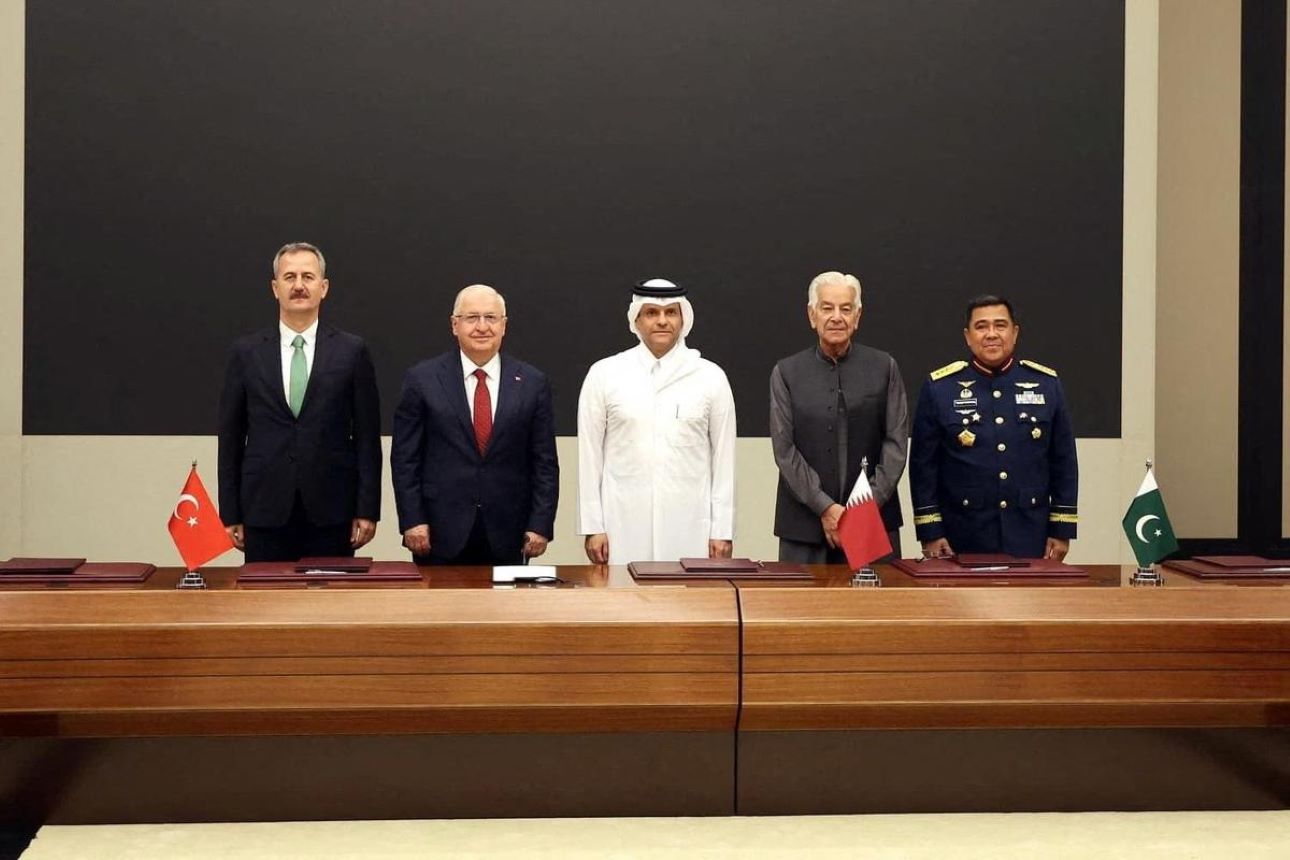
Türkiye, Qatar, Pakistan, and Indonesia
signed the 'Badr' Memorandum of Understanding in Doha to deepen defense
cooperation and strengthen their defense-industrial capabilities
Türkiye, Qatar, Pakistan and Indonesia have signed the
Badr Memorandum of Understanding (MoU) in Doha to deepen defence cooperation
and strengthen their defence-industrial capabilities.
More on the News
¨
Named Badr, meaning “full
moon” in Arabic, the MoU seeks to expand cooperation in military production,
technical training, research and development (R&D), and the strengthening
of defence capabilities.
¨
The agreement comes about
two months after Türkiye, Pakistan and Saudi Arabia signed the separate Makkah
Joint Defence Agreement in August 2026, which provides for collective defence
in the event of an armed attack against any one of its parties.
Badr Memorandum of Understanding
¨
Defence-industrial
cooperation: The MoU seeks to strengthen ties between the participating
countries’ defence industries and promote cooperation in military production.
¨
Technology and R&D:
It aims to facilitate technology sharing, joint development and research to
support the development of modern defence technologies.
¨
Training and military
capabilities: The agreement provides a framework for cooperation in technical
military training and strengthening the participating countries’ defence capabilities.
¨
Domestic production:
According to Türkiye’s defence-industry chief, the initiative seeks to move
beyond off-the-shelf procurement towards joint technological development and
stronger domestic production capabilities.
¨
Economic dimension: By
combining their respective defence-industrial strengths, the countries aim to
improve industrial integration and meet the requirements of allied and friendly
nations.
Strategic Significance
¨
Joint defence production:
The MoU could facilitate joint development, technology transfer and
collaborative manufacturing. The actual outcomes will depend on the projects
subsequently agreed upon by the participants.
¨
Complementary
capabilities: Türkiye brings an established defence industry, Pakistan has
domestic defence-production capabilities, Indonesia has ongoing
defence-industrial partnerships, and Qatar maintains defence partnerships and
investment capacity. The MoU creates scope for cooperation among these
capabilities.
¨
Diversification of
defence partnerships: The agreement reflects efforts to expand
defence-industrial collaboration, strengthen domestic production and reduce
dependence on conventional equipment procurement.
¨
Regional security
cooperation: The arrangement brings together countries with interests spanning
West Asia, South Asia and Southeast Asia. However, its wider strategic impact
will depend on the nature and scale of its implementation.
Implications for India
¨
Regional security: Closer
defence-industrial cooperation involving Pakistan could have implications for
India if it results in new military capabilities or technology transfers
relevant to the regional security environment.
¨
Defence technology
monitoring: India will need to monitor any concrete joint-production projects,
technology-sharing arrangements and military capabilities emerging from the
MoU.
¨ Indo-Pacific partnerships: Indonesia’s participation highlights the importance of monitoring defence developments alongside India’s own bilateral defence engagement with Southeast Asian countries.
¨ Distinguishing the two agreements: The Badr MoU focuses on defence-industrial and military cooperation. It should not be conflated with the Makkah Joint Defence Agreement between Türkiye, Pakistan and Saudi Arabia, which includes a collective-defence commitment.


