Twenty rebel Lok Sabha MPs of the All
India Trinamool Congress announced their merger with the ‘Nationalist Citizens
Party of India
Twenty rebel Lok Sabha MPs of the All India Trinamool
Congress (AITC) announced their merger with the Nationalist Citizens Party of
India (NCPI), a little-known registered but unrecognised political party.
More on the News
¨
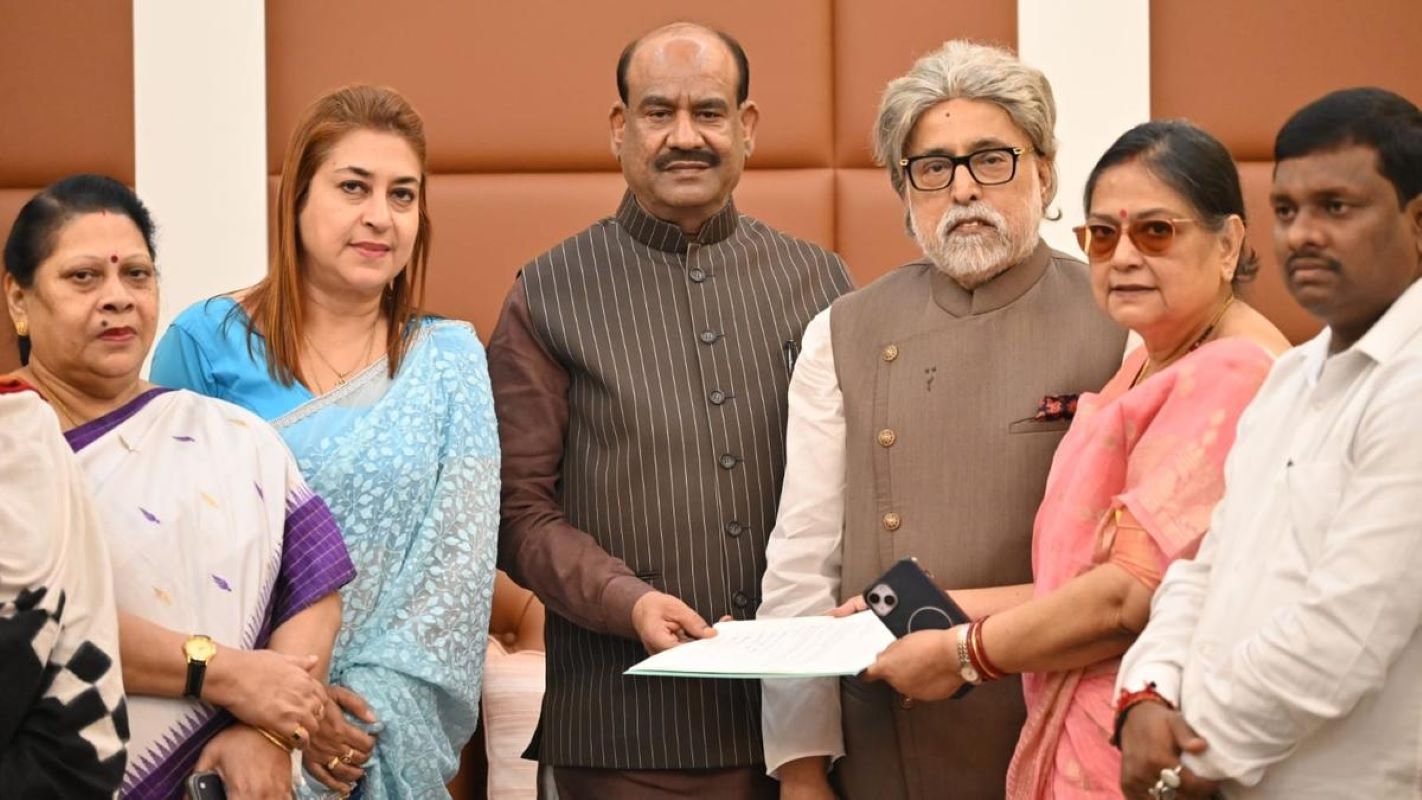
A group of 20 rebel TMC
MPs met Lok Sabha Speaker Om Birla seeking separate recognition and seating
arrangements in Parliament.
¨
The MPs subsequently
announced their merger with the NCPI, claiming protection under the merger
provision of the Tenth Schedule.
¨
The development follows a
prolonged internal conflict within the TMC leadership.
¨
Unlike the Shiv Sena and
NCP rebellions, the rebel MPs did not initially claim to be the “real”
Trinamool Congress; instead, they chose to merge with another political party.
¨
The move has reignited
debates over the anti-defection law, the merger exception under the Tenth
Schedule, and the changing strategies adopted by political rebels in
contemporary India.
Understanding Anti-Defection Law and the
Merger Exception
¨
The Tenth Schedule was
introduced through the 52nd Constitutional Amendment Act, 1985, to curb political
defections and ensure stability in parliamentary democracy.
¨
Key Features:Legislators
may be disqualified if they voluntarily give up party membership or violate the
party whip.The law seeks to prevent political instability arising from
opportunistic defections.
¨
Merger Exception under
Paragraph 4:The original anti-defection law contained exceptions for both
“split” and “merger”.The 91st Constitutional Amendment Act, 2003, abolished the
split provision, ending protection for breakaway factions. However, the merger
exception was retained.A merger is protected if at least two-thirds of the
members of a legislature party agree to merge with another political
party.Originally intended to facilitate genuine political realignments, the
merger provision is increasingly being invoked as a shield against
disqualification.
Judicial Interpretation of Defection Law
¨
Through a series of
decisions, the judiciary has consistently emphasised that the Anti-Defection
Law is intended to curb political opportunism while preserving the stability of
elected governments.
¨
In Rajendra Singh Rana v.
Swami Prasad Maurya (2007), the Supreme Court held that the Speaker must decide
disqualification petitions based on objective constitutional criteria and
cannot indefinitely delay adjudication under the Tenth Schedule.
¨
In Keisham Meghachandra
Singh v. Speaker, Manipur Legislative Assembly (2020), the Court expressed
concern over prolonged delays in anti-defection cases and recommended that
Speakers ordinarily decide such petitions within three months.
¨
Most recently, in Subhash
Desai v. Principal Secretary, Governor of Maharashtra (2023), the Court
distinguished between the political party and the legislature party, holding
that legislative strength alone cannot determine the identity of the original
political party under the Tenth Schedule.
¨
The Court reaffirmed that
the split exception stands abolished after the 91st Constitutional Amendment
and that protection from disqualification is available only through the
constitutionally recognised merger provision.
Evolution of Defection Strategies in India
¨
The TMC-NCPI episode
reflects the changing constitutional strategies adopted by political factions
in response to developments in anti-defection law and judicial interpretation.
¨
From Split Politics to
Merger Politics:Before the 91st Constitutional Amendment (2003), breakaway
factions often relied on the split provision under the Tenth Schedule.With the
abolition of the split exception, political actors increasingly began exploring
alternative constitutional routes.
¨
The “Real Party”
Strategy:In the Shiv Sena and NCP disputes, rival factions claimed that they
represented the original political party and sought control over the party
name, symbol and organisation.Such claims required Election Commission scrutiny
of both legislative and organisational strength.
¨
The TMC-NCPI Merger
Strategy:Unlike the Shiv Sena and NCP factions, the rebel TMC MPs did not
initially claim ownership of the original party.The move reflects the
post-Subhash Desai legal environment, where legislative majorities alone may
not be sufficient to establish legitimacy.By merging with NCPI, the rebels
sought to invoke the merger exception under Paragraph 4 while avoiding an
immediate battle over party ownership.
¨ Emergence of the Merger Model:The recent merger of seven AAP MPs with the BJP and the TMC-NCPI episode indicates a growing preference for merger-based strategies.These developments suggest that the merger exception is becoming an increasingly important instrument in contemporary political realignments.
¨ Key Emerging Concerns:Is the Merger Exception Becoming a Loophole: Critics argue that the merger provision is increasingly being used to legitimise defections rather than genuine political mergers.