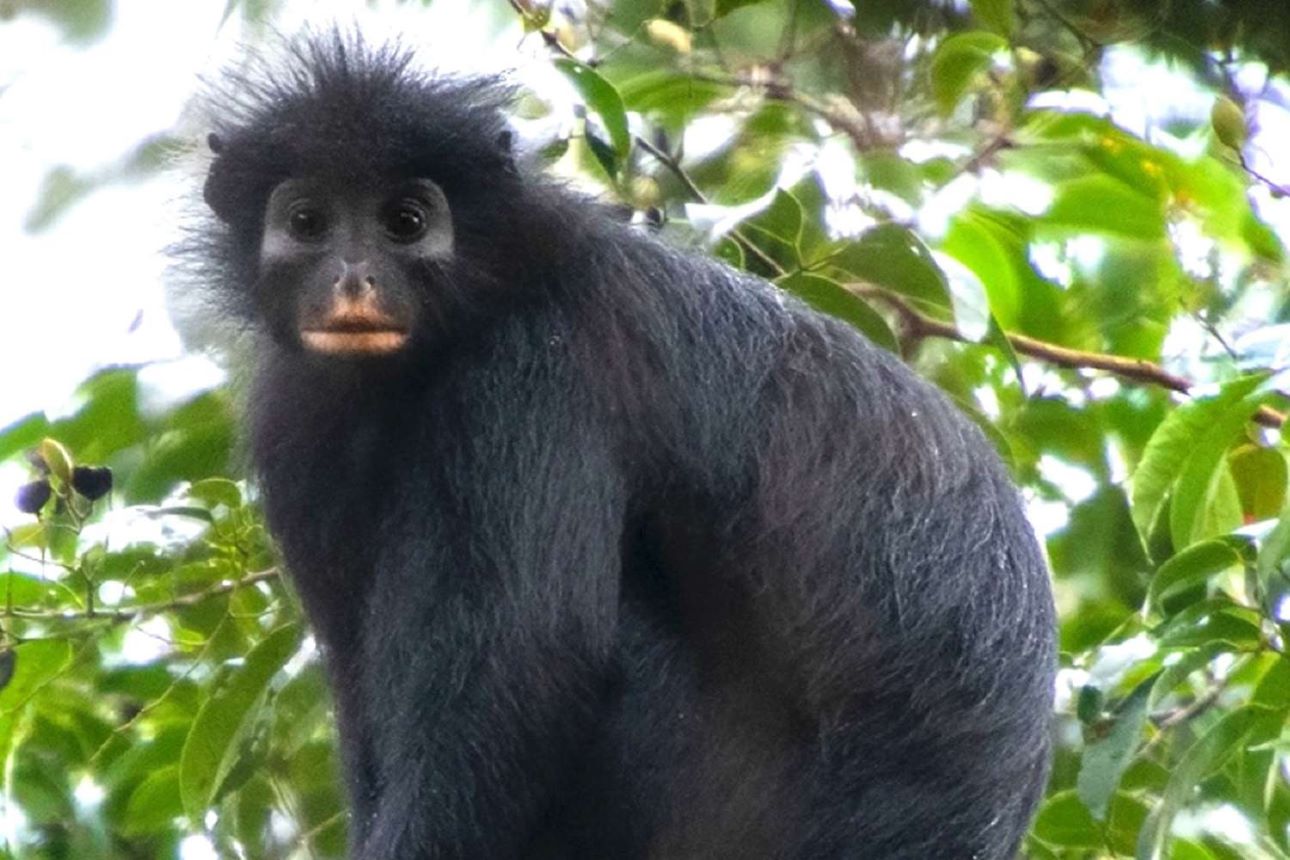
A new monkey species named Colobus
congoensis has been discovered in the Democratic Republic of the Congo
¨
A new monkey species
named Colobus congoensis has been discovered in the Democratic Republic of the
Congo (DRC).
¨
The species is locally
known as “Likweli.”
¨
It belongs to the colobus
monkeys, a group of Old World monkeys found in Africa.
¨
The species was confirmed
through genetic, anatomical, and acoustic analyses.
¨
Its closest known
relative is Colobus satanas.
¨
The two species are
separated by a distance of more than 1,200 kilometres.
¨
Scientists estimate that
the two species diverged 4–5 million years ago.
¨
The discovery was
published in the peer-reviewed journal PLOS One on 15 July 2026.
¨
The Likweli monkey is
predominantly black in colour.
¨
It has pinkish-orange
lips or orange-cream patches around the mouth and nose.
¨
It has bare grey cheekbones
and a white patch of fur around the anus.
¨
These physical
characteristics, along with genetic and vocal evidence, helped distinguish it
from other colobus monkey species.
¨
The species has a very
limited distribution of about 1,700 square kilometres.
¨
It is found between the
Lomami and Lilo Rivers in the Congo Basin, mainly within Lomami National Park.
¨
The first blurry
photograph of the species was taken in 2008 during an expedition along the
Lomami River.
¨
Clear sightings in 2018
led to a focused scientific search and eventual identification.
¨
Researchers have
recommended listing the species as Endangered on the IUCN Red List.
¨
The recommendation is
based on its restricted range, small population, habitat loss, and hunting
pressure.
¨ It is only the fifth new African monkey species discovered in the last 75 years.
¨ The discovery involved researchers from Florida Atlantic University, Lukuru Wildlife Research Foundation, Yale University, City University of New York, Lomami National Park, and Frankfurt Zoological Society.
 was photographed in the Ubeshwar wildlife area of Udaipur, Rajasthan.jpg)