CDSCO Grants Marketing
Authorization to Qdenga – India's First Approved Dengue Vaccine
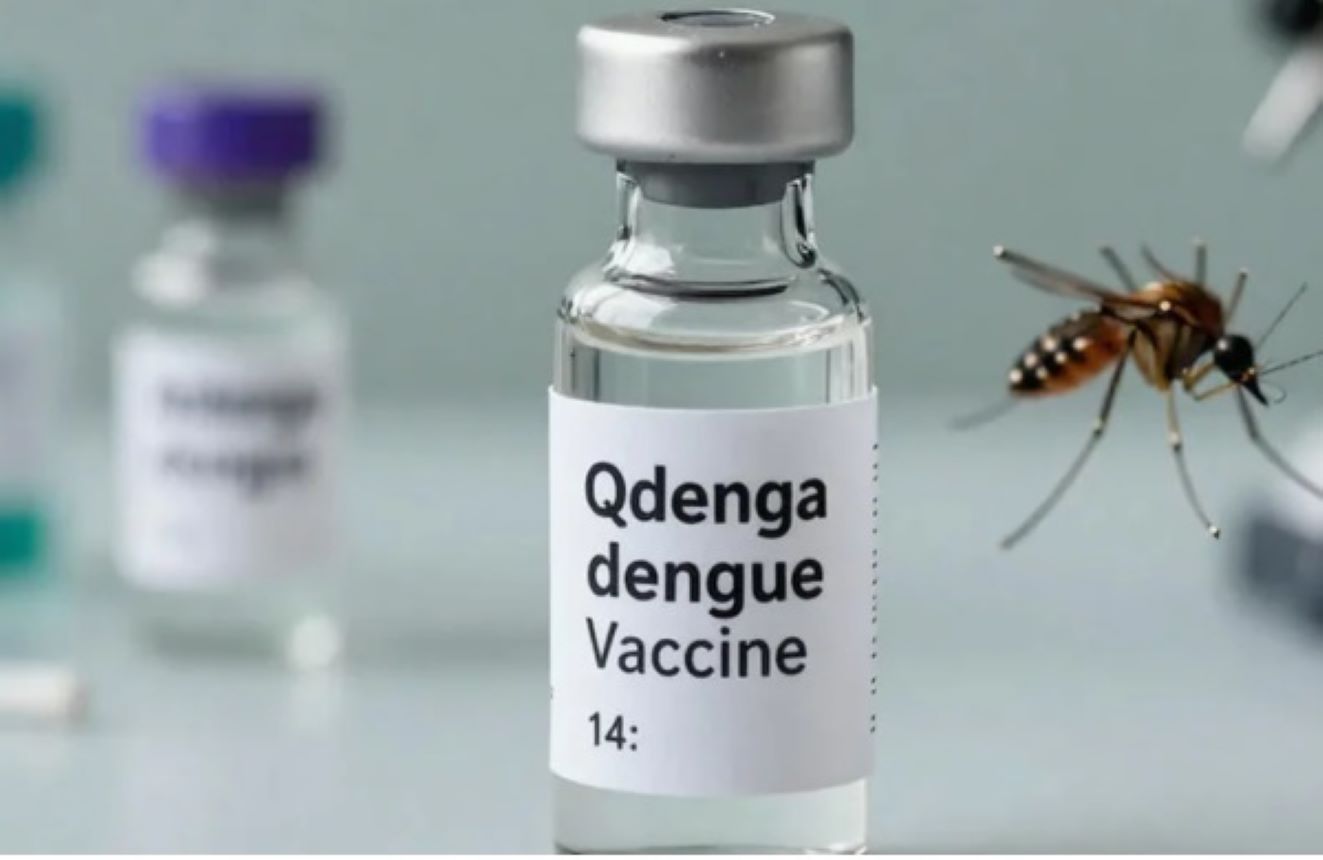
Recently, the Central Drugs Standard
Control Organization (CDSCO) granted marketing authorization to Qdenga (Dengue
Tetravalent Vaccine – Live, Attenuated). With this approval, Qdenga has become
the first vaccine approved in India for the prevention of dengue.
More on the News
¨
The
CDSCO, under the Ministry of Health and Family Welfare, approved QDENGA®,
developed by Takeda GmbH, Germany, for individuals aged 4–60 years.
¨
The
approval was granted after a comprehensive scientific evaluation under the
Drugs and Cosmetics Act, 1940, Drugs Rules, 1945, and New Drugs and Clinical
Trials (NDCT) Rules, 2019.
¨
The
vaccine is expected to complement India’s existing dengue control strategy,
including vector control, surveillance, early diagnosis and case management
under the National Vector Borne Disease Control Programme (NVBDCP).
¨
QDENGA
has received WHO prequalification and regulatory approval in over 40 countries,
including the European Union, the United Kingdom, Switzerland, Indonesia,
Malaysia and Thailand.
¨
QDENGA
is part of Brazil’s National Immunisation Program and is available through
public immunisation programmes in Argentina, Colombia and Indonesia.
QDENGA (Dengue Tetravalent
Vaccine)
¨
Developed
by Takeda GmbH, Germany.
¨
Imported
and marketed in India by Takeda Biopharmaceuticals India Pvt. Ltd.
Type of Vaccine:
¨
Live,
attenuated tetravalent dengue vaccine.
¨
Developed
using recombinant DNA technology.
¨
Produced
in Vero cells using a DENV-2 (dengue virus type-2) backbone engineered with
serotype-specific surface proteins.
¨
Contains
genetically modified organisms (GMOs).
¨
Supplied
as a freeze-dried powder for reconstitution.
¨
Protection:
Designed to protect against all four dengue virus serotypes (DENV-1, DENV-2,
DENV-3 and DENV-4).
¨
Can be
administered irrespective of previous dengue infection.
¨
No
pre-vaccination screening or serological testing is required.
¨
Eligibility:
Approved for individuals aged 4–60 years.
Significance of QDENGA
¨
High
Global Disease Burden: About half of the world’s population is at risk of
dengue, with an estimated 100–400 million infections occurring annually,
according to the World Health Organization.
¨
Addresses
India’s High Dengue Burden: India accounts for nearly one-third of the global
dengue burden and is among the 30 most highly endemic countries for dengue.
¨
According
to the National Centre for Vector-Borne Disease Control (NCVBDC), 1,21,824
dengue cases and 121 deaths were reported in 2025, while the caseload exceeded
2 lakh in 2023 and 2024.
¨
Strengthens
India’s Dengue Prevention Strategy: Introduces the first approved dengue
vaccine in India, adding vaccination to the country’s existing dengue prevention
measures.
¨
Reduces
Economic Burden: Dengue places a significant medical and economic burden on
India, with a 2019 Journal of Infection and Public Health study estimating its
overall economic cost at US$5.71 billion in 2016.
Dengue
¨
Dengue
(also known as break-bone fever) is a mosquito-borne viral disease caused by
the dengue virus (DENV).
¨
It is
transmitted primarily through the bite of infected female Aedes aegypti
mosquitoes; Aedes albopictus can also act as a vector.
¨
The
disease is endemic in more than 100 countries, mainly in tropical and
subtropical regions.
¨
The
dengue virus has four distinct serotypes—DENV-1, DENV-2, DENV-3 and DENV-4—and
infection with one serotype provides lifelong immunity only against that
serotype, while a subsequent infection with a different serotype increases the
risk of severe dengue.
¨
Symptoms:
Symptoms usually appear 4–10 days after infection, last 2–7 days, and commonly
include high fever, severe headache, pain behind the eyes, muscle and joint
pain, nausea, vomiting, skin rash and swollen glands.
¨
Severe
Dengue: Warning signs of severe dengue include severe abdominal pain,
persistent vomiting, rapid breathing, bleeding gums or nose, blood in vomit or
stool, extreme weakness and restlessness.
¨
Diagnosis:
Dengue is diagnosed through Nucleic Acid Amplification Tests (NAATs), antigen
tests, ELISA-based antibody tests and Rapid Diagnostic Tests (RDTs).