Union Cabinet Approves National Circular
Bio-Energy Scheme – GOBARdhan with a Total Outlay of ₹2,331 Crore
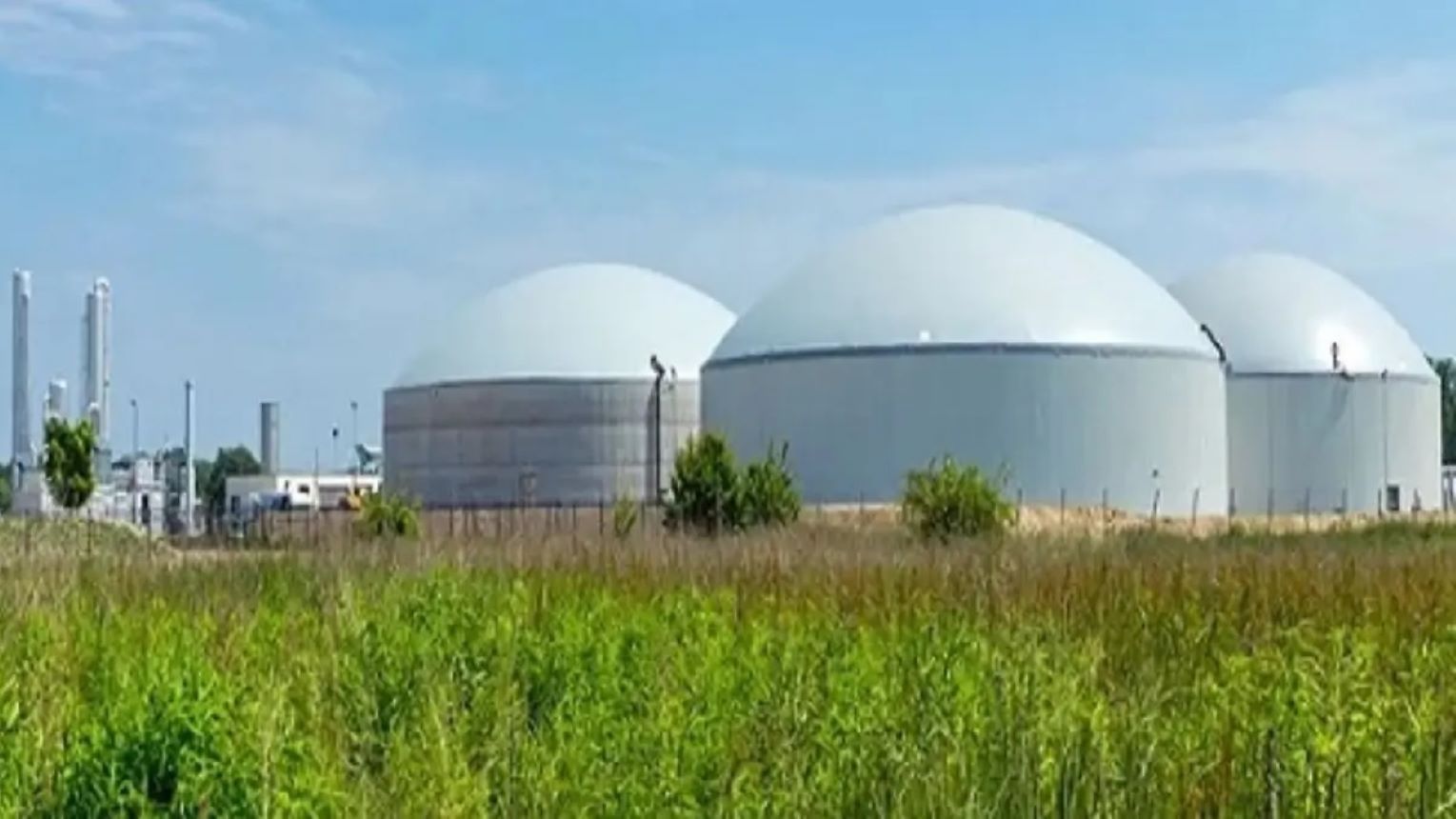
The Union Cabinet has approved the National Circular
Bio-Energy Scheme – GOBARdhan with a total outlay of ₹2,331 crore. Its
objective is to accelerate the development of Compressed Biogas (CBG) and
establish it as a key pillar of India's future energy mix.
National Circular Bio-Energy Scheme –
GOBARdhan
¨
Scheme Duration: The
scheme will be implemented from the financial year 2026–27 to 2035–36.
¨
Administrative Ministry:
Ministry of Petroleum and Natural Gas.
¨
Objective: It aims to
increase domestic Compressed Biogas (CBG) production approximately tenfold,
attract large-scale private investment, and build a robust circular bio-economy
across the country.
¨
It aims to provide a
strong and predictable framework through assured demand, remunerative and
stable pricing, capital support, pipeline infrastructure, credit assistance,
and technology development.
¨
The scheme converts
agricultural residues, cattle dung, pressmud, organic waste from municipal
bodies, and other biomass into clean fuel, organic manure, rural income, and
national economic value.
The
scheme is based on the following initiatives
¨
Sustainable Alternative
Towards Affordable Transportation (SATAT)
¨
Market Development
Assistance (MDA) scheme
¨
Biomass Aggregation
Machinery (BAM) scheme
¨
Pipeline Infrastructure
Development (DPI) scheme
¨
Central Financial
Assistance (CFA) under the National Bio-energy Programme
Six components of GOBARdhan
1. Assured
CBG Offtake: The scheme establishes a dedicated CBG offtake assurance framework
to provide a reliable and predictable market for producers. Procurement by City
Gas Distribution (CGD) entities will help meet notified CBG obligations in the
CNG (transport) and PNG (domestic) sectors—specifically 3% in FY 2026–27, 4% in
FY 2027–28, and 5% from FY 2028–29 onwards.
2.
Stable Pricing Framework:
A stable administered CBG price of ₹2,110 per Million Metric British Thermal
Units (MMBTU) has been set under a pricing framework valid for a minimum of 10
years. This ensures long-term income certainty and helps maintain affordability
for consumers.
3.
Capital Support: Eligible
greenfield CBG projects will receive capital support of up to ₹2 crore per
tonne per day (TPD) of installed CBG capacity. Brownfield expansion projects
will also be eligible. This support will not be limited to core plant machinery
but will also cover feedstock aggregation and organic manure processing.
4.
Pipeline Infrastructure
Development: Support will be provided for cluster-based and standalone pipeline
infrastructure connecting CBG plants to main pipelines and City Gas
Distribution networks.
5.
Loan Guarantee Support:
Institutional credit will be extended to eligible MSME-based CBG projects
through a dedicated loan guarantee mechanism. This will improve access to
affordable financial assistance and reduce collateral requirements.
6. CBG
Ecosystem Challenge Fund: This will provide support for the assessment and
mapping of feedstock resources, feedstock aggregation infrastructure,
district-level CBG development planning, technology adoption, value addition of
organic manure, capacity building, and stakeholder awareness.
Impact of the Scheme
¨
Increasing domestic CBG
production nearly tenfold and achieving a target of 5 Million Metric Standard
Cubic Meters per Day (MMSCMD).
¨
Reducing dependence on
imported fossil fuels, thereby saving over ₹40,000 crore in foreign exchange.
¨
Attracting large-scale
private investment to develop a CBG industry estimated at ₹75,000 crore,
facilitated by assured offtake, stable pricing, capital support, pipeline
connectivity, and credit assistance.
¨
Generating approximately
1.5 lakh jobs and creating additional income opportunities for farmers,
feedstock aggregators, cooperatives, MSMEs, and rural entrepreneurs.
¨
Promoting the scientific
utilization of agricultural residues, cattle dung, press mud, and organic waste
from urban local bodies; expanding the organic manure economy (FOM and LFOM);
and reducing greenhouse gas emissions.