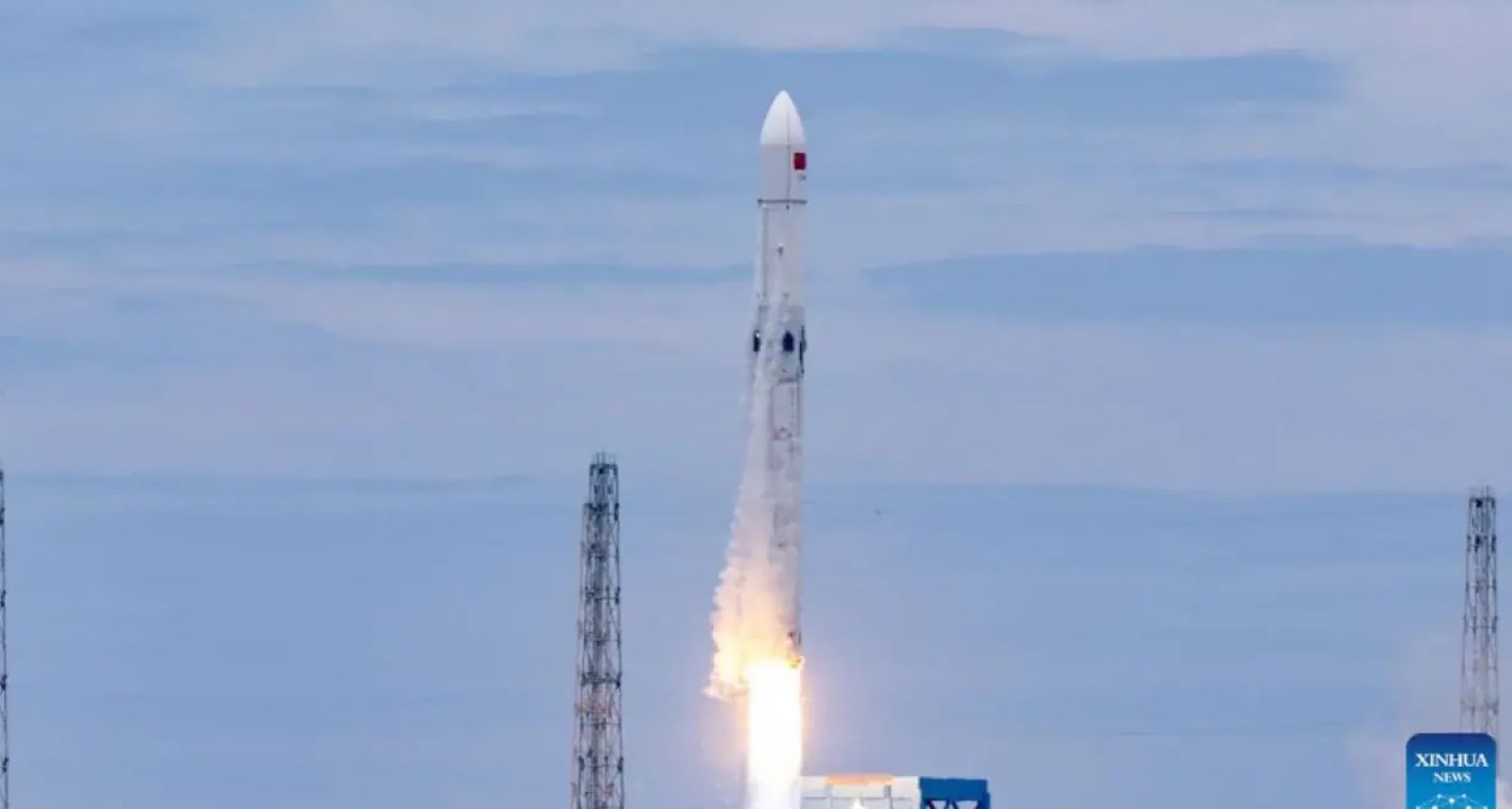
China Successfully Recovers Long March-10B
First Stage, Marking a Major Step Toward Reusable Launch Capability
China has successfully recovered and safely landed the
first stage of its Long March-10B rocket, marking the successful demonstration
of its first reusable orbital-class launch vehicle. This achievement represents
a major milestone in China's space programme and advances its efforts to
develop cost-effective and reusable launch technologies..
More on the News
¨
The Long March-10B
successfully completed a controlled descent and vertical landing on a sea-based
recovery platform, becoming China’s first recovered orbital-class reusable
rocket booster.
¨
Unlike conventional
landing-leg recovery systems, the booster was captured using a net-based
recovery system mounted on an offshore platform, a method claimed to be a
world-first in reusable rocket recovery.
¨
The rocket can carry
about 16 tonnes to Low Earth Orbit (LEO) in reusable mode and is expected to
support China’s Qianfan satellite constellation, commercial launch market, and
future lunar exploration missions.
Reusable Rocket Technology: Concepts and
Types
What are Reusable Rockets?
¨
Reusable rockets are
launch vehicles whose stages or major components can be recovered after launch,
refurbished, and flown again for future missions.
¨
Unlike conventional
expendable rockets, they are designed to survive re-entry and landing, reducing
the need to manufacture a new rocket for every launch.
Why Does Reusability Matter?
¨
The first-stage booster
accounts for a major share of launch costs because it contains expensive
engines, avionics, fuel systems, and structural components.
¨
Recovering and reusing
these components can significantly reduce the cost of access to space and
improve launch frequency.
¨
The concept is often
compared to commercial aviation, where aircraft are reused repeatedly rather
than discarded after a single flight.
Types of Recovery Systems
Vertical Take-off, Vertical Landing (VTVL)
¨
The rocket launches
vertically and returns to land vertically using controlled engine burns and
precision guidance systems.
¨
Requires advanced
navigation, thrust-vector control, and autonomous landing technologies.
¨
Examples: SpaceX Falcon
9, SpaceX Starship Booster, Blue Origin New Shepard, China’s Long March-10B
Horizontal Landing Systems
¨
The vehicle returns
through the atmosphere and lands on a runway like an aircraft.
¨
Requires aerodynamic
control surfaces and robust thermal protection systems.
¨
Examples: ISRO’s Pushpak
Reusable Launch Vehicle (RLV), NASA Space Shuttle
How Reusable Rockets Work
¨
After launch, the
reusable stage separates from the upper stage carrying the payload.
¨
Guidance, navigation, and
control systems steer the booster through a controlled descent trajectory.
¨
Engine burns reduce
velocity before landing on a designated platform or runway.
¨
The recovered vehicle is
inspected, refurbished, and prepared for future launches.
Significance of Reusable Rocket Technology
¨
Lowering the Cost of
Space Access: Reusing expensive booster stages significantly reduces launch
costs, making space missions more affordable.
¨
Increasing Launch Frequency:
Faster turnaround and reuse enable more frequent launches than conventional
expendable rockets.
¨
Supporting Mega Satellite
Constellations: Reusable launch systems facilitate the cost-effective
deployment of large satellite networks for communication and internet services.
¨
Enabling Future
Deep-Space Missions: Reduced launch costs improve the feasibility of sustained
lunar, planetary, and human spaceflight missions.
¨
Expanding the Commercial
Space Economy: Affordable and frequent launches encourage private-sector
participation and enhance competitiveness in the global space market.


 Series with Base Year 2022–23.jpg)