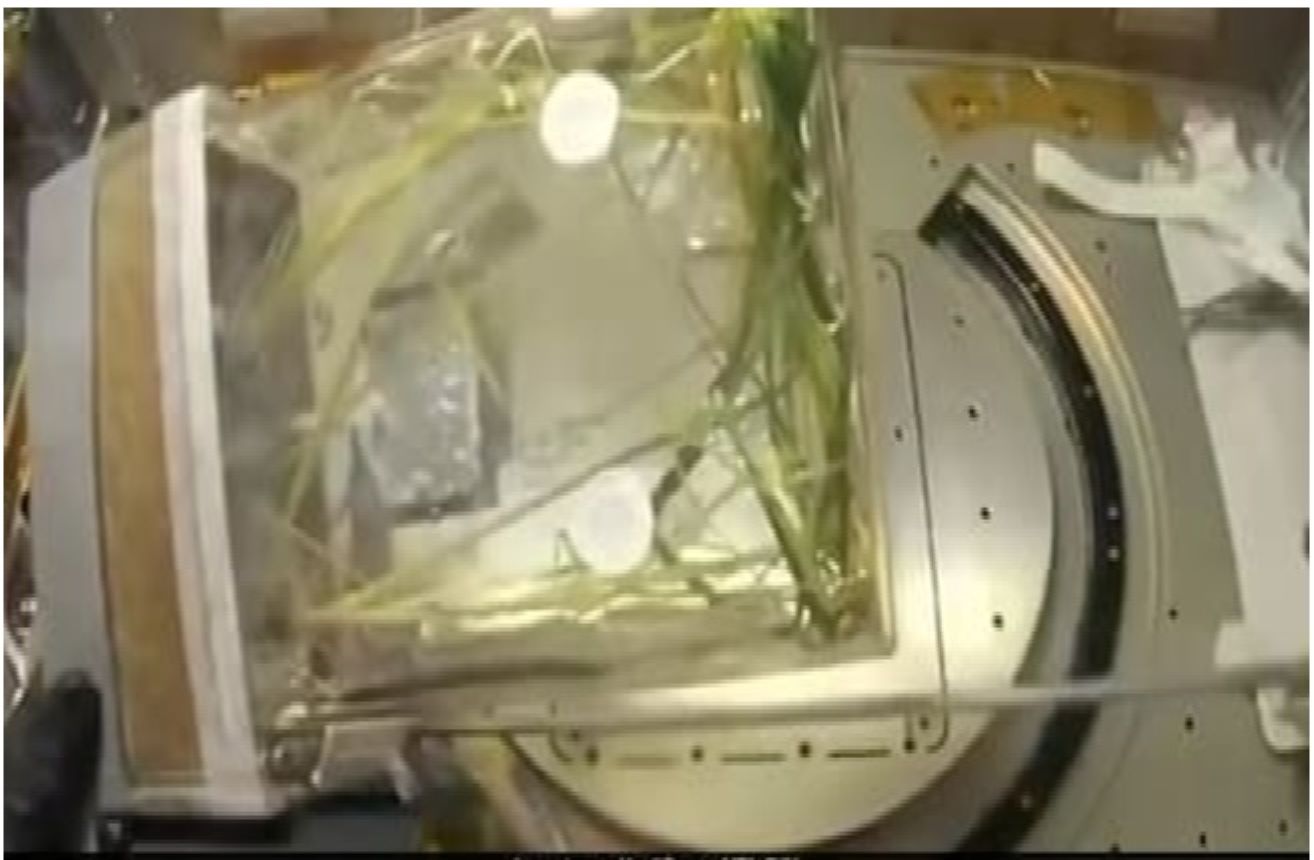
Chinese astronauts aboard the Tiangong
Space Station harvested the first batch of rice grown in orbit
¨
Chinese astronauts aboard
the Tiangong Space Station harvested the first batch of rice grown in orbit on
5 August 2026.
¨
The harvest was part of
the Shenzhou-23 mission, which was launched on 24 May 2026.
¨
The harvested rice
samples were collected and stored for further scientific analysis.
¨
Tiangong is China’s
modular space station that supports long-duration human missions and biological
experiments in low Earth orbit.
¨
The Shenzhou-23 crew
consisted of Zhu Yangzhu, Zhang Zhiyuan, and Lai Ka-ying, who carried out the
rice harvesting and sample storage in orbit.
¨
The experiment aims to
achieve the continuous cultivation of two generations of rice in space.
¨
Researchers will study
how prolonged microgravity affects genetic stability, plant development, and
seed reproduction.
¨
The experiment uses two
types of japonica rice seeds.
¨
The first type consists
of ordinary seeds that have never been exposed to space.
¨
The second type consists
of “space lineage” seeds, descended from rice grown aboard Tiangong in 2022 and
bred on Earth for three generations.
¨
The experiment uses four
cultivation units and follows two reproduction methods.
¨
The first method is
conventional seed-to-seed sexual reproduction, in which plants produce new
generations through seeds.
¨
The second method is
ratooning, in which new shoots grow from the remaining roots after the plant is
harvested.
¨
Scientists will analyse
the returned rice grains, stems, and leaves to understand plant growth and
reproduction in space.
¨
The research is expected
to support the development of space farming and in-situ food production for
future missions to the Moon and Mars.