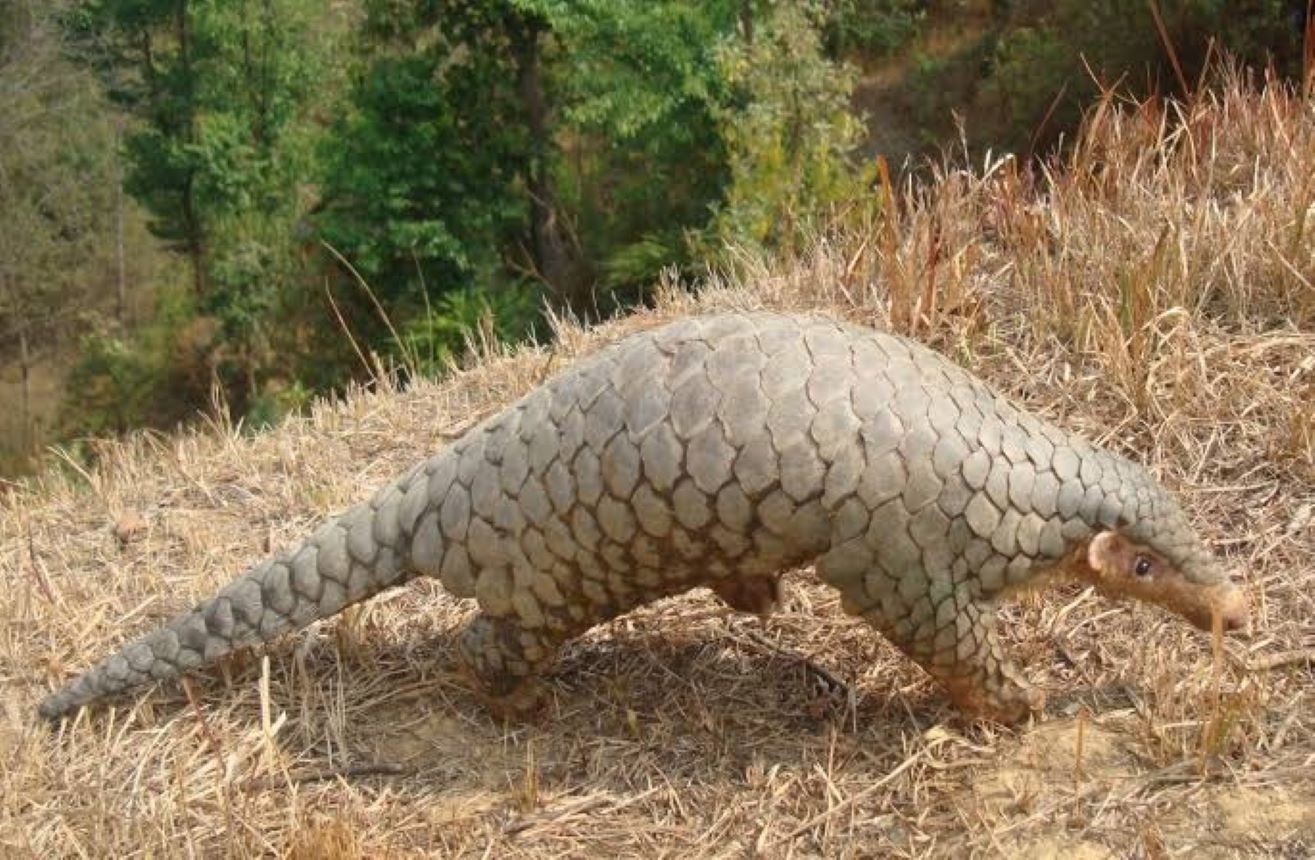
Confirmed as a distinct species of
Himalayan pangolin
A recent study has confirmed the Himalayan pangolin
(Manis aurita) as a distinct species, ending its long-standing classification
as a subspecies of the Chinese pangolin (Manis pentadactyla)
More on the News
¨
Historically, three
subspecies of the Chinese pangolin were recognised: M. p. pentadactyla
(Taiwan), M. p. pusilla (Hainan Island) and M. p. aurita (Central Nepal). While
the first two had been extensively studied, the taxonomic status of M. p.
aurita remained unresolved for decades.
¨
Researchers sequenced DNA
from the original 1836 lectotype specimen of aurita described by Brian Houghton
Hodgson and compared it with modern Himalayan specimens.
¨
The genomic and
morphological analyses confirmed that Himalayan pangolins represent a distinct
evolutionary lineage, warranting recognition as Manis aurita.
¨
The species has a
restricted distribution in the southern Himalayan foothills, with confirmed
populations in Nepal, South Tibet and Northeast India, including Assam.
¨
Additionally, DNA
analysis of the original 1836 aurita specimen confirmed that the recently
proposed Manis indoburmanica and Manis aurita are the same species.
Consequently, Manis aurita has been retained as the valid scientific name for
the Himalayan pangolin.
Scientific Basis for Species Recognition
Distinct Physical Characteristics
¨
The Himalayan pangolin is
significantly larger than the Chinese pangolin, averaging 95.2 cm in length
compared to 71.2 cm.
¨
It has a larger skull,
longer tail, smaller ears, and a shorter, broader nasal bone, indicating clear
physical differences.
Strong Genetic Evidence
¨
Genome sequencing
revealed substantial genetic differences between Himalayan and Chinese
pangolins, confirming that they belong to separate evolutionary lineages.
¨
Differences were also
observed in genes related to olfaction (sense of smell), reflecting adaptation
to different environments.
Long Evolutionary Separation
¨
Scientists estimate that
the ancestors of the two species diverged around 1.8 million years ago during
the Early Pleistocene Epoch.
¨
Climatic changes likely
isolated populations in the Himalayan region from those in East and Southeast
Asia, leading to the evolution of a separate species over time.
Impact of Past Climate Change
¨
Genetic evidence suggests
that the Himalayan pangolin experienced major population declines during
periods of climatic cooling, including during the Little Ice Age (14th–19th
century).
Conservation Significance
¨
Species-Specific
Conservation Planning: Recognition of Manis aurita as a separate species
enables conservation strategies to be tailored to its unique ecology,
distribution and threat profile.
¨
Improved Conservation
Assessment: Earlier assessments grouped Himalayan and Chinese pangolins
together; species-level recognition will allow more accurate evaluation of
population status, distribution and extinction risk.
¨
Strengthening
Anti-Trafficking and Wildlife Forensics: Clear taxonomic distinction can
improve the identification of pangolin scales and body parts in wildlife crime
investigations, supporting efforts to combat illegal trafficking.
¨
Recognition of Hidden
Himalayan Biodiversity: The discovery highlights the Himalayan region as an
important centre of cryptic biodiversity and underscores the value of
integrative taxonomic research.
 report for 2022-23 and 2023-24.jpg)