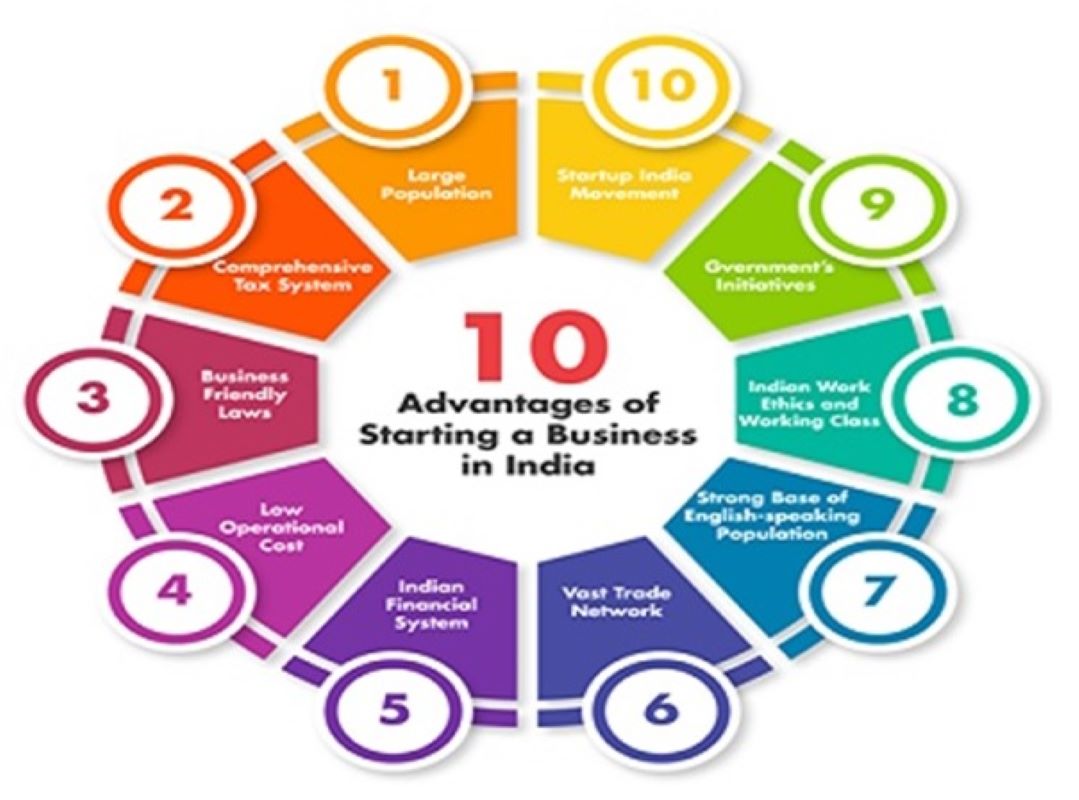
Decade of Reforms Strengthens India’s Ease
of Doing Business Ecosystem
The Government of India has highlighted a decade of
reforms aimed at improving the country's Ease of Doing Business (EoDB)
ecosystem through regulatory simplification, digital governance, and
trust-based administration. These reforms have been designed to reduce
compliance burdens, enhance transparency, attract investments, and create a
more business-friendly environment.
Key Performance Metrics
¨
India’s rank in the World
Bank’s Doing Business Report improved from 142 (2014) to 63 (2019), while its
IMD World Competitiveness Ranking improved from 43 (2021) to 41 (2025).
¨
India has been placed in
Group A of the World Bank’s GovTech Maturity Index in 2020, 2022 and 2025,
reflecting strong digital governance capabilities.
¨
The reforms signify a
shift from a compliance-heavy regulatory regime towards a facilitation-driven
and trust-based governance framework.
¨
Reforms have targeted the
entire business lifecycle, including business entry, land and permits,
taxation, credit access, logistics, trade facilitation and insolvency
resolution.
Major Reforms Undertaken to Promote EoDB
Startup and Enterprise Ecosystem
¨
Under Startup India,
recognised startups increased from 502 (2016) to over 2.23 lakh (2026),
generating more than 23.3 lakh jobs.
¨
The SPICe+ platform and
MCA21 Version 3 have simplified company incorporation through integrated
registrations and technology-enabled compliance systems.
¨
The Udyam Registration
Portal has facilitated paperless and self-declaration-based registration,
significantly expanding MSME formalisation.
Land and Property Reforms
¨
Under the Digital India
Land Records Modernization Programme (DILRMP), over 97% of cadastral maps have
been digitised, and more than 36 crore land parcels have been assigned ULPIN.
¨
The National Generic
Document Registration System (NGDRS) is streamlining property registration
through the “One Nation, One Registration” approach.
Expanding Market Opportunities
¨
Government e-Marketplace
(GeM) has emerged as a major public procurement platform with cumulative
transactions exceeding ₹18.4 lakh crore.
¨
Open Network for Digital
Commerce (ONDC) is expanding digital market access for MSMEs, startups and
small businesses across the country.
Improving Logistics and Connectivity
¨
India’s rank in the
Logistics Performance Index improved from 54 (2014) to 38 (2023).
¨
Initiatives such as PM
GatiShakti, the National Logistics Policy and digital logistics platforms are
improving multimodal connectivity and supply-chain efficiency.
¨
Trade facilitation
measures such as ICEGATE, eCoO 2.0 and the Districts as Export Hubs initiative
have strengthened export competitiveness.
Improving Access to Finance
¨
Schemes such as CGTMSE,
PM Mudra Yojana and technology-driven credit assessment models have expanded
access to formal credit, particularly for MSMEs.
¨
Strengthening of TReDS is
facilitating faster invoice financing and improving MSME liquidity.
Tax and Digital Public Infrastructure
Reforms
¨
GST replaced multiple
indirect taxes and expanded the taxpayer base from around 60 lakh (2017) to
over 1.64 crore (2026).
¨
Faceless assessments,
digital tax administration and the e-Way Bill system have reduced compliance
burdens.
¨
Digital Public
Infrastructure initiatives such as UPI, cKYC Registry and EntityLocker have
simplified payments, onboarding and business transactions.
¨
Trust-Based Governance
and Regulatory Reforms
¨
The Jan Vishwas Acts
(2023 & 2026) have decriminalised hundreds of minor offences and promoted
proportionate regulation.
¨
More than 47,000
compliances have been reduced, simplified, digitised or eliminated across
sectors.
¨
Business Reforms Action
Plan (BRAP) and District BRAP are driving competitive federalism and improving
the business environment at the state and district levels.
¨
Reforms in the Insolvency
and Bankruptcy Code (IBC) have strengthened time-bound insolvency resolution
and creditor-driven restructuring.
Significance of India’s EoDB Reforms
¨
Promoting
Entrepreneurship and Formalisation: Simplified registration processes, digital
platforms and easier credit access have encouraged business creation and
formalisation of enterprises.
¨
Enhancing Investor
Confidence: Faster approvals, transparent regulations and insolvency reforms
have improved the predictability and attractiveness of India’s business
environment.
¨
Driving Digital-Led
Governance: Adoption of digital public infrastructure and online service
delivery has reduced transaction costs and improved efficiency.
¨ Strengthening Global Competitiveness: Reforms in logistics, trade facilitation and market access have improved India’s position as a preferred investment and manufacturing destination.
¨ Transitioning to Trust-Based Governance: Compliance reduction, decriminalisation and technology-enabled regulation have shifted governance from control-based oversight to facilitation-oriented administration.

.jpg)