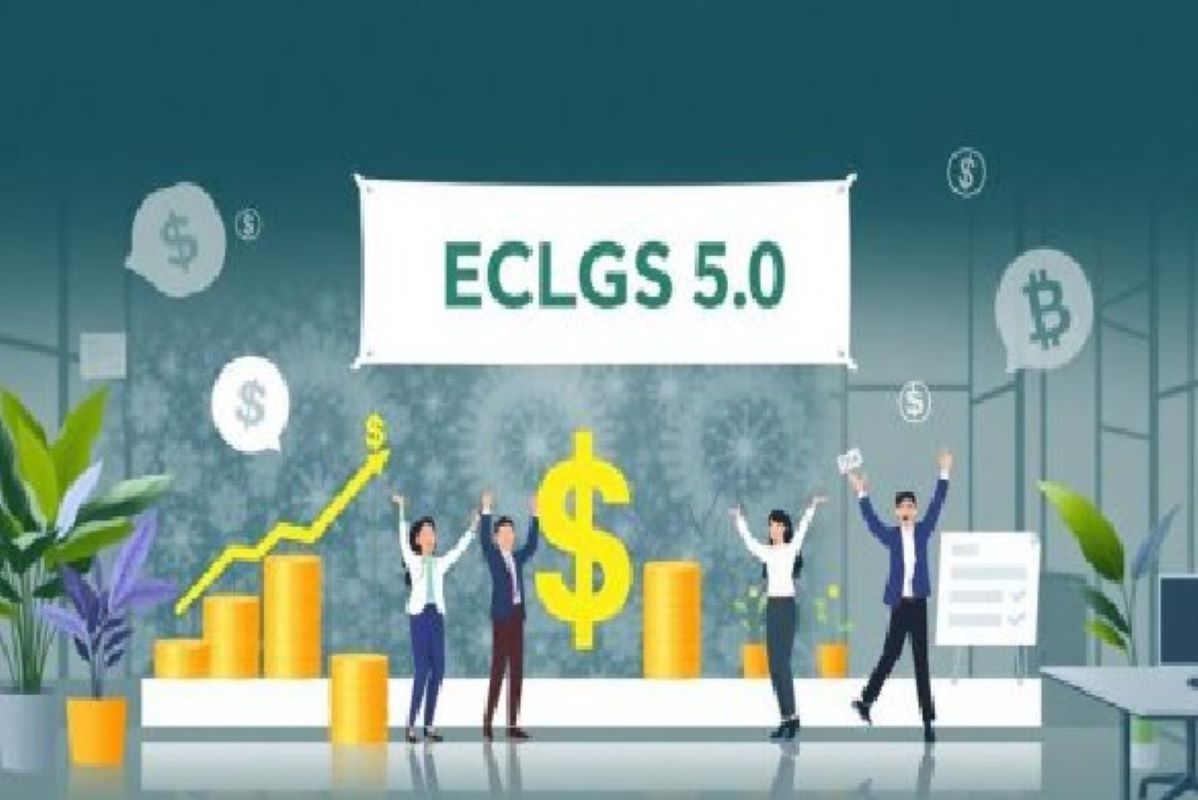
ECLGS 5.0 Crosses
Major Milestone: Over 1 Lakh Guarantees Issued
The Emergency Credit Line Guarantee
Scheme (ECLGS) 5.0 has achieved a significant milestone, with the total number
of guarantees issued under the scheme crossing 1 lakh. The cumulative value of
guarantees has also surpassed ₹48,000 crore, highlighting the scheme’s growing
role in supporting India’s healthcare sector.Launched to strengthen healthcare
infrastructure and improve access to credit for healthcare-related institutions,
ECLGS 5.0 provides government-backed guarantees on loans extended by banks and
financial institutions. The scheme aims to ensure that healthcare providers can
obtain additional funds without facing difficulties related to collateral
requirements.
More on the News
¨
As
of June 9, 2026, a total of 1,06,549 guarantees have been issued under ECLGS
5.0, with the cumulative value of guarantees reaching ₹48,484.26 crore.
¨
The
scheme remains overwhelmingly MSME-focused, with 96% of the guarantees issued
(by number) and 86% of the total guaranteed amount pertaining to the MSME
sector.
¨
Public
Sector Banks (PSBs) account for nearly 96% of the guarantees issued, reflecting
their central role in ensuring rapid and widespread implementation of the
scheme.
¨
The
milestone demonstrates the strong uptake of government-backed credit guarantees
and the continuing relevance of ECLGS as a tool for supporting businesses
during periods of economic stress.
ECLGS and
Evolution
¨
The
Emergency Credit Line Guarantee Scheme (ECLGS) was launched in May 2020 as part
of the Atmanirbhar Bharat Package to provide collateral-free,
government-guaranteed emergency credit to businesses affected by the COVID-19
pandemic.
¨
The
scheme is implemented through the National Credit Guarantee Trustee Company
Ltd. (NCGTC) under the Department of Financial Services, Ministry of Finance.
¨
Over
time, the scheme evolved through multiple phases—ECLGS 1.0, 2.0, 3.0 and
4.0—expanding its coverage to additional sectors and addressing emerging
economic challenges.
¨
ECLGS
5.0, approved by the Union Cabinet on 5 May 2026, is the latest phase aimed at
supporting businesses facing liquidity stress arising from the West Asia crisis
and related global economic uncertainties.
Key Features of
ECLGS 5.0
¨
The
scheme seeks to facilitate additional credit support of ₹2.55 lakh crore to
existing borrowers facing liquidity challenges arising from the West Asia
crisis.
¨
It
provides 100% guarantee coverage for MSME borrowers and 90% guarantee coverage
for non-MSME borrowers, including scheduled passenger airlines, thereby
reducing lending risk for financial institutions.
¨
Eligible
borrowers can avail additional credit linked to their existing credit exposure,
enabling quicker access to working capital during periods of stress.
¨
The
scheme has an estimated guarantee cover of around ₹18,000 crore and remains
operational for eligible loans sanctioned up to 31 March 2027.
¨
By
offering sovereign-backed guarantees, the scheme encourages banks and financial
institutions to extend credit to otherwise risk-prone sectors.
Significance for
the Economy
¨
Strengthening
MSMEs: The fact that 96% of guarantees issued and 86% of the guaranteed amount
relate to MSMEs highlights the scheme’s critical role in supporting India’s
MSME sector, which contributes around 30% of GDP, 45% of exports and over 11
crore jobs.
¨
Enhancing
Credit Flow: Government-backed guarantees improve lender confidence and
facilitate timely credit to enterprises that may otherwise face financing
constraints during uncertain economic conditions.
¨
Supporting
Business Continuity: The issuance of 1,06,549 guarantees worth ₹48,484.26 crore
demonstrates the scheme’s effectiveness in addressing liquidity shortages and
sustaining economic activity.
¨ Protecting Employment and Supply Chains: By ensuring access to working capital, ECLGS helps businesses maintain production, preserve jobs and support supply-chain resilience.
¨ Counter-Cyclical Economic Support: The scheme acts as an important policy instrument for mitigating the impact of external shocks and preventing credit contraction during periods of economic uncertainty.
.jpg)