ICIMOD Releases Climate Finance Synthesis
Report
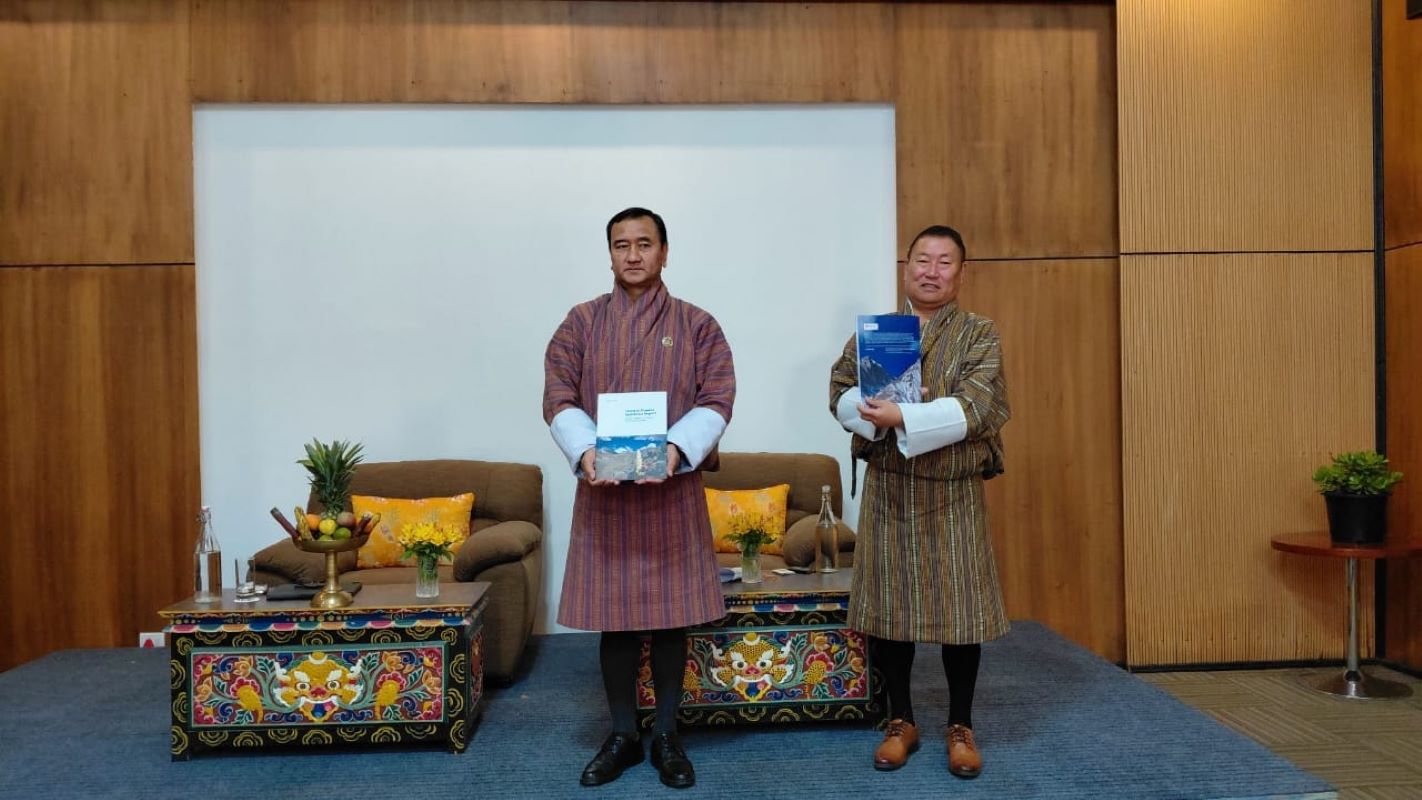
Recently, the International Centre for Integrated
Mountain Development (ICIMOD) released its Climate Finance Synthesis Report,
estimating that countries in the Hindu Kush Himalaya (HKH) region will require
approximately US$ 12.06 trillion between 2020 and 2050 to achieve their climate
adaptation and mitigation goals.
Key Findings of the ICIMOD Report
Scale of Climate Finance Requirements
¨
The eight HKH countries
collectively require USD 12.07 trillion in climate finance during 2020–2050,
equivalent to an annual requirement of about USD 768.68 billion.
¨
China (USD 8.46 trillion)
and India (USD 2.69 trillion) together account for over 92% of the region’s
total climate finance needs, reflecting the size of their economies and
populations.
India’s Climate Finance Requirement
¨
India’s total climate
finance requirement is estimated at USD 2.69 trillion, with an average annual
requirement of USD 101.92 billion between 2020 and 2050.
¨
The country’s annual
per-capita climate finance requirement stands at USD 69.6, equivalent to
approximately 3% of its per-capita GDP.
Disproportionate Burden on Smaller Economies
¨
Lower-income HKH
countries face significantly higher climate-finance burdens relative to their
economic capacity. Bhutan has the highest annual per-capita requirement at USD
2,126.5 (57% of per-capita GDP), followed by Nepal (USD 296.5) and Pakistan
(USD 166.1).
¨
The findings highlight a
major climate justice and equity challenge, as several smaller economies face
disproportionately high financing needs despite their relatively limited
contribution to global greenhouse-gas emissions.
Persistent Financing Gaps
¨
Despite rising climate
risks across the HKH region, sectors such as adaptation, disaster risk
reduction, water management, agriculture and ecosystem conservation continue to
receive inadequate financial support.
Recommendations
¨
Strengthen Climate
Finance Governance: Build robust national institutional capacities,
climate-finance governance frameworks, climate budgeting systems and
project-preparation capabilities to improve access to climate finance.
¨
Establish an HKH Climate
Finance Network: Promote regional cooperation through a dedicated platform for
knowledge sharing, capacity building, policy coordination and collaborative
financing initiatives across HKH countries.
¨
Leverage Innovative
Financing Instruments: Expand the use of green bonds, blue bonds,
debt-for-climate swaps, blended finance and voluntary carbon markets tailored
to the specific needs of mountain economies.
¨
Enhance Private Sector
Participation: Create enabling policy frameworks, investment incentives and a
pipeline of bankable climate projects to attract greater private investment in
climate action.
¨
Improve Data and Risk
Assessment Systems: Strengthen climate-risk assessments, climate-finance
tracking mechanisms, data infrastructure and reporting systems to improve
transparency, accountability and investor confidence.
About the Hindu Kush Himalaya (HKH) Region
¨
The HKH region spans
Afghanistan, Bangladesh, Bhutan, China, India, Myanmar, Nepal and Pakistan,
covering approximately 3.44 million sq. km.
¨
Often referred to as the
“Third Pole”, it contains the largest reserves of ice and snow outside the
Arctic and Antarctic regions.
¨
The region is the source
of 10 major transboundary river systems, including the Indus, Ganga,
Brahmaputra, Mekong, Yangtze and Yellow Rivers.
¨
Around 240 million people
live within the HKH region, while nearly 1.9 billion people depend directly or
indirectly on its ecosystem services.
Why HKH Matters Globally
¨
Global Water Security:
The HKH serves as Asia’s water tower, sustaining agriculture, drinking water,
hydropower generation and livelihoods across large parts of South and East
Asia.
¨
Climate Regulation and
Disaster Resilience: Glaciers, forests and mountain ecosystems play a crucial
role in regulating regional climate systems, while protecting communities from
floods, landslides and droughts.
¨
Biodiversity
Conservation: The region contains four global biodiversity hotspots, over 330
Important Bird and Biodiversity Areas (IBAs) and numerous endemic species.
¨
Food-Energy-Water Nexus:
The HKH underpins food production, energy generation and water availability for
nearly one-fourth of the world’s population.
About ICIMOD
¨ ICIMOD is a regional intergovernmental knowledge and learning centre headquartered in Kathmandu, Nepal.
¨ It serves the eight Regional Member Countries: Afghanistan, Bangladesh, Bhutan, China, India, Myanmar, Nepal and Pakistan.

.jpg)