India’s Atomic Energy Regulatory Board
approved the restart of Unit-2 of the Tarapur Atomic Power Station in
Maharashtra
¨ India’s Atomic Energy
Regulatory Board approved the restart of Unit-2 of the Tarapur Atomic Power
Station in Maharashtra on 7 May 2026.
¨
The unit has been cleared
for operation for the next 10 years.
¨ The approval was granted
after completion of a major refurbishment and safety upgradation programme.
¨
The work was carried out
by Nuclear Power Corporation of India Limited.
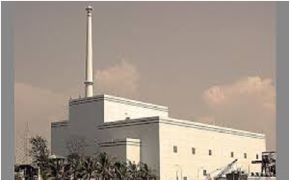
¨ Tarapur Atomic Power
Station is located near Boisar in Palghar district of Maharashtra.
¨
It is one of India’s
oldest nuclear power plants.
¨
Unit-1 and Unit-2 of
Tarapur were India’s first Boiling Water Reactors.
¨
These units began
commercial operations in 1969.
¨
Tarapur Unit-1 received
restart approval in December 2025.
¨
It is currently operating
at its rated capacity of 160 megawatts.
¨ Several major technical
upgrades were carried out under the modernisation programme of Unit-2.
¨
The reactor coolant
recirculation piping system was completely replaced.
¨ Advanced
corrosion-resistant stainless steel forged piping and fittings were installed.
¨
A reactor containment
filtered venting system was added.
¨
An alternate cooling
water system was also installed.
¨
These systems are
intended to strengthen plant safety and emergency response capability.
¨ The Atomic Energy
Regulatory Board reviewed all technical tests, safety inspections and upgrade
works during its meeting on 6 May 2026.
¨
After the review,
permission was granted for the restart of Unit-2.
¨
AERB will continue
monitoring the safety systems and performance of Unit-1 and Unit-2.
¨
The organisation is
responsible for ensuring nuclear safety standards in India.
¨
In a Boiling Water
Reactor, water is used as both a coolant and a moderator.
¨
Water inside the reactor
is heated and converted into steam.
¨ The steam drives turbines to generate electricity.
¨ This technology is widely used in nuclear power plants across the world.