¨ India’s makhana market is estimated to reach ₹11,000–12,000 crore by 2029–30.
¨ Key drivers of market growth include rising demand, increasing prices, expansion of production and growing interest in health-focused snacks.
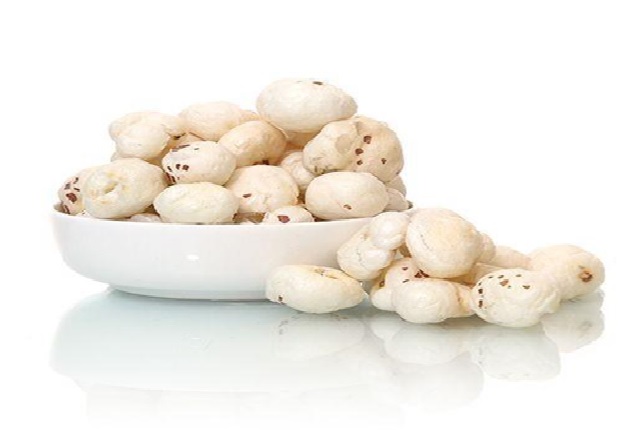
¨ Makhana is commonly known as fox nut, gorgon nut or water lily seed.
¨ Its scientific name is Euryale ferox.
¨ It is an aquatic plant, whose seeds are processed and roasted for consumption as food.
¨ Makhana is mainly cultivated in ponds, water bodies and wetland areas.
¨ India is the world’s largest producer of makhana.
¨ In India, makhana production is mainly concentrated in Bihar, West Bengal and Assam.
¨ Bihar is the largest makhana-producing state in the country.
¨ Major production regions in Bihar include North Bihar, the Kosi Basin, Mithila and Seemanchal.
¨ Major producing districts include Madhubani, Darbhanga, Saharsa, Katihar, Purnia and Supaul.
¨ In 2024–25, India’s makhana production was 63,910 metric tonnes, with an average productivity of 2.03 metric tonnes per hectare.
¨ According to the Second Advance Estimates for 2025–26, production is estimated at 80,590 metric tonnes, with productivity of 2.34 metric tonnes per hectare.
¨ Bihar’s makhana production in 2025–26 is estimated at around 60,000 metric tonnes, with productivity of 2.00 metric tonnes per hectare.
¨ Farm-system-based cultivation and varieties such as Swarna Vaidehi and Sabour Makhana-1 can help increase productivity and reduce cultivation risks.
¨ The domestic makhana market recorded annual growth of 17–18% between 2021–22 and 2024–25.
¨ During the same period, the average price of makhana increased from around ₹500 per kg to approximately ₹1,250 per kg.
¨ In 2025–26, India exported 7,264.89 metric tonnes of makhana products.
¨ The value of makhana exports stood at ₹19,296.08 lakh.
¨ The United States, Canada and the UAE together accounted for around 77% of India’s total makhana exports.
¨ This concentration highlights significant potential for diversifying export markets and expanding India’s global makhana presence.
India’s makhana market is estimated to reach ₹11,000–12,000 crore by 2029–30
India’s makhana
market is estimated to reach ₹11,000–12,000 crore by 2029–30


 for 2026–27.jpg)