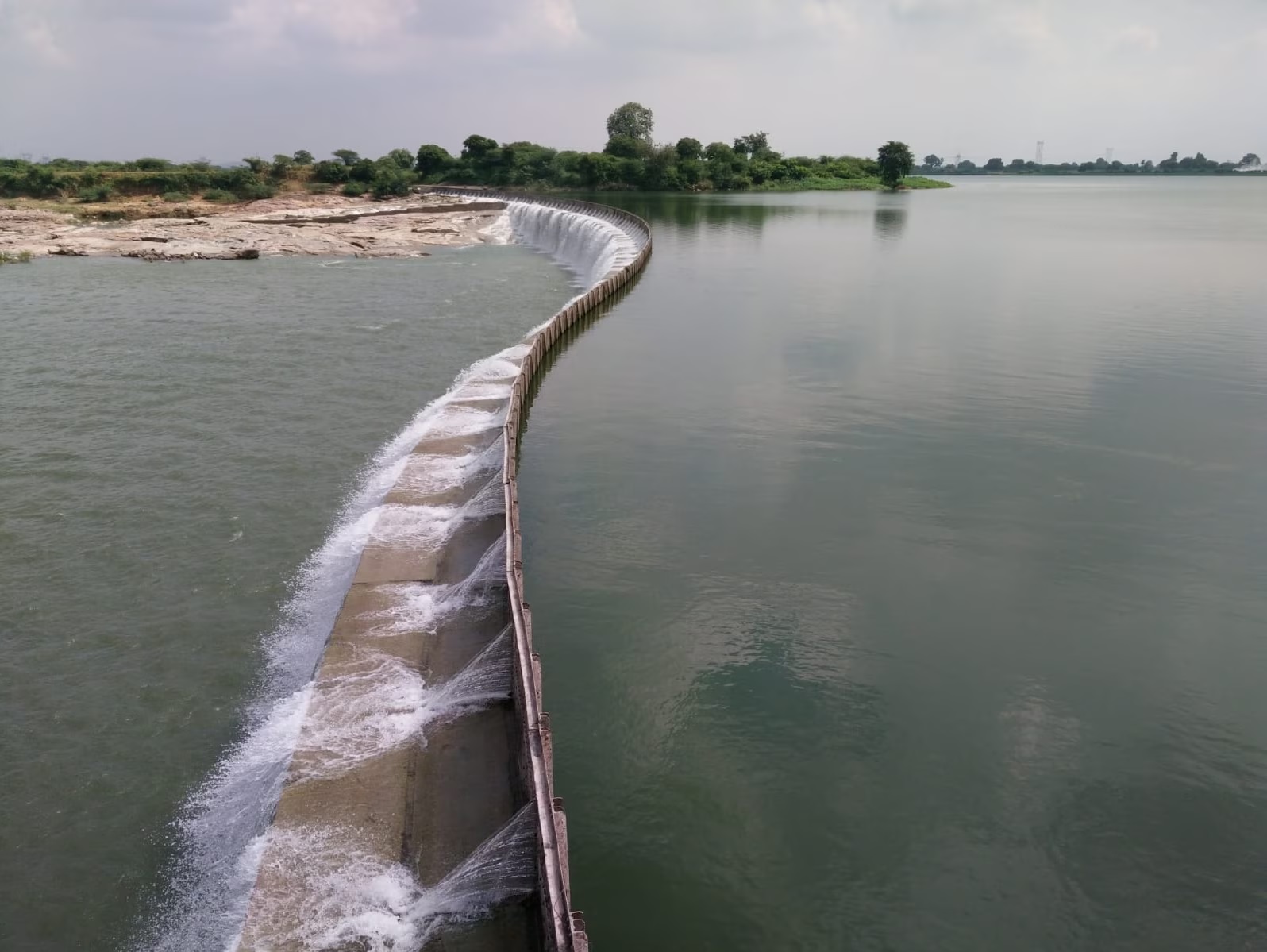
¨ International Commission on Irrigation and Drainage (ICID) designated the 140-year-old Parichha Weir in Jhansi as a World Heritage Irrigation Structure (WHIS) on 13 August 2026.
¨ The Parichha Weir is associated with the Betwa Canal System, which provides irrigation facilities in Uttar Pradesh and Madhya Pradesh.
¨ World Heritage Irrigation Structure (WHIS) is a recognition given by ICID to historic irrigation structures having engineering, cultural and operational significance.
¨ ICID is an international organisation concerned with irrigation, drainage and flood management.
¨ Parichha Weir is a rubble-stone masonry structure.
¨ It is approximately 1,174 metres long and stands 16.8 metres above the riverbed.
¨ The weir has 318 steel falling shutters.
¨ Its reservoir has a capacity of approximately 2,400 million cubic feet.
¨ The associated Betwa Canal System extends for about 2,654 km.
¨ The canal system irrigates approximately 4,28,360 hectares across five districts in Uttar Pradesh and Madhya Pradesh.
¨ The Parichha Weir is located on the Betwa River in the Jhansi region.
¨ The Betwa Canal System was first proposed by Captain Strachey in 1855.
¨ Construction of the system began in 1881 at a cost of approximately ₹40 lakh.
¨ The system was commissioned in 1886.
¨ Parichha Weir became the second major structure in the Jhansi region to receive ICID heritage status.
¨ The Sukwa-Dukwan Weir was recognised as a World Heritage Irrigation Structure in 2022.
International Commission on Irrigation and Drainage (ICID) designated the 140-year-old Parichha Weir in Jhansi as a World Heritage Irrigation Structure • Int
International Commission on Irrigation and Drainage (ICID) designated the 140-year-old Parichha Weir in Jhansi as a World Heritage Irrigation Structure