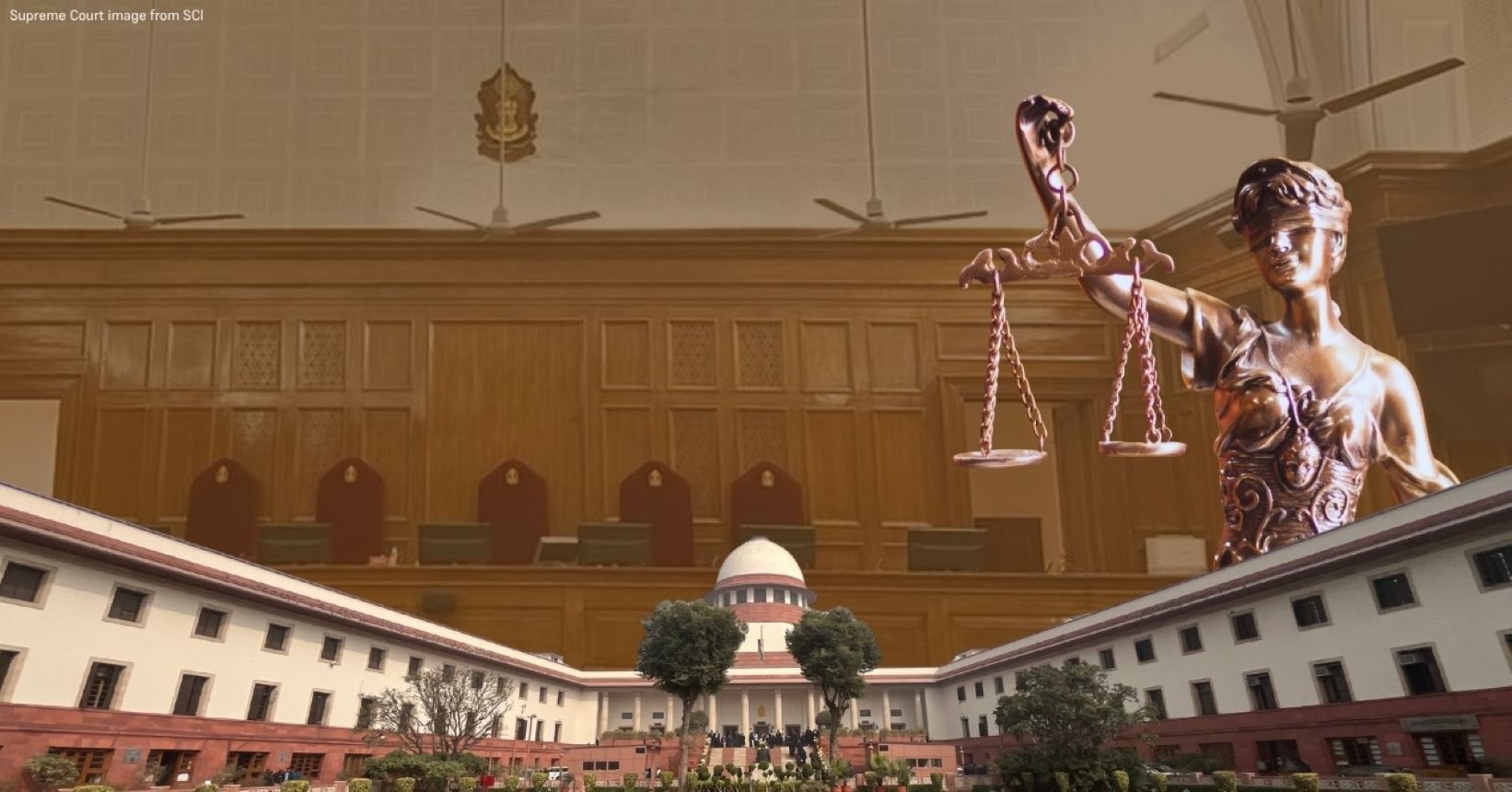
Judicial Transparency Index 2026
The Judicial Transparency Index (2026), released under
the Justice Access and Lowering Delays in India (JALDI) initiative of the Vidhi
Centre for Legal Policy, evaluates the level of transparency in India's
judicial system. The report highlights significant transparency gaps in the
functioning of the Collegium system, particularly in judicial appointments,
transfers, and case allocation.According to the Index, several key aspects of
judicial decision-making remain insufficiently accessible to the public. It
points to limited disclosure regarding the reasons for judicial appointments
and transfers, the criteria used in the selection process, and the principles
governing the allocation of cases. These shortcomings may affect judicial
accountability and public confidence in the justice system.
Key Findings of the Judicial Transparency
Index
¨
Collegium & Judicial
Appointments: The last five Supreme Court Collegium resolutions recommending
High Court judges did not provide specific reasons for appointments, while reasons
for Supreme Court elevations remained largely generic, citing only “merit,
integrity and competence” without substantive justification.
¨
Judicial Transfers: The
Supreme Court does not publish any transfer policy for High Court judges, and
recent Collegium resolutions recommending transfers do not disclose reasons.
¨
Case Allocation: No court
publishes criteria governing allocation of cases to different benches,
resulting in lack of transparency in bench constitution, case allocation,
recusals and disciplinary proceedings.
¨
RTI & Financial
Transparency: Fifteen High Courts prescribe additional exemptions beyond
Section 8 of the RTI Act, while eight High Courts have not published budgets
and no High Court regularly publishes audit reports.
¨
Live Streaming: Only 13
of 25 High Courts have adopted live streaming, and only Chhattisgarh, Gujarat,
Telangana and Gauhati High Courts streamed more than 75% of proceedings on the
assessed day.
About the Collegium System
¨
The Collegium System is
the mechanism through which judges of the Supreme Court and High Courts are
appointed and transferred, and it evolved through the Three Judges Cases
without being mentioned in the Constitution.
¨
Composition: The Supreme
Court Collegium consists of the Chief Justice of India and the four senior-most
judges, while the High Court Collegium consists of the Chief Justice and the
two senior-most judges of the concerned High Court.
¨
Constitutional
Provisions: Article 124 deals with the appointment of Supreme Court Judges,
Article 217 with High Court Judges, Article 224 with Additional Judges, and
Article 222 with the transfer of High Court Judges.
¨
Evolution: The First
Judges Case (1981) gave primacy to the Executive, the Second Judges Case (1993)
established judicial primacy and introduced the Collegium System, and the Third
Judges Case (1998) expanded the Collegium and clarified appointment and
consultation procedures.
¨
National Judicial
Appointments Commission (NJAC): Parliament enacted the 99th Constitutional
Amendment and the NJAC Act, 2014 to replace the Collegium, but the Supreme
Court struck it down in 2015.
Concerns over Transparency in the
Collegium System
¨
Lack of Reasons: Recent
Collegium resolutions provide no reasons for appointments and transfers,
whereas earlier resolutions, though brief and formulaic, recorded some
justification.
¨
No Codified Selection
Criteria: Selection standards are not available in any publicly accessible
document, creating uncertainty regarding appointments.
¨
Confidential
Decision-making: Deliberations on appointments, elevations and transfers remain
confidential, while reasons for rejecting or deferring candidates are rarely
disclosed.
¨
Public Accountability:
Citizens have a right to know who is being appointed, why candidates are
selected and the judicial work and achievements of appointees.
¨
Judicial Independence:
Transparency strengthens judicial independence and open justice enhances public
confidence in the judiciary, as recognised in Swapnil Tripathi (2018) and CPIO,
Supreme Court of India v. Subhash Chandra Agarwal (2020).
 Bill, 20ning India’s Civil Registration System.jpg)