Karivalamvandanallur Excavations Reveal
Continuous Human Occupation from the Microlithic to the Sangam Age
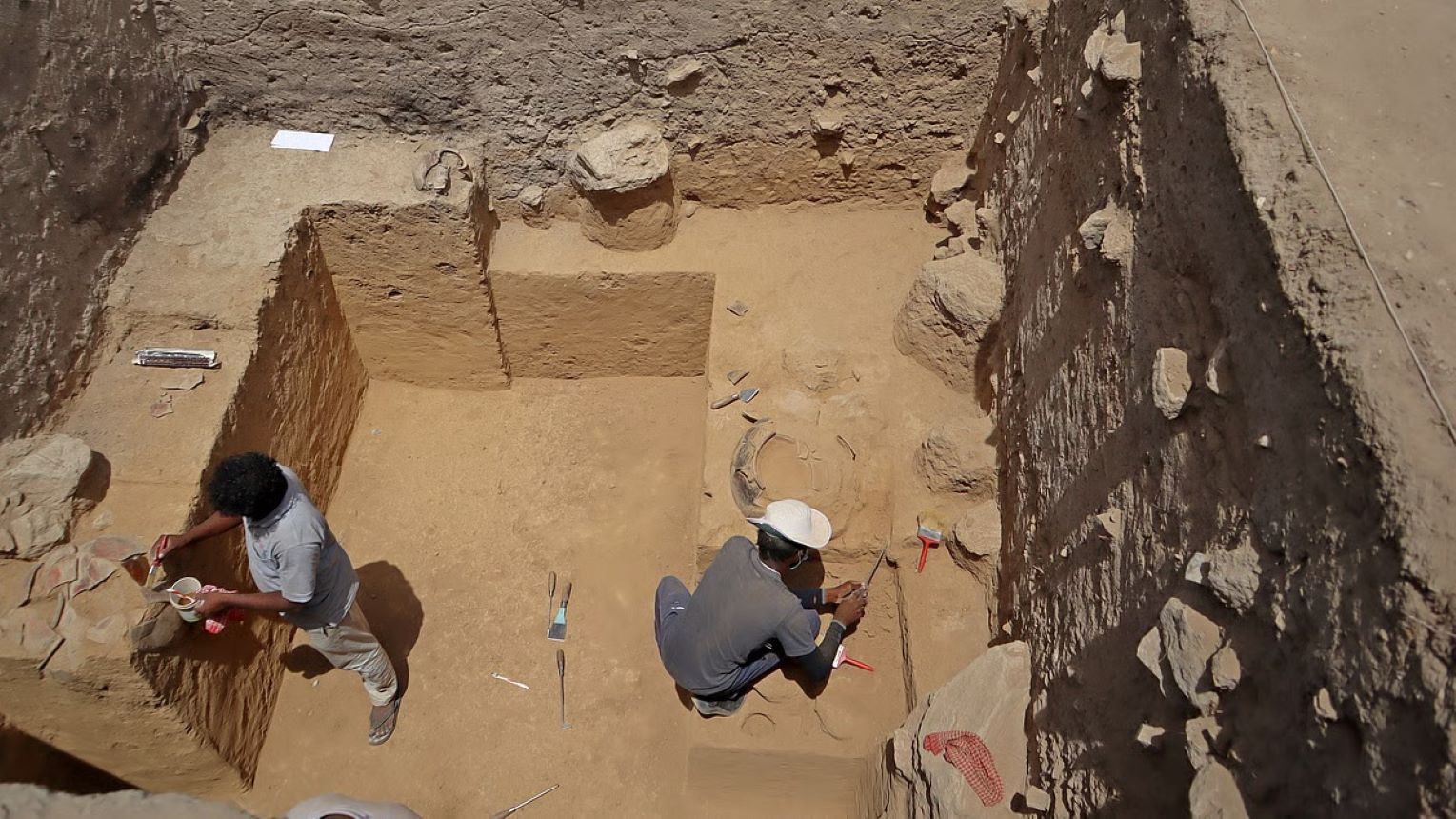
Archaeological excavations at Karivalamvandanallur
(Malayadipatti), situated on the banks of the Vaippar River in Tenkasi
district, Tamil Nadu, have uncovered evidence of a human settlement that
appears to have existed continuously from the Microlithic Age to the Sangam
Age. The findings provide valuable insights into the cultural evolution of
southern Tamil Nadu over several millennia.
Key Findings
Karivalamvandanallur Excavation
¨
Continuous Human
Habitation: The evidence indicates continuous human habitation spanning from
the Microlithic period through the Iron Age and Early Historic period to the
Historic period; however, the Neolithic and Chalcolithic phases were absent.
This cultural sequence mirrors findings from Mangudi, Sivagalai, and
Adichanallur, whereas a distinct Microlithic–Neolithic–Iron Age sequence is observed
in northern Tamil Nadu.
¨
Organized Industrial
Settlement: Evidence suggests that the site was not merely a residential
settlement but also an organized industrial hub. Archaeologists recovered
hematite (for iron extraction), iron implements, glass beads, terracotta
figurines, graffiti-marked pottery, hopscotch game pieces, and Black-and-Red
ware alongside other Early Historic pottery types. Other finds include shell
bangles, terracotta spindle whorls, terracotta discs, coral beads, a gold bead,
rectangular game pieces, and copper coins. Structural evidence indicates the
presence of workshops dedicated to iron tool manufacturing, bead making, shell
bangle production, and weaving during the Sangam period.
¨
Large Brick Structure:
One of the most significant discoveries of the excavation is a massive brick
structure measuring approximately 8.7 meters by 4.2 meters, constructed using
bricks that measure 40 × 20 × 7 centimeters. • The
structure features descending steps, and it is believed to have served as an underground
granary or a rainwater harvesting tank. Its design suggests that the settlement
possessed an advanced water management system, despite its proximity to the
Vaipar River. The size of the bricks resembles those found at Keeladi,
Alagankulam, and Poompuhar, indicating that the structure belongs to the Early
Historic or Sangam period. Soil analysis and carbon dating are currently being
conducted to determine the structure's purpose and chronology.
¨Evidence
of burial: Archaeologists discovered a red-slipped burial urn adorned with
depictions of peacocks. The presence of molar and premolar teeth outside the
urn, along with a Black-and-Red Ware pot placed beneath it, suggests it was
used as an ossuary (burial urn). Graffiti marks were also observed on the
vessel.
¨
Similar peacock-adorned
burial urns have previously been found at Porunthal and at sites associated
with the Harappan Civilization's Cemetery H culture—including Harappa, Hulas,
and Bhirrana—indicating their ritual significance. Akananuru, a Sangam-era
text, mentions the decoration of memorial stones with peacock feathers,
providing literary corroboration for this archaeological evidence.
Significance of the discoveries
¨
Historically significant
site: The site's importance first came to light following reports of Roman
coins being found in the area. Subsequently, L.A. Cammiade surveyed the site,
while the 1932–33 annual report of the Madras Museum noted the discovery of
glass beads and burial urns from the location.
¨
Evidence of a specialized
production center: The evidence indicates that this settlement functioned as a
specialized production center, hosting activities such as iron production, bead
making, shell bangle manufacturing, and weaving.
¨
A hub for habitation,
production, and trade: Situated on an ancient east-west trade route, the
settlement appears to be a combined hub for habitation, production, and trade,
suggesting its integration into an extensive trade network.
¨
A bridge between
archaeology and Sangam literature: Peacock-adorned burial urns and references
found in the *Akananuru* further strengthen the link between archaeological
evidence and Sangam literature.
¨
Distinct cultural
sequence: Excavations indicate the development of a cultural sequence in
southern Tamil Nadu—comprising the Microlithic Age, Iron Age, and Early
Historic Period—that differs from the Microlithic-Neolithic-Iron Age sequence
observed in northern Tamil Nadu.
¨
Strengthening Tamil
Nadu's archaeological record: Together with sites like Keeladi, Sivagalai,
Mangudi, and Adichanallur, these findings reinforce Tamil Nadu's archaeological
record and suggest a continuous evolution of Karivalamvandanallur from the
Stone Age through the Sangam period.